Taiwan Tensions:A Rift in the Relationship?

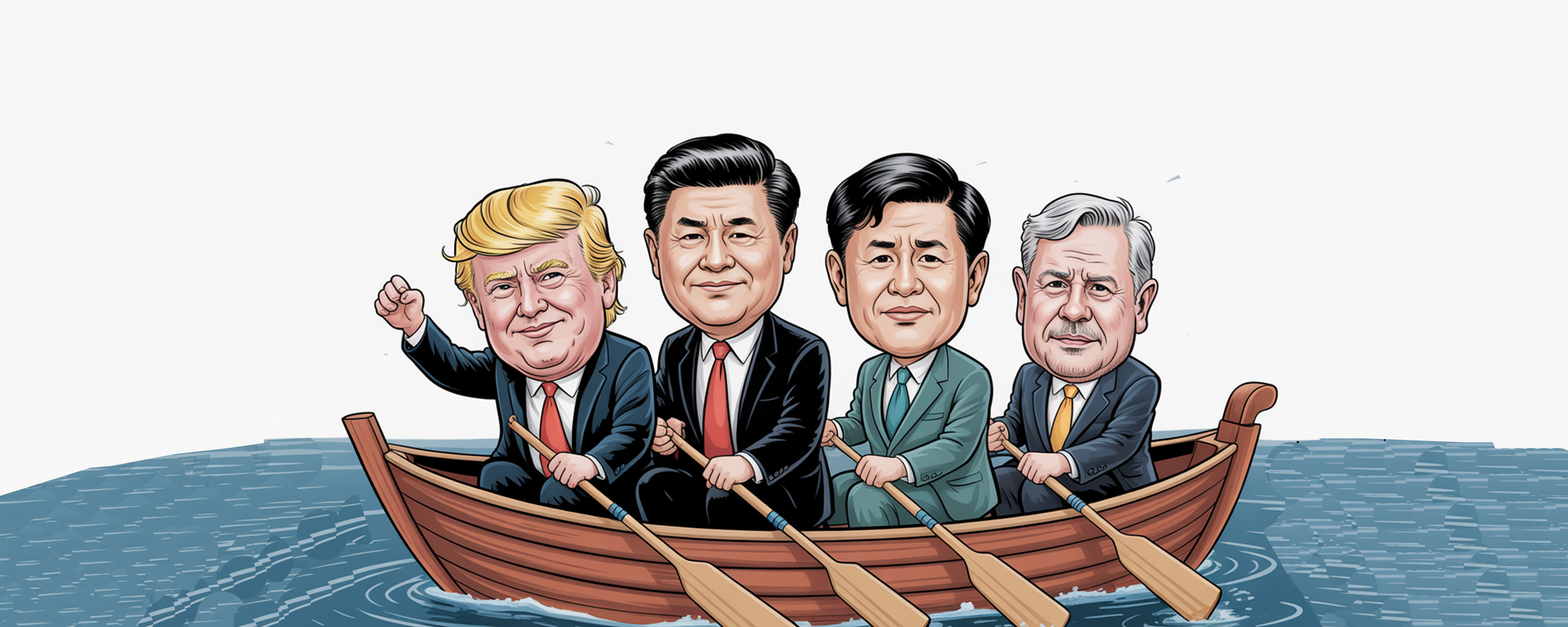
On July 13, 2025, the Financial Times published a report concerning the ongoing tensions between the U.S. and China over Taiwan. According to the report, U.S. Deputy Under Secretary of Defense for Policy, Elbridge Colby, has spoken with officials from Washington's key Indo-Pacific allies, particularly Australia and Japan. Colby sought to clarify their positions and persuade them to support the U.S. in the event of a U.S.-China armed conflict over Taiwan. Apparently, both allied countries have so far avoided giving a direct answer. Handling such contingencies requires strong political commitment and trust-building among allies. However, the Trump administration is not sending the right signals to its Indo-Pacific partners.
When Might China Attack Taiwan?
The question of whether China intends to attack Taiwan, and if so, when, is a subject of intense speculation. However, one frequently cited 'timeline' is 2027. This year coincides with the 100th anniversary of the founding of the People's Liberation Army (PLA). President Xi Jinping sees this period as a time when China will have made significant improvements in its 'strategic capabilities to safeguard its national sovereignty, security, and development interests.' The Trump administration also appears to take this timeline seriously. This is signaled by the warning given in 2021 by former U.S. Indo-Pacific Command Admiral Philip Davidson. He stated that China would take some major action regarding Taiwan by 2027. This warning is also known as the 'Davidson Window'.
Thus, if the U.S. and China become embroiled in a war over Taiwan, Washington would seek to leverage its alliance network in the Western Pacific. However, in recent weeks, flaws have been exposed in this hub-and-spoke network, especially during the Trump administration. It is important to first note that, although the U.S. has bilateral treaty alliances with Japan and Australia, these treaties also contain ambiguities. Neither ally's security treaty with Washington legally and explicitly commits them to a military role in a conflict that does not involve a direct attack on territory under their administration. However, there are nuances within the treaties that must be understood. For example, Article VI of the U.S.-Japan defense treaty states that Tokyo will accept and support the deployment of U.S. forces on Japanese soil to contribute to regional stability. However, it does not explicitly mention the active participation of the Japan Self-Defense Forces (JSDF) beyond the defense of Japan. Similarly, Australia's treaty with the U.S. in 1951 revolves around mutual consultation in the context of 'common danger'.
Which U.S. Policies Disappoint Australia and Japan?
Still, the lack of a clear legal obligation in the treaties does not mean that potential allies cannot act in a contingency. In such a situation, political leadership, inter-state coordination, and trust-building play a key role in filling these gaps. Japan has made new efforts to enhance its national security capabilities in recent years. Despite this, defense experts there also concede that an attack on Taiwan would have a direct impact on Japan, especially if China's military attempts to target U.S. bases in Japan. In 2022, then-Prime Minister of Japan Shinzo Abe called on the U.S. to abandon its 'strategic ambiguity' regarding Taiwan. On the other hand, Australia's stance has been more restrained. This is due to Australia's extensive trade relations with China. However, Australia also realizes that a Chinese invasion of Taiwan may not be limited to that geographic area. China has, in any case, increased its provocative and aggressive actions against Australia over the past four years.
Although contingency planning between the U.S., Japan, and Australia is crucial, Washington has not been able to create the right conditions to advance such an agenda with its allies. In fact, the Trump administration is currently focusing more on trade and tariffs. The U.S. has openly demonstrated its strength by renegotiating the terms of unfair patron-client relationships with its allies. This became even clearer when the Trump administration demanded that Indo-Pacific allies increase their defense spending to five percent of gross domestic product (GDP). This commanding advice from the U.S. is disliked by Australia, South Korea, and especially Japan. The Trump administration is also likely to move forward with a review of the Australia-United Kingdom-United States (AUKUS) agreement. This would further increase uncertainty among Australian policymakers. On the economic front, a trade war broke out following the U.S. administration's decision to impose 'reciprocal tariffs' at the start of Trump's second term. Japan was unable to reach a just trade agreement with the U.S. In view of this, Trump imposed a 25 percent tariff on Japan, the U.S.'s most important ally in the Indo-Pacific region. What's more, the Trump administration called it 'bad' for not presenting its terms for a trade agreement.
Will the Trump Administration Change its Stance?
Although the U.S. has significant military and economic power in the Indo-Pacific region, the Trump administration must work together with its key regional allies. If the U.S. fails to understand the need to work with them on equal terms, challenges will arise in mounting a united response to any serious conflict in the region. The lack of integrated planning between Trump's defense expectations and economic demands hinders coordination. Although both Japan and Australia are well aware of the consequences of a Chinese invasion of Taiwan, the U.S.'s attitude is also disappointing them. Besides, it is also a fact that the U.S.'s stance regarding the defense of Taiwan is not clear. Given the uncertainties of the Indo-Pacific's regional dynamics, it becomes even more challenging for key allies to clearly commit to defending Taiwan. All member countries of the hub-and-spoke network understand the need for contingency planning for any conflict in the Taiwan Strait. However, the U.S. must also reconsider its diplomatic approach. The Trump administration must accept that the basis of any successful allied response is collective political will rather than written treaty obligations. If the U.S. wants to implement a collective action plan in the region, it must re-examine its relations with its allies in the Indo-Pacific region."
(Author is a geopolitical analyst and writer in the Philippines. He is also a lecturer in the International Studies Department at De La Salle University.)