Global Financial, Power Shift

Global power balances were once determined by armies and battleships, then by oil, gas, and maritime control. But a new determinant of global power is emerging in today’s world—digital payment systems, currency settlement, and financial sovereignty.
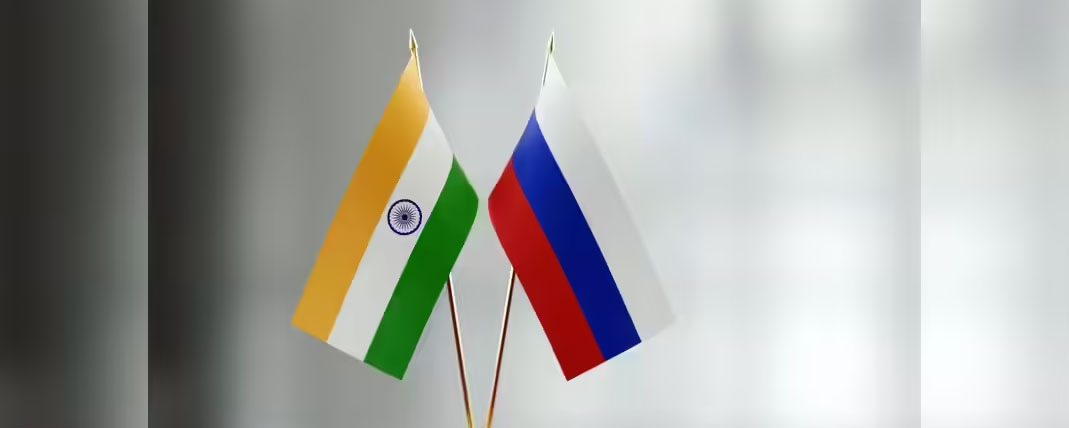
The decisive steps taken by Russia and India to integrate their respective national payment networks—Mir and RuPay—is the most vibrant signal of this transformation. This is not merely technical convenience; it is the establishment of an alternative financial axis challenging the dollar-centric global framework.
President Vladimir Putin’s upcoming visit to New Delhi may formalize this process. Just a few years ago, the world of international payments was dominated by Visa, Mastercard, and SWIFT, and that was considered the final word. However, Western sanctions inadvertently punched holes in their own structure. Financial penalties imposed on Russia, instead of crippling Moscow, forced it onto a new path—developing its own payment network and shaping its own digital sovereignty, much like India. India’s RuPay and UPI are no longer just domestic payment systems; they are among the world’s fastest and most comprehensive digital infrastructures. The goal of both nations is now to integrate these systems so that trade and transactions no longer depend on a third country or currency.
This move is not limited to tourism, ATM cards, or QR payments. The real upheaval is occurring at the level where control over currency exchange becomes the measure of power. Today, over 90 percent of trade between Russia and India is conducted directly in Rupee-Ruble or other friendly currencies—effectively bypassing the dollar. Oil, coal, fertilizer—all these transactions are passing through channels beyond the West’s control. This is not merely a financial arrangement; it is a demonstration of sovereignty—a right that was once dependent on the grace of Washington’s banking system.
The situation could change even more dramatically once Russia and India’s payment networks are integrated. Experts suggest the first phase will involve connecting Mir and RuPay, followed by the integration of Russia’s Faster Payment System with India’s UPI. Once that level is achieved, payments will not be settled in dollars, nor will they be contingent on permission from any American system. Transaction costs could plummet by nearly thirty percent, and traders will be able to settle payments using simple QR codes or mobile wallets. When the flow of trade is independent, the equations of power also become independent.
This shift is uncomfortable for the Western world. Its entire financial power has historically rested on three pillars: energy being priced in dollars, payments passing through the SWIFT network, and private systems like Visa/Mastercard being applied globally. The Russia-India payment bridge is the first crack in these pillars. China has already developed its own alternative payment system. If India and Russia successfully establish this digital financial nexus, the West’s financial dominance will not just be challenged; it will gradually lose its centrality. This is not a sign of the future—it is the blueprint for it.
India’s role in this entire process is particularly crucial. This nation is neither a shadow of Moscow nor a pupil of Washington. It is a pole unto itself, with a clear geopolitical objective: to prioritize its own interests, its energy security, and its financial sovereignty. This is why the Russia-India payment link is not just a technical connection but a realignment of the power map, where Asia is emerging not just as a market but as a decision-maker.
This move by Russia and India sends three clear messages to the world: financial independence is no longer a diplomatic appendix but the core of power; digital payments are an ocean that old empires cannot fence in; and the Global South is now a creator, not just a consumer.
In summary, the West is still erecting walls of sanctions, while India and Russia are building new corridors. The future belongs not to the walls that divide the world, but to the paths that connect two continents and fundamentally change the entire system. This is not merely financial convenience—it is the initial sketch of a new world order.