The Eclipse of Dynasties

Stretching along India’s western coast, caressed by the restless waves of the Arabian Sea and guarded by the ancient Sahyadris, Maharashtra is not merely a state—it is India’s most complex and dynamic political laboratory. This is the land of Chhatrapati Shivaji Maharaj, where history was written with the sword but guided by an unwavering ethic of public service. And yet, in a cruel irony, over the past few decades this sacred political soil was reduced to the private estate of a handful of powerful families. From the “Baramati power centre” to diktats issued from “Matoshree,” and from Delhi durbars of the Congress era, Maharashtra’s politics revolved around three gravitational poles of dynasty and entitlement.
That script has now been decisively burned to ashes.
The local body elections concluded on 15 January 2026 were not routine civic contests. They were a political reckoning. Covering 29 municipal corporations, 893 wards, and 2,869 seats, this electoral battle witnessed participation from nearly 34.8 million voters—almost the population of a mid-sized European nation. The results were seismic. The Bharatiya Janata Party (BJP) secured control over 23 of the 29 municipal corporations, including the crown jewel: the Brihanmumbai Municipal Corporation (BMC), India’s richest civic body.
These are not mere numbers. They are a proclamation. Maharashtra has broken free from the chains of dynastic entitlement, appeasement politics, and ideological drift. What unfolded was not a loud revolution but a silent one—a quiet restructuring of power that demolished entrenched bastions without spectacle. This was New India asserting itself at the most granular level of democracy.
The End of “Administrator Raj”
The significance of this mandate is not merely political; it is deeply constitutional.
For nearly four years—from March 2022 to January 2026—Mumbai, one of the world’s most prominent cities, had no elected civic representatives. Governance was handed over to state-appointed IAS officers, euphemistically termed “administrators.” This was a direct subversion of the 74th Constitutional Amendment Act, 1992. Article 243U(3) clearly mandates that municipal elections must be held before the expiry of a council’s term or within six months of its dissolution. That constitutional guarantee was repeatedly violated.
Under the pretext of legal complications surrounding OBC reservations and ward delimitation, democratic representation was indefinitely postponed. Cities like Pune, Nagpur, Thane, Nashik, and Mumbai were effectively placed under bureaucratic trusteeship. Democracy was replaced by files, citizens by circulars.
The January 2026 elections have finally ended this constitutional vacuum. Elected councils are back. While the BJP emerged as the primary beneficiary, the larger winner is Indian democracy itself. Power has returned from bureaucratic corridors to public representatives. The verdict restored not just governments, but constitutional morality.
A Brahmin “Peshwa” in the Maratha Citadel
Perhaps the most remarkable transformation in Maharashtra’s political landscape is sociological.
For decades, the state’s unwritten political constitution dictated that real power would always remain with Maratha strongmen. From Yashwantrao Chavan to Vasantdada Patil and Sharad Pawar, leadership was synonymous with Maratha dominance. This was not merely political arithmetic—it was treated as destiny.
That myth now lies shattered.
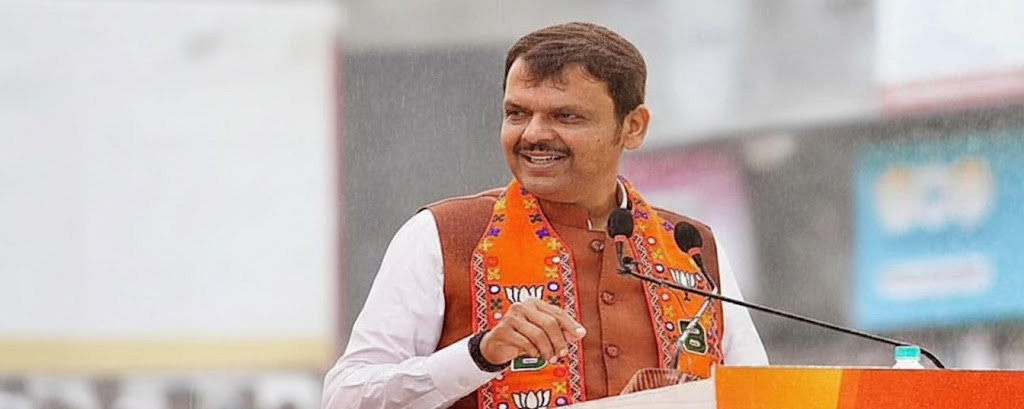
At the epicentre of this transformation stands Chief Minister Devendra Fadnavis—a Brahmin leader who has risen not through inheritance, but through strategy, resilience, and relentless political labour. His ascent represents a fundamental recalibration of Maharashtra’s power structure.
The sweeping municipal victory has firmly established Fadnavis not just as the state’s undisputed leader, but as a national figure in the BJP’s next-generation leadership—standing alongside Yogi Adityanath and Amit Shah in the post-Modi political imagination.
This success is rooted in what analysts describe as the Madhav formula—mobilising Mali, Dhangar, and Vanjari communities, alongside a broader consolidation of OBC groups. Under the expansive umbrella of Hindutva, Fadnavis forged a coalition of the politically marginalised—communities long excluded under Maratha hegemony. This was social engineering of the highest order, one for which neither Sharad Pawar nor Uddhav Thackeray had an effective counter.
Urban Autonomy: The Illusion and the Reality
While the elections have restored elected bodies, it would be naïve to assume that Maharashtra’s cities have suddenly become autonomous.
India’s urban governance structure remains deeply centralised. The mayor—often portrayed as the city’s most powerful figure—is, in reality, a ceremonial entity. In Mumbai, the mayor is indirectly elected under Section 37 of the BMC Act and wields negligible executive authority. The real power lies with the Municipal Commissioner—an IAS officer appointed by the state government.
Budgets, tenders, development plans, Floor Space Index regulations, and mega infrastructure projects ultimately rest with the state secretariat.
This is precisely why the BJP’s victory is strategically significant. With the party controlling both the state government and most municipal corporations, the so-called “double engine” can now operate without friction. Standing Committees—critical for financial decisions—are firmly under BJP control.
Yet, one truth must be acknowledged: these were “local elections” in name only. In substance, they were state and national contests fought on municipal terrain. Local issues were eclipsed by larger political narratives, and the faces that dominated the campaign were Modi and Fadnavis—not ward councillors.
The Collapse of Baramati and the End of the Pawar Playbook
Once, western Maharashtra was known as the “sugar belt,” a bowl of sweetness whose benefits were largely confined to the coffers of the Pawar family and their allies. The impregnable fortress Sharad Pawar built through a vast network of cooperatives, sugar mills, and district banks has today collapsed like a house of cards.
The political wipeout of both factions of the NCP—led by uncle Sharad Pawar and nephew Ajit Pawar—in their own strongholds of Pune and Pimpri-Chinchwad signals the end of an era. This is not merely an electoral defeat; it is the downfall of a feudal mindset that assumed farmers and rural voters were captive. Lobbying for tickets and defections exposed how ideology has become secondary, while power remains the ultimate truth. The BJP strategically targeted corruption in the cooperative sector and simultaneously cultivated new leadership within the Maratha community.
Ajit Pawar, who died in a plane crash on January 28, was once seen as Sharad Pawar’s natural heir and the “strongman” of Maratha politics. After his death, uncertainty clouds the party’s future—whether the next generation will take charge or the party will merge with Sharad Pawar’s faction remains to be seen. Meanwhile, Sharad Pawar, in the twilight of his political life, is forced to watch the empire he built over five decades crumble before his eyes.
Matoshree’s Silence and Mumbai’s New Temperament
Mumbai—the city of dreams, India’s financial capital, and once the unquestioned domain of the Thackeray family. For over three decades, the BMC functioned as Shiv Sena’s economic backbone. Orders from Matoshree translated into municipal law. But the 2026 verdict made one thing unmistakably clear: Mumbai’s voters have moved beyond emotional blackmail.
The BJP’s capture of the BMC—assisted by the Eknath Shinde faction—has triggered an existential crisis for Uddhav Thackeray. While he managed to retain a segment of the Marathi identity vote, real power has slipped away.
The Shinde-BJP alliance remains transactional rather than ideological, marked by negotiations over posts and influence. Yet the broader truth is undeniable: Mumbai is no longer a family fiefdom. The sea has washed away old loyalties.
Congress in Terminal Decline and Owaisi’s Rise
Once the backbone of Maharashtra politics, the Congress party is now on political life support. In most municipal corporations, it finished third or fourth.
Its vacuum has been partially filled by the AIMIM led by Asaduddin Owaisi, which won 121 seats, including eight in Mumbai. This signals a decisive shift among Muslim voters—from Congress’s “soft secularism” to a more assertive identity-based politics.
While this polarisation may electorally benefit the BJP, it raises serious concerns about social cohesion. Secularism in Maharashtra is no longer centrist—it is fragmenting.
Looking Towards 2029
As Maharashtra stands in January 2026, it is evident that the state has entered reset mode.
The BJP has entrenched itself not only in India’s financial capital but also in the country’s second-most politically significant state after Uttar Pradesh. This victory is not merely Narendra Modi’s charisma—it is the product of Devendra Fadnavis’s organisational discipline, strategic exploitation of constitutional gaps, and the moral collapse of the opposition. Local bodies—often dismissed as puppets—have emerged as decisive arenas of power. The road ahead promises turbulence: restructuring of cooperatives, new education and employment hubs, and a shift from caste-based agitation to development-centric Hindutva. The chessboard for the 2029 Lok Sabha and Assembly elections is already set.
Ultimately, Maharashtra’s verdict sends a message far beyond its borders: India is changing. Political inheritance is no longer guaranteed by surname but earned through performance and perseverance. The Sahyadris bear witness—old banyan trees are withering, and a new saffron dawn has arrived.
Maharashtra is no longer looking back. It is preparing for a long leap into the future.