Diplomatic Alarm: India’s Trial in a World of Chaos
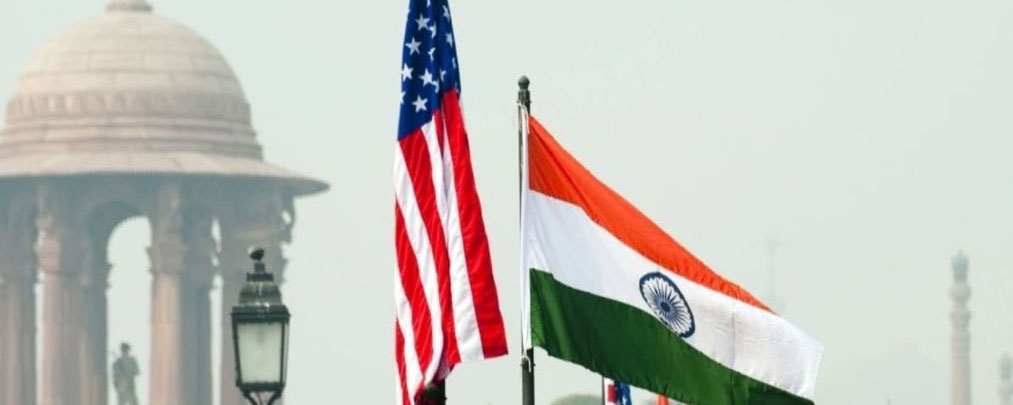
As dawn broke in 2026, the senior echelons of Indian diplomacy in New Delhi’s South Block did not merely see a new year; they confronted a stark warning. For decades, Indian foreign policy has rested on the twin pillars of strategic autonomy and a rules-based international order. Today, that order is showing cracks, as the world’s foremost superpower—America—prioritizes caprice over norms. For Indian strategists, the concern is not the distant turmoil in Caracas or Nuuk alone, but the collapse of the democratic, liberal order on which India had charted its development trajectory.
As India marches toward its centenary of independence in 2047, the sudden resurgence of global “anarchy” has transformed into a diplomatic crucible. When the most significant strategic partner itself becomes a threat to global stability, how can India safeguard its national interests—energy security, border integrity, and economic growth—without compromising its autonomy?
The Venezuela Incident: A Wake-Up Call
The first week of January 2026 delivered a shock to Indian diplomatic corridors. U.S. President Donald Trump’s dramatic action of forcibly removing Venezuela’s president and his wife from Caracas to Washington represented a slap in the face of modern sovereignty. For India, a leader of the Non-Aligned Movement and a consistent defender of international autonomy, this was a wake-up call.
This was not merely a coup in a Latin American country—it was a declaration that the United States now acts unrestrained by international law or moral obligation. Today, it is Venezuela; tomorrow, it could be any nation that obstructs American interests. This is especially alarming for India, given Trump’s attention to Greenland’s strategic resources and ongoing threats to Iran. An unstable West Asia, home to millions of Indian expatriates and vital energy supplies, becomes a direct security concern.
The Illusion of Market-Driven Security
To understand India’s contemporary predicament, one must look back. After the Soviet Union’s collapse and India’s economic liberalization in 1991, New Delhi embraced the notion that the future would be guided by market forces and soft power. With the Cold War over, India opened its economy, believing that economic strength would outweigh military might.
During globalization’s early decades, India also sought a new equilibrium in its relationship with the United States. The wounds of 1971, when Washington had sided against India, were deliberately set aside. By the 21st century, India and America were viewed as “natural partners.” Shared democratic values and expansive markets were expected to bind the two nations.
But 2026 has shattered that illusion. Trump’s presidency demonstrates that trade is no longer a guarantee of peace but a weapon in strategic coercion. India has observed how the United States leverages its economic might to bend other nations. Indian policymakers now confront a harsh truth: GDP alone does not guarantee security; it must be paired with hard power and strategic resolve.
India–America Relations: Fractured Expectations
The return of Trump to the White House in 2025 was initially met with cautious optimism among Indian media and certain diplomatic circles. There was hope that Prime Minister Modi’s personal “chemistry” with Trump would elevate bilateral relations. Defense deals were expected to accelerate, technology transfers to materialize, and a robust alliance against China to form.
By year-end, however, that honeymoon had given way to bitter reality. The very economic ties considered the backbone of the relationship now appear as strangling constraints. Trump’s “America First” agenda directly conflicts with India’s Atmanirbhar Bharat and Make in India initiatives. Washington now increasingly views India not as a cooperative partner but as a potential tariff competitor. For India, this is a jolt, as its strategic planning had long assumed America as a pivotal pole in the Indo-Pacific balance.
Russia, Energy, and India’s Strategic Pride
Arguably the most sensitive point in Indo-American tensions is Russia. This is not merely about oil; it is about India’s strategic autonomy. During the Ukraine conflict, while much of the West boycotted Russia, India continued to procure affordable energy, prioritizing the welfare of its citizens. The Indian government’s rationale was clear: “Our energy security cannot become hostage to others’ political battles.”
The United States, however, accuses India of financing Putin’s war. From the Indian perspective, these allegations are not only insulting but hypocritical. Indian diplomats have pointed out that Europe purchased far more Russian energy than India did. Nevertheless, the U.S. persists in exerting pressure. Frustrated by failing to halt the Ukraine conflict, Trump channels his ire toward India, threatening punitive tariffs of up to 500 percent.
For India, this is no longer merely an economic dispute; it is a question of sovereign pride. Succumbing to U.S. pressure and severing ties with Russia would signal to the world that India is not an independent actor but a subordinate of Washington—a devastating blow to its global stature.
Economic Blackmail vs. India’s New Power
Trump’s tariff threats cannot be ignored, yet India is no longer in a position of fear. Its economy is no longer that of 1990; India is the fifth-largest global economy, rapidly approaching the third spot. From an Indian vantage point, a tariff war cannot be unilateral. India represents a massive, rapidly expanding market for American multinationals—Apple, Google, Boeing, and social media giants. Any tariffs imposed on Indian pharmaceuticals or textiles can elicit proportional retaliation. Furthermore, the U.S. relies on India’s supply chains to counter China. Trump, a businessman by instinct, is unlikely to sustain policies that harm mutual interests, but India must respond with its economic clout, asserting strength rather than submission.
India’s Strategic Mandate in a Turbulent World
Given this global turbulence and American pressure, Indian strategists identify three critical fronts:
1. Policy of Non-Submission: Venezuela’s example illustrates that weakness invites aggression. India must send a clear message that it will not compromise national interests. Its ties with Russia remain pivotal for defense preparedness and cannot be sacrificed to appease Washington. India must communicate to Trump that a strong, self-reliant India serves U.S. interests better than a dependent, weakened one.
2. Expanding Multi-Alignment: India must continue converting its historical non-alignment into multi-alignment. This entails maintaining engagement with the Quad alongside dialogue with Russia and China via BRICS and the Shanghai Cooperation Organization. Partnerships with medium powers like France, Japan, and Germany must be deepened to reduce overreliance on the United States.
3. Leadership in the Global South: India must become the voice of developing nations. Events like Venezuela sow fear across Africa, Asia, and Latin America. India’s stance in favor of a rules-based, rather than force-based, global order can provide these countries reassurance and bolster India’s moral authority on the world stage.
A Symbol of Stability Amid Chaos
Ultimately, the geopolitical scenario of 2026 tests India’s patience and diplomatic maturity. While Trump’s America may be unpredictable and unstable, India must emerge as a pivot of stability.
The abduction of Venezuela’s president and Washington’s designs on Greenland signal that the world has entered a perilous era. In such times, India’s ideal of Vasudhaiva Kutumbakam—the world as one family—is not mere rhetoric; it is a strategic imperative. India must demonstrate that it is an independent player, not a pawn in the games of superpowers.
India and America will not sever ties—they remain mutually dependent, especially regarding China. Yet, the terms of engagement must be redefined. Washington must recognize that 21st-century India demands partnership on equal terms, not subordination. In this era of volatility, India’s greatest assets are its self-confidence and strategic autonomy.