A Mirage of Tranquility
On the global chessboard of diplomacy, moves are rarely as straightforward as they appear. They are layered, calculated, and often cloaked in moral rhetoric that conceals raw power beneath. Every grand diplomatic gesture carries within it a set of contradictions—between principle and interest, legitimacy and leverage, ethics and expediency. In the cold winds of January 2026, such a contradiction has arrived quietly but unmistakably in New Delhi.
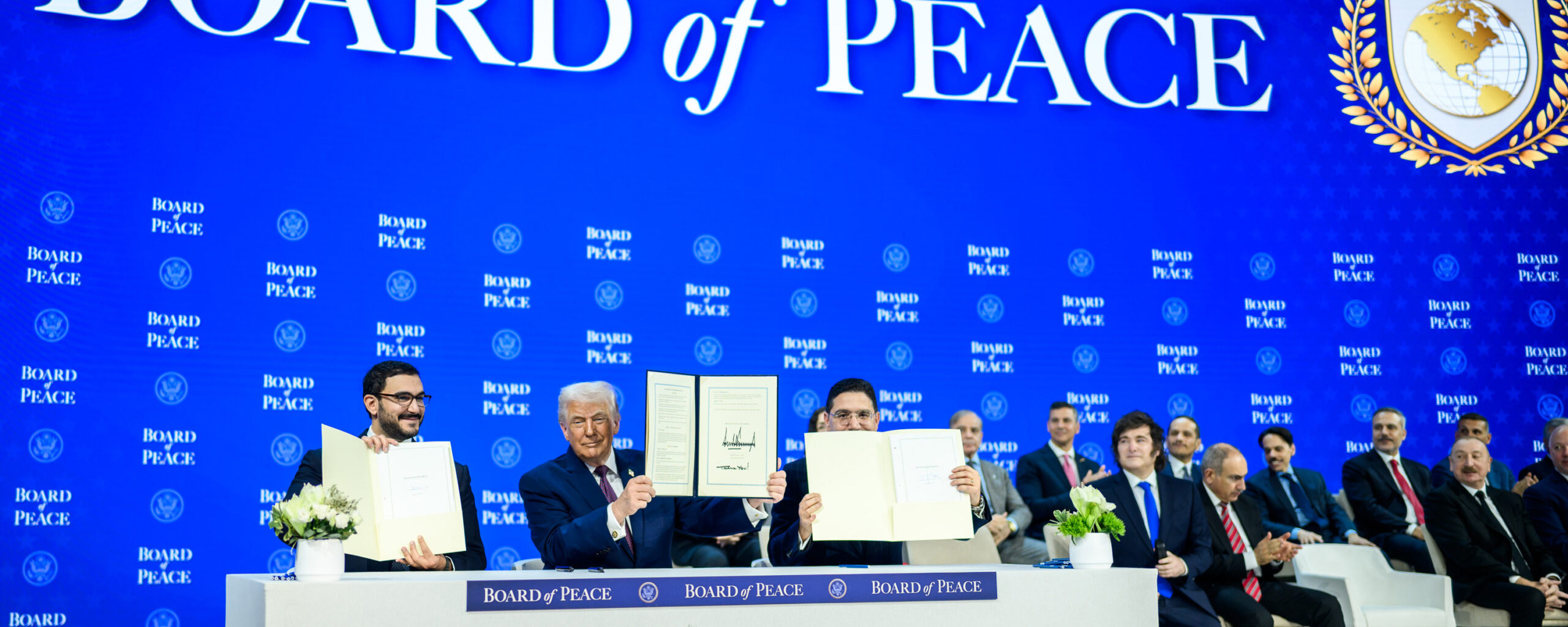
When Sergio Gor, the newly appointed United States Ambassador to India, announced on a digital platform that President Donald Trump had invited Prime Minister Narendra Modi to join a newly formed “Board of Peace” for Gaza, the message was designed to flatter. On the surface, it appeared to be recognition of India’s growing global stature—its emergence as a pivotal power capable of bridging divides in one of the world’s most volatile regions.
Ambassador Gor, who had recently presented his credentials to President Droupadi Murmu at Rashtrapati Bhavan, would likely argue that India’s credentials are impeccable. India maintains robust and increasingly strategic ties with Israel while retaining deep historical sympathy and moral commitment toward the Palestinian cause. Few countries enjoy such diplomatic bandwidth. Few are trusted by both sides. Few possess the civilisational credibility that India does.
And yet, diplomacy teaches us a harsh lesson: what looks like an invitation is often a test; what appears as honour may conceal entrapment. This proposal resembles a golden cage—gleaming, prestigious, and seemingly empowering, but ultimately designed to constrain. For India, a civilisation-state that prides itself on strategic autonomy and moral independence, this moment demands not enthusiasm but restraint.
This is not merely a question of Gaza. It is a question of whether India will anchor itself firmly within the multilateral, rules-based global order—or allow itself to be drawn into a personalised, transactional, and deeply destabilising alternative.
A “Peace Board” or the Privatisation of Global Governance?
Peeling back the layers of this proposal reveals an unsettling truth. Trump’s so-called “Board of Peace” is not a humanitarian mission nor a peacekeeping mechanism in the conventional sense. It is, in essence, an attempt to privatise conflict management and erect a parallel authority to the United Nations—one that answers not to international law, but to personal power.
Formally announced in September 2025, the board’s declared aims are lofty: promoting stability, restoring the rule of law, and securing peace in conflict zones. Such language is familiar. It is the language of international institutions, peacekeeping mandates, and humanitarian charters. But language, in diplomacy, often serves as camouflage.
On January 15, while unveiling the board, President Trump remarked bluntly, “The United Nations has never helped me.” This single sentence exposes the ideological core of the initiative. The board is not motivated by global consensus or collective responsibility. It is born out of personal grievance and a long-standing hostility toward multilateral institutions.
Trump has never concealed his disdain for the UN—questioning its funding, its legitimacy, and its relevance. The “Board of Peace” is therefore not an alternative mechanism; it is a challenge, even an affront, to the post-1945 international order.
For India, this raises a profound dilemma. India is not merely a member of the UN; it is one of its foundational pillars. Over the decades, India has contributed troops, diplomats, mediators, and ideas to UN peacekeeping and norm-building. It has championed decolonisation, disarmament, and the rights of the Global South.
Can India now become part of an initiative whose implicit objective is to weaken, bypass, and delegitimise the very institution it helped build? Such participation would not be neutral. It would amount to complicity in dismantling multilateralism itself.
Gaza: Real Estate Vision or Moral Catastrophe?
Trump’s approach to Gaza reveals the true nature of this initiative. During a February 2025 meeting with Israeli Prime Minister Benjamin Netanyahu, Trump spoke openly of transforming Gaza into the “Riviera of the Middle East.” The phrase was not accidental. It reflected a worldview that sees devastated territories not as sites of human suffering, but as underutilised assets.
In Trump’s imagination, Gaza is not a graveyard of lives lost and futures destroyed. It is a redevelopment zone. A demolition site awaiting luxury hotels, beachfront resorts, and profitable real estate ventures.
This framing is deeply disturbing. When the president of a superpower speaks of “taking over” or “owning” a territory devastated by war, it echoes the darkest instincts of 19th-century colonialism. Sovereignty becomes irrelevant. Human suffering becomes collateral. Reconstruction becomes extraction.
India, of all nations, understands the violence of such thinking. It knows what it means to be reduced to a resource, a market, a territory to be exploited. India’s foreign policy has always drawn moral strength from its anti-colonial struggle. To associate itself with a project that treats Gaza as a commercial opportunity would betray that legacy.
The rubble of Gaza is not a blank slate. It is layered with memory, trauma, and grief. No “Riviera” can be built without burying justice beneath concrete. India’s ethical compass cannot permit such erasure.
A One-Man Board
The proposed structure of the Board of Peace further exposes its true character. This is not a representative institution. It is a hierarchical, corporate-style body dominated by a single individual. Trump, as self-appointed chairman, would retain sweeping powers—initiating proposals, approving actions, and exercising veto authority without consultation.
This is diplomacy reduced to spectacle. A one-man court where nations are invited not as equal partners, but as contributors and spectators.
Perhaps the most alarming aspect is the proposed $1 billion “entry fee” for a permanent seat. Pricing peace is not innovation; it is moral bankruptcy. It transforms conflict resolution into a luxury club accessible only to the wealthy.
For India, this is indefensible. India has immense developmental needs—from healthcare and education to climate adaptation and poverty alleviation. Diverting public resources to fund a privately controlled board driven by an individual’s ego would be politically and morally untenable.
Equally troubling is the board’s impermanence. Its existence depends entirely on Trump’s political relevance. When he leaves office—or loses interest—the board may collapse overnight. India does not invest in diplomatic structures that lack durability, legitimacy, and institutional continuity.
India’s Foreign Policy and the Trump Contradiction
Since independence, India’s foreign policy has been defined by three pillars: non-alignment, strategic autonomy, and moral credibility. Even as India has grown closer to the United States in recent decades, it has never surrendered these principles.
India has criticised the UN, yes—but always with the aim of reform, not replacement. It seeks a more representative Security Council, not its dissolution. It believes deeply polarising conflicts must be resolved through institutions, not individuals.
Trump’s Israel–Palestine approach fundamentally clashes with this worldview. His unilateral recognition of Jerusalem as Israel’s capital, his sidelining of the Palestinian Authority, and his disregard for international consensus stand in sharp contrast to India’s balanced stance. India continues to support the Palestinian Authority and the two-state solution. It recognises Tel Aviv—not Jerusalem—as Israel’s diplomatic capital. It has consistently argued that peace must emerge through dialogue, not coercion or commercialisation.
Trump’s Board of Peace violates every one of these principles.
The Vajpayee Doctrine
India has faced such tests before. In 2003, when the United States sought Indian troops for the Iraq War, the pressure was immense. The Bush administration framed participation as a mark of strategic partnership.
Prime Minister Atal Bihari Vajpayee refused.
His logic was simple and profound: India would deploy its soldiers only under a UN mandate. Not for unilateral wars. Not for regime change. That decision preserved India’s credibility and moral authority.
Today, Prime Minister Modi stands at a similar crossroads. Accepting Trump’s invitation would place India outside the UN framework and erode decades of trust among Arab nations and the Global South.
A Better Path
Rejecting the board does not mean disengagement. India can—and should—play a meaningful role in Gaza through legitimate channels.
India can expand humanitarian aid, medical assistance, and reconstruction support through UN agencies such as UNRWA. It can maintain dialogue with Palestinian leadership through its Ramallah office. It can advocate ceasefires, negotiations, and accountability.
Most importantly, India can urge the United States to place any peace initiative under UN supervision. That would restore legitimacy and ensure collective oversight.
Choosing Substance Over Spectacle
Trump’s Board of Peace is a mirage—bright, alluring, and ultimately empty. It promises peace but delivers power. It speaks of stability but undermines institutions India must decline this invitation with humility and firmness. Peace is not a commodity. Diplomacy is not real estate. India’s destiny lies in multilateralism, not in personalised power structures. A true Vishwaguru does not choose the easy path. It chooses the right one—even when it is harder. n
(The author has previously served as Bureaucrat and Indian diplomat in Kabul.)