Greater Eurasia : Charting a Tripolar Future

When the hands of history shift, their subtle tick often drowns beneath the thunder of guns. Yet, 2025 conveyed a message of a different kind. Greater Eurasia—the immense continent stretching from the Atlantic shores to the Pacific waves—is increasingly asserting its agency, seeking to write its own destiny rather than remain a chessboard for external hegemonies. No longer does a single “hegemon” dictate terms, and externally imposed bloc arrangements are losing their efficacy. The question arises: can the world’s largest continent thrive without a singular overlord? Is the current quiet a lull before the storm, or have the Eurasian powers genuinely embraced a philosophy of coexistence? For India, this is no mere academic query; it defines the very core of its strategic future. Over the past year, the unfolding events on this continent have reinforced the notion that Eurasia is being regarded not as a battlefield of competing blocs but as a shared home, where stability is a collective responsibility rather than the prerogative of any one state.
Perhaps the most striking feature of Eurasia’s emerging narrative is that the sources of instability are no longer internal but external. Countries still tethered to external directives, especially from Washington—European states, Japan, and Israel—pose the greatest potential threats to the continent’s stability. Israel’s trajectory illustrates this paradox sharply: aspiring to act as an autonomous player in West Asia, it remains heavily reliant on American support. The June 2025 Israeli strike against Iran underscored the limits of regional autonomy, demonstrating that ambition without strategic independence is hollow. Yet, for Eurasia, there is cause for cautious optimism. Iran and the Arab states exhibited remarkable restraint, avoiding the collapse of the regional order despite provocations, signaling that local powers are increasingly capable of managing disputes without Western interference.
The subcontinent, long a flashpoint, provides another lens into Eurasia’s recalibration. The decades-old India–Pakistan conflict, often sensationalized on global stages, no longer threatens continental stability in any existential sense. Indian diplomacy has succeeded in localizing the dispute, containing it within a bilateral framework. Islamabad’s attempts to internationalize the Kashmir issue or leverage the border dispute for external gain have largely failed. Today, both India and Pakistan recognize that escalation beyond manageable thresholds is counterproductive, and the interference of third parties—especially Western powers—is widely unwelcome. In this sense, South Asia’s tensions are ‘localized’ rather than destabilizing, and India has ensured that Pakistan can no longer serve as a pawn in Eurasia’s broader strategic game.
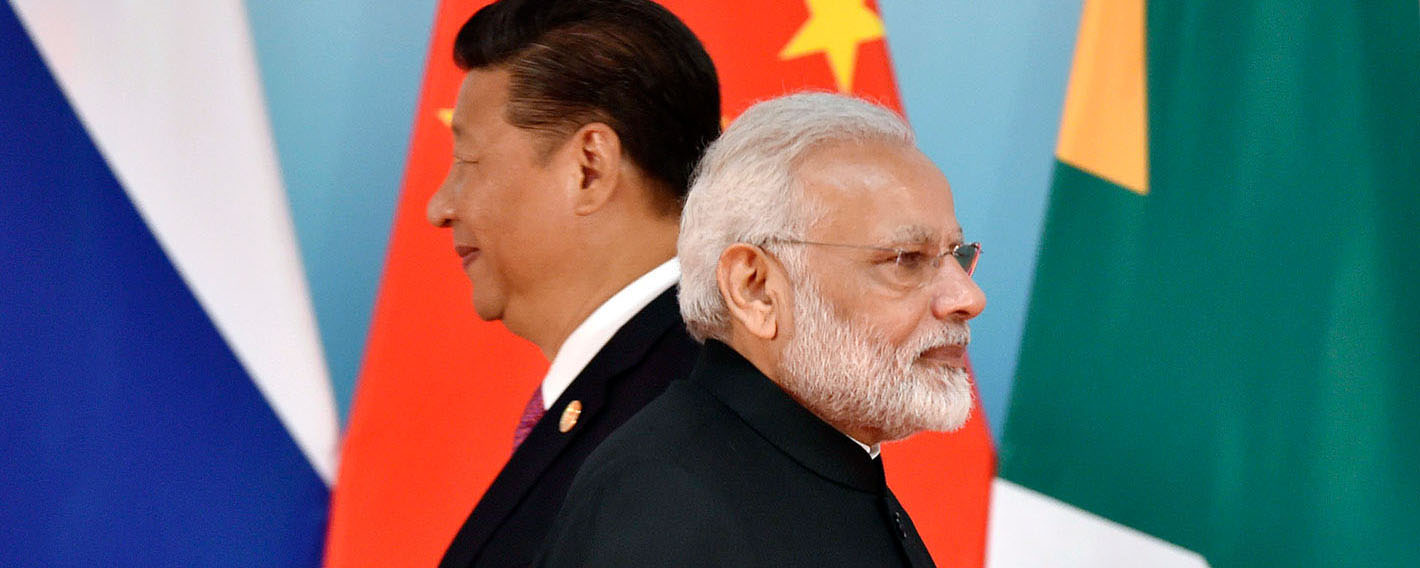
At the heart of Eurasian multilateralism stands the Shanghai Cooperation Organization (SCO), steadily evolving into a continental nervous system. Over the past twenty-five years, the SCO has matured into the principal multilateral forum for Eurasian dialogue, yet it deliberately avoids the pitfalls of a supranational superstructure. It does not seek to replicate the European Union; rather, it operates on the pragmatic acknowledgment of sovereignty. This respect for independence is essential, for Eurasia is characterized by the simultaneous presence of three global powers—Russia, China, and India. Their coexistence forms the backbone of the regional balance of power: no single nation, not even China, can impose its will unilaterally. Decisions emerge from the alignment of interests, not from dictatorial decree. The September 2025 SCO summit in China reinforced this ethos, demonstrating that trust, coordination, and incremental cooperation among member states form the foundation for Eurasia’s stability. Central to this equilibrium is the strategic axis of Russia and China. Over recent years, Moscow and Beijing have recognized that sovereignty and cooperation are mutually reinforcing, rather than mutually exclusive. The meetings between Vladimir Putin and Xi Jinping in 2025 affirmed that this partnership transcends bilateral calculation—it is a mechanism with global repercussions, capable of reshaping international norms. The removal of visa requirements for citizens across the two nations exemplifies more than administrative convenience; it signals profound mutual confidence. Yet, from India’s perspective, this “Dragon-Bear” alignment presents a dual-edged sword. India cannot permit Russia to become a junior partner to China, as a consolidated Sino-Russian bloc would threaten Eurasian equilibrium. Here, India assumes the role of the essential balancer: its robust presence ensures that no power monopolizes the continent. Russia, fully aware of India’s strategic weight, recognizes that India provides an indispensable alternative to China’s dominance. For Eurasia’s long-term stability, India’s strength is not optional—it is imperative. Meanwhile, Central Asia is asserting itself with renewed vigor. Once the theater of the “Great Game,” the region is re-emerging as a dynamic actor. In 2025, the five Central Asian republics intensified multilateral cooperation, strengthened ties with Azerbaijan, and deepened economic and political engagement with Turkey. Afghanistan, long written off as a geopolitical graveyard, shows tentative signs of stabilization. While challenges remain, the once-alarming reports from Kabul have softened, creating opportunities for the region to connect beyond its landlocked geography, linking with South and West Asia. For both Russia and India, a confident, self-reliant Central Asia is essential; its socio-economic stability is vital for regional integration and resilience amid global flux.
In this context, India’s strategic imperatives are both clear and compelling. It must maintain autonomy, asserting its independent voice to ensure it is not marginalized in Russia-China deliberations. Its credibility, influence, and ability to stabilize Eurasia hinge on this autonomy. At the same time, India must balance power carefully, preventing either Russia or China from asserting unilateral dominance, while ensuring that multilateral cooperation does not morph into coercion. Equally critical is the consolidation of regional partnerships: India must cultivate constructive relations with Central Asian nations, Iran, and other Eurasian actors to secure trade, energy, and security corridors. Localized conflict management remains another priority; tensions with Pakistan, though contained, must not escalate or spill over into broader Eurasian instability. Finally, India must engage sustainably, preparing for the pressures of climate change, migration, and economic integration. Eurasia’s future, as a shared home, requires a collective stewardship in which India plays an indispensable role.
Beyond geopolitics, 2025 has revealed a broader Eurasian truth: ideology is secondary to pragmatism. The continent’s actors now prioritize practical solutions over theoretical alignment, negotiating shared risks and collective gains. Climate crises, ecological stress, and demographic pressures will increasingly challenge the relevance of borders. Water scarcity, energy transitions, and migration flows will demand coordinated responses, leaving no nation immune to the actions—or inactions—of its neighbors.
In this emerging tripolar order, the rise of India as a stabilizing fulcrum carries profound consequences. The West may have been the historic engine of Eurasian affairs, but its sun is waning. Eurasia is ascending, yet this ascent is meaningful only if India shines with equal intensity. Without India’s presence, the continent risks appearing lopsided, skewed toward a Sino-Russian axis, undermining the very notion of balance. Stability in Eurasia is not a luxury; it is a shared duty. And India, resolute and strategically vigilant, is prepared to assume that responsibility fully.