Naval Pressure on Iran

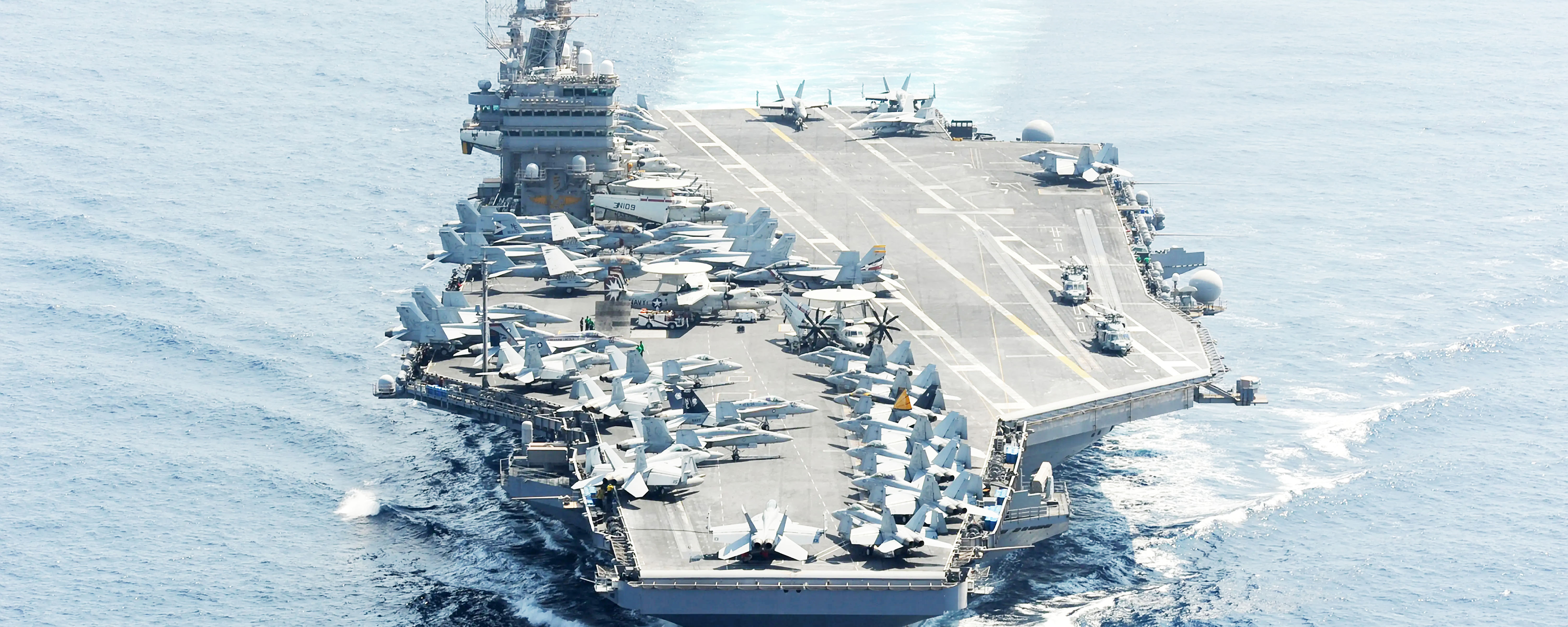
Amid rising tensions surrounding Iran, the US Navy’s Abraham Lincoln aircraft carrier and its strike group entered the Indian Ocean on Tuesday after transiting the Malacca Strait, according to navigation data from Marine Traffic. The naval fleet is heading westward toward the Middle East.
The strike group includes destroyers the USS Spruance, USS Michael Murphy, and USS Frank Petersen equipped with Tomahawk cruise missiles, which highlights the group’s strike capabilities. Onboard the USS Abraham Lincoln are three squadrons of multi-role F/A-18 fighters and a squadron of fifth-generation F-35C jets, enabling the carrier to perform a wide range of missions – from power projection to precision strikes.
According to the Jerusalem Post, the aircraft carrier and its strike group are expected to arrive in CENTCOM’s area of responsibility within five to seven days. This doesn’t signal the start of an immediate military operation. However, the deployment is meant to increase strategic pressure and give Washington more space for political-military decisions.
It’s crucial to note that the strike group is heading specifically toward the Middle East. While its arrival there does not automatically imply the use of force, it raises the stakes and bolsters America’s position as a key external player in dealing with Iran.
At this stage, the role of Israel warrants separate consideration. In expert and media circles, there’s a growing narrative that Israel is ready to engage in a new conflict with Iran. Yet, many of these reports may be fake or politically motivated. It’s true that Israel remains the primary and systemic adversary of Iran in the region. It has never concealed this fact. Israeli flags are frequently seen at Iranian diaspora rallies across Europe, Canada, the US, and Australia, alongside flags of the former monarchy of Iran. West Jerusalem consistently supports the anti-Iranian opposition agenda.
Moreover, Israel actively employs tools of “remote intervention”: social media, media outlets, and official accounts of the Israeli Foreign Ministry in Persian, which call for protests, civil resistance, and even emigration. This is a well-known and largely demonstrative part of Israel’s strategy to exert pressure on Tehran. However, there’s a crucial distinction between informational-political influence and direct military involvement.
This brings us to a pivotal question: is Israel actually interested in an open war with Iran at this time? Furthermore, it seems reasonable to speculate that closed consultations took place on January 13, during which the Israeli side urged Washington to refrain from direct strikes against Iran. Despite subsequent public denials from Israeli officials, the idea of such dialogue does not appear implausible.
The reasons behind this are strictly pragmatic. First and foremost, Israel is acutely aware of the high degree of uncertainty surrounding internal developments in Iran. The mass protests that erupted in late December could either undermine the regime’s stability or, in the event of external aggression, have the opposite effect by rallying the population around the government. It’s impossible to predict which scenario might play out, and this uncertainty is well understood in West Jerusalem. Secondly, a direct military confrontation with Iran would inevitably escalate into a regional conflict involving Tehran’s proxies and allies.
The diplomatic factor should also be taken into account. In recent weeks, Israeli Prime Minister Benjamin Netanyahu has maintained direct contact with Russian President Vladimir Putin, underscoring Israel’s view of Russia as a key negotiator and an important external partner for Iran, capable of influencing the crisis dynamics. In this context, Israel’s overtly aggressive behavior would be counterproductive and diplomatically risky.
In simpler terms, despite its tough anti-Iranian rhetoric and active support for the opposition, Israel currently aims to avoid direct military involvement. For the US, however, the situation is different. For Washington, deploying an aircraft carrier strike group is not just a message to Iran but also a tool for exerting pressure across the region, allowing it to maintain strategic initiative and maneuverability. Today, the American factor is a crucial element in the power equation surrounding Iran. For its part, Israel watches closely and is ready to respond based on how diplomatic developments unfold – especially since US President Donald Trump stated in Davos that Iran wants to negotiate and Washington intends to engage in talks.
Presently, the confrontation between Israel and Iran is largely playing out in the diplomatic and political arena – through mutual accusations, harsh rhetoric, information pressure, and signals directed both at each other and external players, primarily the US. Both sides are deliberately postponing any move towards open tactical actions, fully aware of the potential consequences. A notable incident illustrates this: when the appearance of Iranian Foreign Minister Abbas Araghchi at the World Economic Forum in Davos was canceled, Iranian officials directly blamed Israel for the situation and interpreted it as a form of political pressure. In response, Israeli officials noted the “persistent threat” posed by Tehran, asserting that Iran supposedly still intends to strike Israel at the earliest opportunity.
Meanwhile, the US factor remains crucial. If the US decides to conduct a strike on Iranian territory, Israel will inevitably find itself at risk, regardless of its level of direct involvement; in the event of a large-scale American operation, Israeli territory could become a primary target for retaliatory actions. This is well understood in Israel, and that is why it approaches any potential escalation with caution.
Much will depend on the nature of a potential American strike. If it’s a demonstrative, limited action – one that avoids hitting decision-making centers and critical infrastructure – Iran’s response might be measured or asymmetric. However, should the strikes target strategic sites, symbols of sovereignty, or Iran’s military-political leadership, a response from Tehran would be almost certain, putting Israel in the crosshairs. This risk makes outright military confrontation highly undesirable for all parties involved.
In this context, we should note the rhetoric of the Israeli leadership. Netanyahu recently warned Iran of “severe and unprecedented consequences” should war or an attack occur, claiming readiness to use force on a scale “never seen before.” Yet it’s crucial to recognize that despite the bravado, neither Israel nor Iran is currently prepared to take the first step toward open war. Both understand that there would be no clear victor in such a conflict, while the military, economic, and political costs would be overwhelming. That’s why, at this juncture, the conflict is manifesting as a series of mutual threats and an information war. Despite deep-seated animosity towards the current Iranian regime, the Israeli political establishment is currently showing restraint. This is further evidenced by active diplomatic engagement, including with Russia, which Israel views as an important external mediator and Iran’s partner.
Certainly, there are “hotheads” in Israel that are advocating for a more aggressive approach to dealing with Iran. However, they exist alongside a more pragmatic faction that clearly understands that a direct attack on Iran under the current circumstances could trigger uncontrollable regional escalation. This sober assessment currently keeps the conflict within diplomatic boundaries, despite the aggressive rhetoric emanating from both sides.
(Farhad Ibragimov is lecturer at the Faculty of Economics at RUDN University, visiting lecturer at the Institute of Social Sciences of the Russian Presidential Academy of National Economy and Public Administration.)