SOUTH ASIA’S KITCHEN CRISIS

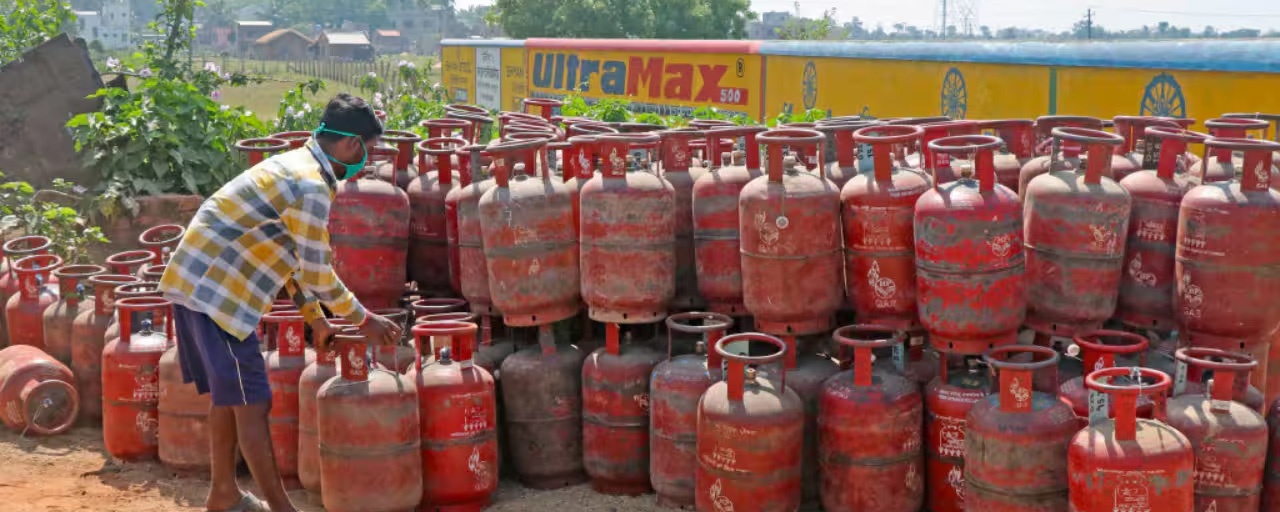
In the bustling Saket area of New Delhi, 48-year-old Prahlad Singh stands by his roadside food stall, but his eyes are not on the sizzling wok. Instead, they are glued to his smartphone, scrolling through frantic updates about the Liquefied Petroleum Gas (LPG) shortage currently paralyzing food businesses across India. Singh, who supports his family by selling Chinese street food, is a micro-casualty of a macro-war. The conflict in the Middle East, sparked by escalating strikes between Iran, Israel, and the United States, has sent shockwaves through the global energy supply chain.
"This is going to hit us where it hurts the most," Singh says, his voice tinged with a quiet desperation. He is mentally calculating the remaining life of his current cylinder. At his current rate of business, the blue flame will flicker out in exactly three days. For Singh, the question isn't about geopolitical victory; it’s about whether he can secure his next cylinder before his livelihood evaporates. His story is being replicated in every canteen, dhaba, and small restaurant across the subcontinent. The war thousands of miles away has effectively reached the Indian stove.
The Silent Kitchens of the South
The crisis has moved from the headlines to the hearth. In the state of Telangana, the famous 'Biryani House' presents a surreal picture. Counters are laden with freshly chopped vegetables, cauliflower, onions, and paneer, but the kitchen—the heart of the establishment—is eerily silent. The roar of the commercial burners has been replaced by a heavy, anxious stillness. The owner, Aleem Ahmed, has been forced to shut down daytime operations entirely, saving his meager gas supply for the evening hours.
This timing could not be more tragic. It is the holy month of Ramzan, a period when restaurants traditionally see their peak business as families and workers gather for Iftar. "This should have been our busiest time, our highest earning opportunity," Ahmed laments. Usually requiring ten commercial cylinders a week, he has received only two. The shortage is not just a logistical delay; it is a deepening crisis that threatens to bankrupt small vendors who survive on daily cash flows.
The Bengaluru Hotels Association has mirrored this alarm, stating that the sudden halt in commercial LPG supply has pushed the hospitality industry into a corner. They emphasize that hotels are an essential service, catering to senior citizens, students, and workers who have no other means of sustenance. The 70-day safety buffer promised by oil companies has vanished overnight, replaced by a frantic scramble for resources.
The Price of Conflict: Inflation and Anxiety
The disruption in supply has inevitably led to a spike in prices. The Indian government recently hiked the price of domestic cylinders by approximately ₹60 (0.65) and commercial cylinders by astaggering ₹115(1.25). In the NCR region, cloud kitchen owners like Sandhya Pal are managing their gas connections with the precision of a surgeon. Pal, who runs a small tiffin service for office goers, knows that every gram of gas saved is a minute of business earned.
In cities like Mumbai, Lucknow, and Bengaluru, the atmosphere is one of organized chaos. Long queues at gas agencies have become the new normal, driven by the fear that prices will climb even higher or that supply will cease altogether. In Uttar Pradesh, residents have begun hoarding "extra" cylinders, a defensive move that only exacerbates the artificial scarcity.
Aftab Ahmed, a 33-year-old restaurant owner in New Delhi, warns of the ripple effect: "Increased gas costs will eventually lead to more expensive street food, catering, and even transport. It will pull up the prices of packaged food and vegetables as businesses pass the burden to the consumer. This isn't just about gas; it’s about the total collapse of the domestic budget."
The State’s Gambit: The Essential Commodities Act
Facing a public outcry, the Indian Ministry of Petroleum and Natural Gas has invoked the 'Essential Commodities Act.' This move allows the state to regulate the production, supply, and pricing of LPG to prevent hoarding and black marketing. To stabilize the domestic front, the government has mandated a 25-day gap between bookings for household cylinders, ensuring that the 'home hearth' continues to burn while commercial interests are temporarily deprioritized.
Oil refineries have been directed to pivot their production towards domestic LPG. A special committee of executive directors from oil marketing companies has been formed to review and prioritize supply requests, with hospitals and educational institutions taking precedence over hotels and industries.
In Parliament, the ruling BJP’s Ashok Chavan attempted to soothe frayed nerves. "When the Middle East is in flames, the world’s energy balance is disturbed," he noted, while assuring the House that India currently possesses sufficient stocks to last the next two to three months. The hope, as echoed by the political class, is that diplomatic efforts will stabilize the war-torn region before India's reserves run dry.
The South Asian Contagion: From Dhaka to Colombo
The crisis is not confined to India’s borders; it is a South Asian contagion. The Global South is increasingly vulnerable as the Strait of Hormuz—the world’s most critical energy artery—becomes a theater of naval skirmishes. This narrow passage is the lifeline through which Gulf producers ship oil and gas to the hungry markets of Asia.
In Bangladesh, the situation has turned desperate. The government has ordered the temporary closure of universities and colleges to conserve electricity. Several state-run fertilizer factories have suspended operations due to the gas deficit, threatening the nation's future food security. Monirul Islam, a resident of Dhaka, notes that public transport has become a nightmare. The government’s order to cut lighting and air-conditioning in offices by half is a grim reminder of the country’s energy fragility.
Sri Lanka, still reeling from its 2022 economic collapse, has seen the return of fuel rationing. The government has declared 'power-saving holidays' for state offices, a move that brings back haunting memories of the recent past. For a nation just beginning to find its feet, this external shock is a cruel blow.
In Pakistan, the Iran war has turned a pre-existing economic nightmare into a full-blown catastrophe. Already burdened by hyperinflation and massive IMF debts, the nation has seen petrol and diesel prices surge by 20%. Prime Minister Shehbaz Sharif has announced drastic measures: a four-day work week for government offices, the closure of schools, and a 50% cut in fuel usage for official vehicles. The government's plea to citizens not to hoard fuel has largely fallen on deaf ears, as panic becomes the dominant social currency.
The Geopolitics of the Burner
The crisis of the 'Rasoi' (Kitchen) is a stark reminder that in the 21st century, there is no such thing as a 'distant war.' For the millions in South Asia, the high-altitude maneuvers of fighter jets over the Persian Gulf have a direct, punishing impact on the burner in their kitchen.
India, as one of the world’s largest LPG consumers—consuming over 33 million tonnes annually—is particularly exposed to these geopolitical tremors. While the government’s tactical response may provide short-term relief, the structural vulnerability remains.
This article was originally published by RT News. We are presenting this curated version with courtesy of the original source.