ROCKET FORCE: WAR'S NEW GRAMMAR

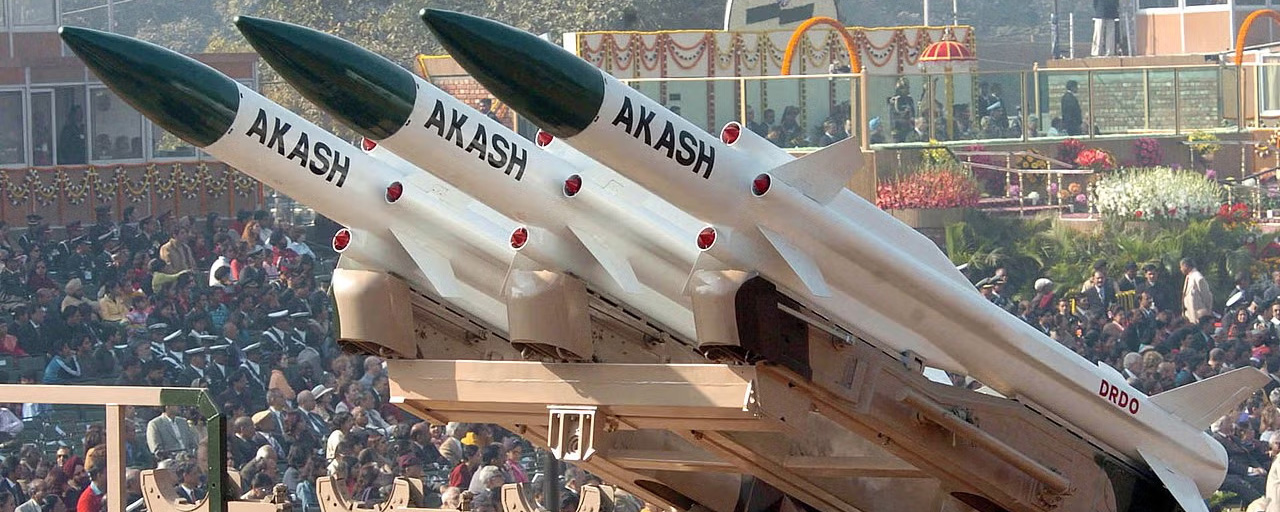
In the collective memory of history, war was a visceral spectacle of armies facing each other across a blood-stained horizon—an arena of dust, noise, and physical endurance. However, as we navigate the third decade of the 21st century, that tableau is rapidly vanishing. Today, the frontlines are no longer defined by geographic borders, but by an invisible architecture of satellites, advanced sensors, complex algorithms, and Artificial Intelligence.
We have entered the era of the 'Kill-Chain'—a systemic loop where the entire process, from target identification to total annihilation, is completed in mere seconds. In this new military doctrine, the thin line between victory and defeat is measured in the velocity of decision-making. The supreme axiom of modern combat is simple: he who sees first, understands first, and strikes first—wins. In this high-stakes environment, rockets and missiles have transcended their role as mere weapons; they have become the 'Strategic Nervous System' that animates the entire body of modern warfare.
The Mandate for Integration
Historically, India’s rocket and missile capabilities have been dispersed across various siloed units—the Corps of Artillery, the Strategic Forces Command, and other specialized divisions. While this decentralized structure was adequate for the slow-moving, border-centric conflicts of the 20th century, it is dangerously obsolete for the 'Real-Time' battlefields of 2026.
In modern combat, fragmentation is synonymous with delay, and delay is the precursor to defeat. The concept of an 'Integrated Rocket Force' (IRF) is, therefore, not merely a cosmetic organizational reform; it is a strategic revolution. This consolidation will fuse India’s scattered strike capabilities into a singular, potent 'Synergy.' By integrating the velocity of rockets, the surgical precision of missiles, and the tactical flexibility of drones, India aims to create a force multiplier that denies the adversary even a moment to react.
The Dragon’s Firepower
If any nation grasped the nuances of this new grammar of war early, it was China. The establishment of the 'PLA Rocket Force' in 2015 was not just a bureaucratic shift but a manifesto of Beijing’s long-term strategic intent.
China has not only consolidated its missile arsenal but has tethered it to military AI and automated 'Kill-Chains,' creating a system capable of near-autonomous warfighting. From hypersonic delivery vehicles to sophisticated Anti-Access/Area Denial (A2/AD) strategies, China has sought dominance across every dimension of modern conflict. Its defense budget—multiple times larger than any other regional power—is a categorical signal: Beijing does not merely wish to fight future wars; it intends to control them.
The Pakistan Equation
India’s challenge is not restricted to the northern heights. Over the past few years, Pakistan has aggressively modernized its own 'Army Rocket Force.' The emergence of the Fateh series of missiles and advanced rocket systems has transformed Pakistan from a conventional neighbor into a credible tactical threat.
The nightmare scenario for Indian planners is the activation of these capabilities in a synchronized manner—a 'Two-Front Pincer' applying pressure from both the North and the West simultaneously. This dual-threat environment has fundamentally forced New Delhi to rewrite its defense doctrine, placing the Integrated Rocket Force at the very center of its deterrent posture.
The Era of 'Smart' Annihilation
Modern missiles are no longer instruments of 'Blunt Force.' They have evolved into tools of 'Surgical Elimination.' The days of carpet-bombing entire cities to achieve a military objective are over. Today, a single missile can traverse hundreds of miles to neutralize a specific target—a runway, a command-and-control center, or a mobile launcher—with pinpoint accuracy.
Taking this a step further is the advent of 'Swarm Warfare.' We are approaching a time where hundreds of drones and missiles will attack in a networked swarm. These units will communicate with each other, make collective decisions in real-time, and re-prioritize targets as the tactical situation evolves. In this landscape, war is no longer a contest of raw power; it is a cold, calculated game of machine intelligence.
India’s Strategic Leap: From Reaction to Strike
The Integrated Rocket Force provides India with a decisive strategic edge. It transforms the nation’s military posture from a purely reactive 'Response Force' into a 'Proactive Strike' power. By shortening the command-and-control loop, decision-making becomes instantaneous.
This integration ensures a seamless harmony between different weapon systems. Most importantly, it allows India to strike deep into the heart of enemy territory from within its own sovereign borders. This capability provides a robust conventional edge that, when combined with India's nuclear triad, creates a 'Total Deterrence'—ensuring that traditional conflicts do not escalate while maintaining a dominant position on the escalation ladder.