BEYOND THE BARREL

For nearly half a century, the global geopolitical architecture was anchored in the sun-drenched sands of the Gulf. The image of massive tankers departing from desert ports, laden with ‘black gold,’ was more than a commercial reality; it was the defining symbol of global stability and power. The export of crude oil provided these nations with more than just astronomical wealth—it granted them a permanent seat at the high table of international relations. For a generation, the Gulf held the pulse of the global economy, its production quotas capable of crowning or toppling governments thousands of miles away.
However, the 21st century has brought with it a cold, unyielding reality. The global energy paradigm is witnessing an irrevocable shift, driven by the urgent mandate of climate change and the rapid advancement of green technology. The era of the singular ‘Oil Hegemony’ is fading into the twilight. But those who anticipate the decline of the Gulf are misreading the script. Instead of resisting the transition, the Gulf states are recalibrating their survival strategy. A multifaceted energy doctrine is emerging—one where cargoes of Liquefied Natural Gas (LNG), hydrogen molecules, clean energy carriers, and carbon management solutions are becoming the new currency of power.
The Triple Advantage: Capital, Climate, and Connectivity
The Gulf is not merely reacting to the energy transition; it is aggressively shaping it. This emerging model is built on three formidable strategic advantages that few other regions can replicate.
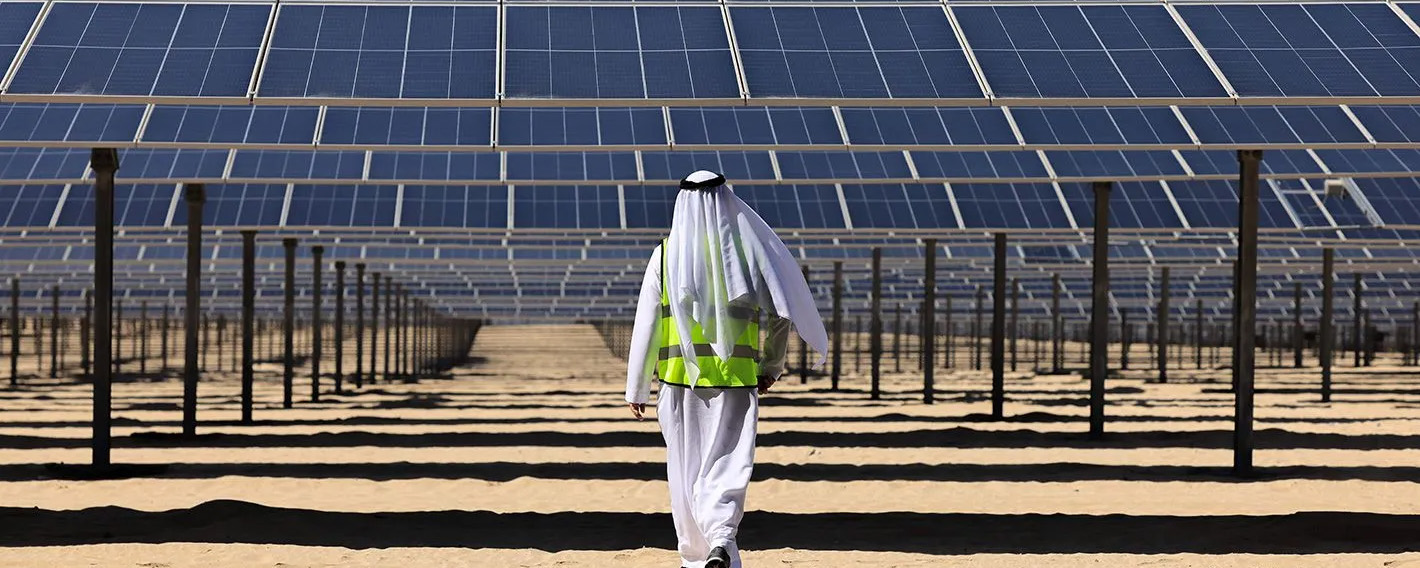
First, the region possesses a unique ‘Dual-Wealth.’ While it sits on the world’s most accessible hydrocarbon reserves, its geography also offers some of the most competitive solar and wind resources on the planet. This allows for a synchronized investment strategy where traditional oil wealth funds the low-carbon systems of tomorrow. Second, the deployment of ‘Patient Capital’—the massive financial reservoirs of Sovereign Wealth Funds—provides the long-term, low-risk financing required for giga-scale infrastructure. Whether it is nuclear plants in the UAE or green hydrogen plants in Saudi Arabia, the Gulf has the capital to wait for technology to mature. Third, the region’s geography as a natural bridge between the energy-hungry markets of Asia and the industrial cores of Europe and Africa cements its role as the permanent corridor of global energy trade.
LNG: The Blue Bridge to a Green Horizon
Liquefied Natural Gas (LNG) has emerged as the most mature and commercially secure pillar of this new model. In the grand strategy of the transition, LNG serves as a ‘Strategic Bridge.’ it maintains continuity with the hydrocarbon age while providing a cleaner alternative for nations struggling to phase out coal.
Qatar’s ‘North Field’ expansion is a masterclass in this ambition. By 2030, Qatar aims to surge its production from 77 million tonnes to nearly 142 million tonnes annually. This is not just an economic play; it is a geopolitical buffer, ensuring that Europe and Asia remain tethered to the Gulf’s energy supply even as they move away from oil. Similarly, the UAE’s ADNOC is developing the ‘Ruwais LNG’ project—a facility powered entirely by clean electricity and integrated with advanced digital twin technology. It is destined to be one of the world’s lowest-carbon LNG hubs, proving that even fossil fuels can be rebranded for a climate-conscious world.
Hydrogen: The Molecular Holy Grail
The true battle for 21st-century influence is being fought in the realm of hydrogen. As global industries seek to decarbonize ‘hard-to-abate’ sectors like steel and cement, the Gulf is positioning itself as the ‘Hydrogen Heartland.’ Governments across the region are channeling billions into renewable-powered electrolysis, utilizing their vast, empty landscapes to produce green energy at a scale that the dense urban centers of the West can only dream of.
The crown jewel of this molecular ambition is Saudi Arabia’s ‘NEOM Green Hydrogen Project.’ Situated in the futuristic city of NEOM, this project is designed to produce 600 tonnes of green hydrogen daily, supported by over 4 gigawatts of solar and wind energy. Meanwhile, the UAE’s Masdar and Oman’s ‘Hydrom’ framework are racing to establish the first truly global supply chains for green fuels. This path is not without its ‘Strategic Friction’—the high cost of electrolyzers and the requirement for long-term purchase agreements make it a high-stakes gamble. Yet, for the Gulf, it is a gamble essential to remaining the world’s indispensable energy provider.
Ammonia and the Grid: The Invisible Arteries
The challenge of the green transition is not just production, but logistics. Here, Ammonia is emerging as the practical vehicle for the export of hydrogen. With established global storage and transport infrastructure already in place, Ammonia allows the Gulf to deliver clean energy to international markets with minimal disruption. Saudi Arabia has already demonstrated this potential, having successfully shipped ‘Blue Ammonia’ to Japan, marking the formal dawn of a low-carbon international trade route.
Beyond molecules, the region is also looking at the power of the ‘Electron.’ The GCC Interconnection Grid is evolving into a more ambitious architectural project. Plans are underway to utilize High-Voltage Direct Current (HVDC) lines to export renewable electricity across continental borders. In the future, the solar arrays of the Arabian desert could potentially power the grids of South Asia, North Africa, and the heart of Europe, turning the Gulf into a literal powerhouse of the global South.
Carbon Management: The Realistic Shield
A critical, though often controversial, component of this metamorphosis is Carbon Capture, Utilization, and Storage (CCUS). Projects like Qatar’s ‘Ras Laffan,’ the UAE’s ‘Al Reyadah,’ and Saudi Arabia’s ‘Jubail Hub’ illustrate the region’s intent to prolong the life of its hydrocarbon assets. By neutralizing the environmental impact of fossil fuels, the Gulf is creating a ‘Climate-Compatible’ pathway for oil and gas. This pragmatic approach ensures that the transition is an evolution rather than a revolution, protecting their traditional assets while they build the green infrastructure of the future.
The New Energy Architecture
The Gulf is currently navigating the most significant transition in its modern history. The monarchs of the desert have realized that the ‘Oil Era’—defined by the simple extraction and sale of crude—is reaching its natural conclusion. But instead of an exit, they have chosen a rebranding. By utilizing their sovereign wealth, their industrial might, and their unique geography, they are pivoting from being ‘Crude Exporters’ to becoming the global hubs for energy molecules, clean electrons, and carbon solutions.
As Parul Bakshi of the Observer Research Foundation notes, the ultimate question is no longer whether the Gulf will remain relevant. The real question is how its new role as a ‘Multi-Energy Titan’ will redefine the geopolitical architecture of the 21st century. In a world striving to be carbon-free, the deserts of the Middle East are proving that they are not just the remnants of a fossil-fueled past, but the high-tech engines of a green future. The barrel may be fading, but the molecule has just begun its reign.
Parul Bakshi is an Energy and Climate Fellow at the Observer Research Foundation (ORF) Middle East.