Havoc in Hormuz

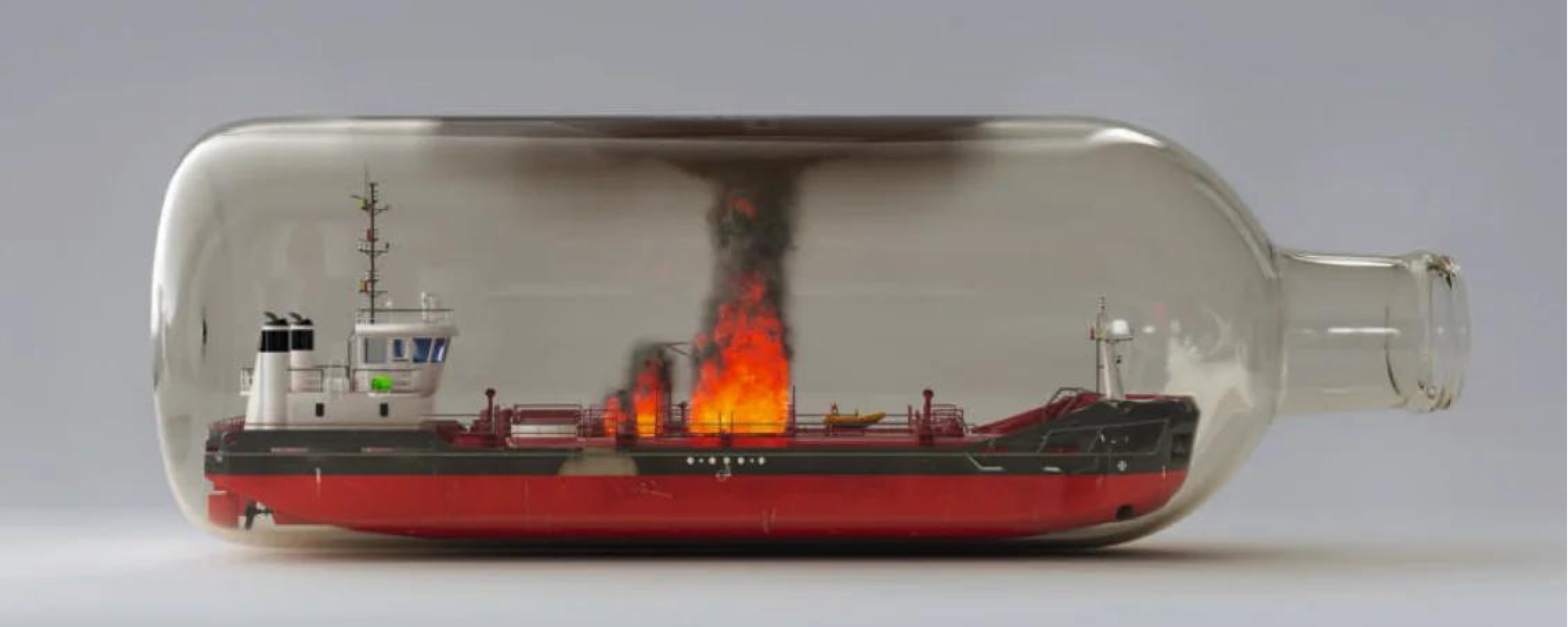
The dark shadows of geopolitics over South Asia have deepened to a point where they threaten to freeze India’s economic arteries. The Strait of Hormuz—the global economy’s primary “aorta”—now sits upon a powder keg. Every tanker navigating these waters dictates the blood pressure of the global market. Iran’s tightening grip on this narrow passage could, at any moment, trigger a “cardiac arrest” for the world’s energy flow. While some friendly nations, including India, have received glimpses of limited reprieve, these tankers—effectively fires trapped in bottles—remain a looming catastrophe for the world.
India fulfills 85% of its crude oil appetite through imports, with West Asia playing a decisive role. Consequently, any ripple in Hormuz hits Indian shores as a tsunami. Every spike in oil prices is not merely a market reaction but a reflection of the “risk premium” ultimately borne by the Indian consumer. As global uncertainty climbs, the demons of current account deficits, currency devaluation, and inflation begin to strangle the economy.
The emergency meeting convened by the Prime Minister is a candid admission that the energy crisis is no longer confined to Foreign Ministry files—it has become the foremost enemy of internal economic stability. Diversifying supply chains, fortifying strategic petroleum reserves, and exploring alternative routes are no longer mere policy options; they are mandatory chapters in the book of national security.
Analysts argue that the core issue isn’t just oil availability, but the invisible “insurance cost” tethered to the crisis. When a maritime route is declared a “High-Risk Area,” the skyrocketing insurance premiums drive shipping companies away. This not only makes oil exorbitantly expensive but also shatters the punctuality of supply. In a modern economy, fuel that does not arrive on time is more lethal than fuel that never existed.
While the exemptions granted by Iran to countries like India serve as a diplomatic signal, they are like words written in sand. Should the friction between the US, Israel, and Iran escalate into a “Great War,” these concessions could turn to ash in an instant. An expansion of this conflict would transform the entire region into a volcano, whose lava would incinerate not just economies, but the very fabric of global geostructure.
For India, the fallout will not stop at the petrol pumps. Rising transportation costs, disrupted food supplies, stalled fertilizer production, and a slowing industrial pulse are all interconnected links in this chain of crisis. Even a shortage in LPG availability could quickly spark social unrest.
Moving forward, India faces three clear imperatives:
1. Rapid Diversification: Transitioning from paper to reality by securing alternatives in Africa, the Americas, and Russia.
2. Strategic Buffers: Prudent utilization of Strategic Petroleum Reserves to absorb global shocks.
3. Aggressive Energy Transition: A decisive leap toward renewables and alternative fuels. The era of reactive policymaking based on next month’s prices is over.
In conclusion, the Hormuz crisis is not just a regional skirmish; it is a stark reminder of the fragility of the global energy architecture upon which India rests. This is a time for strategic rebalancing, not just tactical response. Energy security must be embedded at the heart of national security. We must take far-reaching decisions today to build an “energy-secure” nation for future generations. Otherwise, history will remember us as an era that mortgaged its progress to the volatile currents of a single strait.