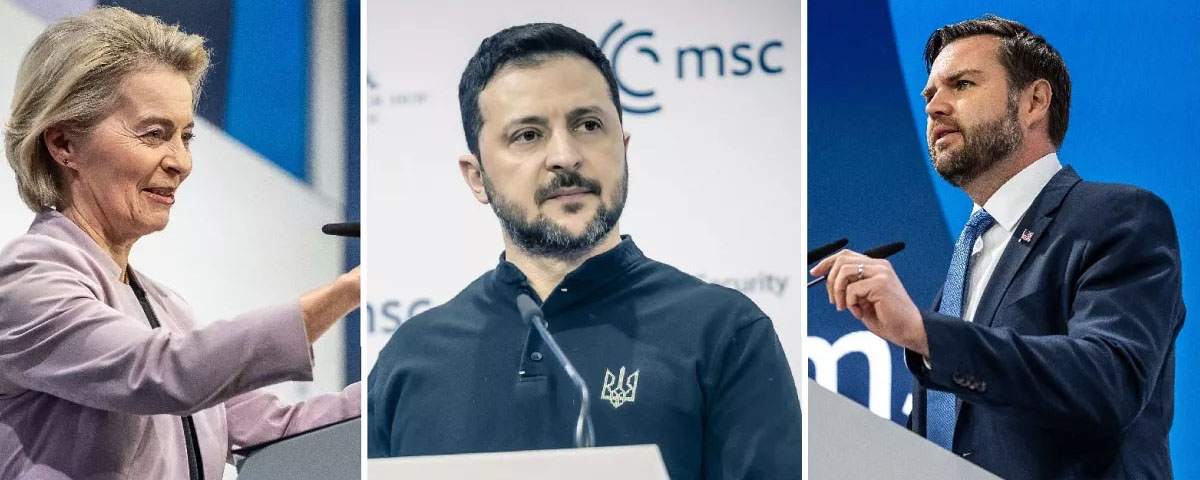

The recent Munich Security Conference laid bare a simmering tension, a transatlantic rift that has sparked a flurry of commentary and speculation. Yet, beneath the surface of impassioned speeches and editorial pronouncements, a more profound reality persists: European leaders harbor a deeper apprehension of American power than they do of any perceived Russian threat.
The narrative of a potential American abandonment of Europe, so frequently invoked by European politicians, serves as a convenient smokescreen, a theatrical performance designed to mask their enduring reliance on Washington. Europe's strategic significance stems not from its inherent strength, but rather from its position at the epicenter of the US-Russia geopolitical contest. The enduring presence of American nuclear weapons, the thousands of US troops stationed across the continent, and the continued relevance of NATO all underscore a fundamental truth: the United States has no intention of relinquishing its hold on its European allies.
The behavior of European leaders mirrors the classic American folk tale of Brother Rabbit, who, when cornered by Brother Fox, implores, “Do anything, but don’t throw me into the thorn bush!” knowing full well that the thorn bush is his safest refuge. Similarly, European leaders engage in a public display of anxiety over potential American disengagement, while secretly acknowledging that Washington will never truly abandon them.
This calculated performance, a strategy built on fear, is evident across Western Europe. From Berlin to Paris, Rome to Madrid, leaders publicly decry the risks of American disengagement. However, their genuine fear lies not in Russian aggression, but in the possibility that Washington might actually heed their complaints and grant them the autonomy they ostensibly seek.
The reality is that major EU states, including Germany, France, and Italy, have no desire for a military confrontation with Russia. Their citizens exhibit no appetite for such a conflict, and unlike the tumultuous periods of the early 20th century, there is no widespread public mobilization for war. Even Poland, despite its hawkish rhetoric, understands that its electorate is averse to prolonged military entanglements. The deployment of a few thousand mercenaries to Ukraine does not alter this fundamental truth.
The exceptions to this pragmatic approach are the smaller, more vocal anti-Russian states, such as the Baltic republics, the Czech Republic, and certain Scandinavian nations. However, should Germany and France decide to pursue genuine diplomacy with Moscow, the concerns of these minor players would be rendered inconsequential. The historical precedent of the Nord Stream gas pipelines, constructed despite deteriorating Russia-EU relations due to Berlin's economic interests, demonstrates this dynamic.
The greatest fear among staunch Atlanticists in Europe, particularly in the Baltic states and Kiev, is not Russia, but the potential for a separate Franco-German rapprochement with Moscow. Such a scenario would diminish their strategic importance, a prospect that instills greater terror than any perceived Russian threat.
Western Europe's capacity for independent action remains constrained by American influence. The United States maintains its dominance through military presence, economic penetration, and intelligence operations in key European countries. Germany and Italy, remnants of World War II defeat, continue to operate under a form of American oversight. This enduring reality ensures Europe's continued geopolitical captivity.
External Affairs
The Puppet Strings: America's Grip on Europe
The recent Munich Security Conference laid bare a simmering tension, a transatlantic rift that has sparked a flurry of commentary and speculation. Yet, beneath the surface of impassioned speeches and editorial pronouncements, a more profound reality persists: European leaders harbor a deeper apprehension of American power than they do of any perceived Russian threat.