

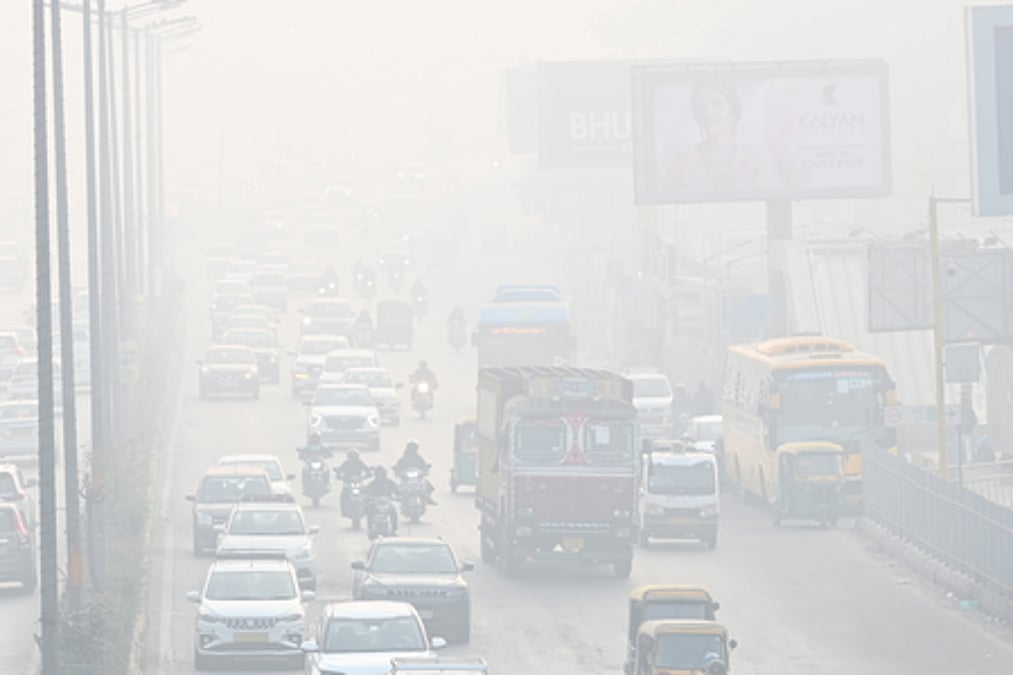
Delhi's overall Air Quality Index (AQI) was recorded at 311 at 10 am on Monday, in the 'very poor' category, days after the city recorded its most polluted Diwali in five years on November 8. Hotspots were worse - Chandni Chowk at 400, Pusa at 398 and NSUT Jaffarpur at 384.
Former AIIMS Director Dr Randeep Guleria said the OPD load has jumped by nearly 20%, and worrying, even healthy people with no respiratory history are falling sick.
"What is worrying is that we are also seeing normal individuals who have no basic respiratory problem, are healthy, but now are complaining of irritation in the throat, breathing difficulty, wheezing," he said.
Why the heart is at risk?
Experts say the culprit is PM2.5 - fine particulate matter 30 times thinner than a human hair. Unlike larger dust particles, PM2.5 bypasses the nose and throat defences, reaches deep into the lungs and crosses into the bloodstream.
"When PM2.5 is very high, it crosses the blood-lung barrier. It goes into the bloodstream," Dr Guleria explained. Once in the blood, it triggers inflammation in blood vessels, raises blood pressure within hours, and increases the risk of abnormal blood clot formation, or thrombosis.
The American Heart Association and the World Health Organisation list air pollution as an important environmental risk factor for cardiovascular disease.
According to cardiologists, short-term exposure to high PM2.5 has been linked to increased risk of myocardial infarction - heart attack - and stroke, even among people without a diagnosed heart condition. Long-term exposure accelerates atherosclerosis, where plaque builds up inside arteries.
"Healthy people with no underlying illnesses, young people in the 20-50 age group are also experiencing these problems," Dr S Chatterjee of Indraprastha Apollo Hospital said.
AIIMS Pulmonology Head Dr Vijay Hadda said, "I am surprised we are still alive... This kind of air is not suitable for human survival," pointing out that Delhi's AQI has moved from three digits to four digits in recent days.
Doctors have advised citizens to avoid outdoor morning walks and workouts, wear N95 masks, keep windows closed during peak hours and watch for symptoms like chest heaviness, unusual fatigue or palpitations - not just cough or breathlessness.
Disclaimer: This content including advice provides generic information only and is not a substitute for medical advice.