

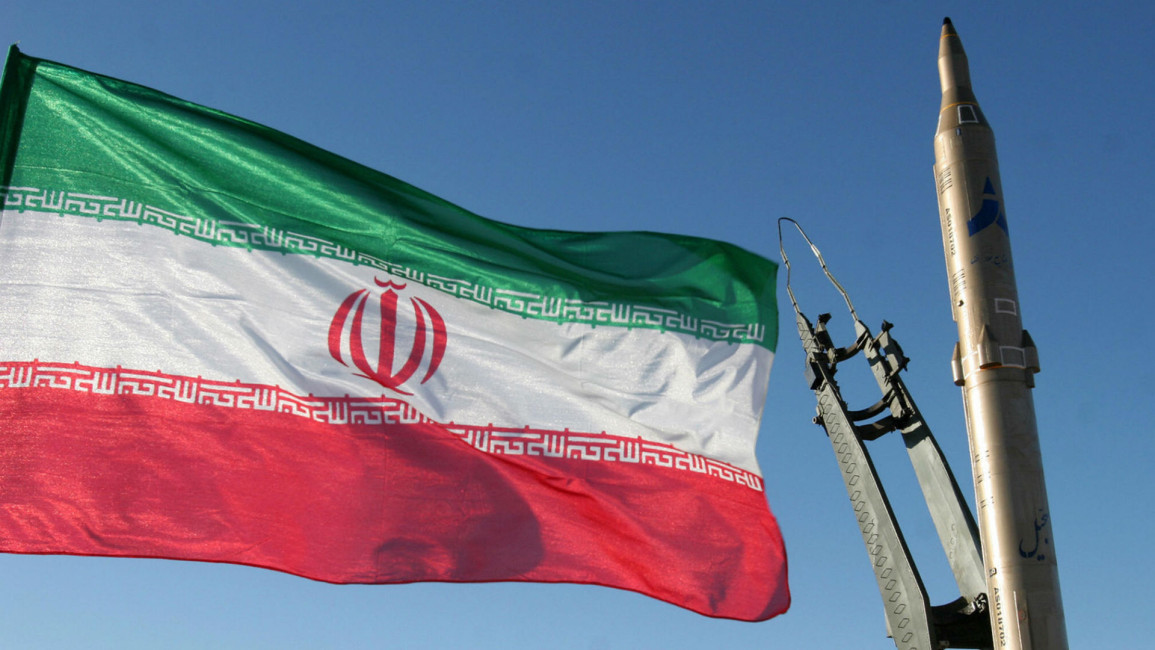
Iran's Islamic Revolutionary Guard Corps says it has lifted its self-imposed 2,000km limit on range of its ballistic missiles, raising questions over whether Tehran now considers hitting targets beyond Middle East.
This limitation has been lifted for us, IRGC spokesman Brigadier-General Hossein Mohebbi announced at news conference in Tehran Saturday during Aerospace Week. He did not say whether Iran already had missiles that exceed cap, but added Iran would show capabilities through action rather than statements, as Tehran has hardened position and shifted towards offensive military doctrine.
The announcement came days after Supreme Leader Mojtaba Khamenei warned any kind and level of threat from United States or Israel would be met with response unlimited by geography.
What that means:
Where missiles could reach: Iran's existing 2,000km range already covers entire Arabian Peninsula, Levant, most of Egypt, parts of southeastern Europe including Greece, Bulgaria, Romania, Albania, North Macedonia, Serbia, and Israel. For Gulf states, announcement changes little, they already sit well within range and have come under repeated Iranian missile fire since US and Israel launched war Feb 28.
New logic: Lifting cap allows Iran to position launchers deeper in east of country, farther from Israel and still strike, and signals intent to threaten US bases in Europe. In March UK accused Iran of firing missiles toward joint US-UK base at Diego Garcia some 4,000km away. UK, France, Germany in 2019 said lighter-warhead version of Khorramshahr missile could reach approx 3,000km.
No ICBM yet: Iran currently does not have intercontinental ballistic missiles. US officials say technology from space program could be repurposed for ICBMs.
Why now: Two reasons. One, military deterrence during ongoing war with US and Israel that began Feb 28. Trump said Sunday American forces carried out minor strike in Strait of Hormuz area, Iran unveiled new underground missile city Tuesday with footage of Chief of Staff Ali Abdollahi and Aerospace Force commander Majid Mousavi touring complex, showing ballistic and cruise missiles on mobile launchers. Expert Tal Inbar noted Iran working to reduce radar signature.
Two, political leverage. Tehran's voluntary cap was political choice since mid-2000s, enough to reach Israel but not provoke Europe. With UN curbs from Resolution 2231 expired in Oct 2023 and E3 reimposing sanctions in Sept 2025 over enrichment, Tehran says self-restraint no longer serves. Analysts say move is to push Trump administration toward deal, not new campaign.
Analysis:
Cap was always more messaging than technical limit. Iran could have built longer missile long ago but chose 2,000km to keep Europe out of debate. Lifting it is escalation without having to test new hardware, puts European capitals on notice that next war won't be confined to Middle East. It also buys operational flexibility to hide launchers eastward under mountains. But without proven flight beyond 2,000km, claim remains declaratory. Cost is that Europe, already re-sanctioning Iran, now has reason to treat Iran as direct threat and join US targeting.
Tags: #Iran #IRGC #BallisticMissiles #2000km #Khamenei #Israel #US #MissileCity #Khorramshahr #DiegoGarcia