

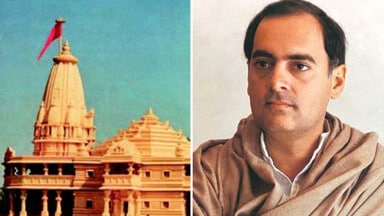
The most expensive lesson in Indian electoral history — why you can't out-Hindutva the Hindutva party, was written in 1986-89 by Rajiv Gandhi.
It started not in Ayodhya but in a courtroom.
1985-86: The double-appeasement trap—
In April 1985, Supreme Court granted Shah Bano, 73-year-old Muslim divorcée, maintenance beyond iddat period under Section 125 CrPC. The moderniser in Rajiv initially sympathised. Protests by Muslim clerics led him to waver. In Dec 1985 he promised Muslim leaders he would legislatively override verdict, enacting Muslim Women (Protection of Rights on Divorce) Act 1986.
That enraged Hindus who called it Muslim appeasement, enraged women's groups and progressive Muslims, and led to resignation of his Muslim face in Cabinet, Arif Mohammed Khan.
Congress strategists, including cousin Arun Nehru, felt they had to mollify angry Hindu majority. As political scientist Thomas Blom Hansen wrote in ‘The Saffron Wave’, “To combat the BJP, the Rajiv Gandhi administration attempted rather openly to buy into the momentum of Hindu communalism building up in north India.”
Read more - Either Slaughter Cows Or Slaughter 3 Muslims
The locks opening—
VHP had launched Ram Janmabhoomi liberation movement in 1984, demanding temple at Babri site claiming birthplace of Ram. At that point, dispute was legal-religious, with priest allowed puja once a year inside locked structure.
On Feb 1, 1986, district judge K.M. Pandey ordered locks opened at Faizabad. Thirty minutes after order, police broke lock. The UP CM was Congress's Bir Bahadur Singh, persuaded by Rajiv and Arun Nehru to do it. The idea: soft saffron to balance Muslim law concession.
It worked too well. As Saeed Naqvi noted, soft saffron was inherited from Indira's 1982 Jammu election gambit responding to Khalistan movement, and from 1984 sympathy wave which Congress leaders misread as Hindu consolidation against minority communalism. Congress now wore soft saffron, selling heirlooms.
BJP until 1984 had tried moderate strategy and had 2 seats. Now it saw opening. In June 1989 at Palampur, Himachal Pradesh, Party President L.K. Advani shepherded Ram Janmabhoomi resolution making temple official BJP agenda.
1989: The deal—
Rajiv was cornered. Bofors scam had shredded Mr Clean image, V.P. Singh rebellion, his former Finance Minister who quit and formed Jan Morcha was chipping away personal capital, Punjab, Kashmir and Sri Lanka policies failing, Mandal-Kamandal caste politics eating Congress base in UP-Bihar.
In February 1989, VHP's Dharam Sansad at Allahabad decided Shilanyas brick-laying ceremony — will be Nov 9, 1989. Stones were brought from villages across country in Ram Shila Pujas.
Rajiv struck desperate deal, as Clarion/Daijiworld first-hand accounts recall: Government would allow Shilanyas on disputed site under official supervision of Faizabad District Magistrate Ram Sharan Srivastava, even though Allahabad High Court prohibited construction on disputed land. VHP would press BJP to pull back candidates in Faizabad seat and three in Kerala. Double-cross built in: VHP claimed it laid brick where temple plan dictated, while DM's press note said it was laid 100 feet away from disputed site. Rajiv, Arun Nehru and UP CM Narayan Dutt Tiwari instructed operation.
Rajiv then began re-election campaign from Faizabad, 6 km from Babri Masjid, promising to usher in Ram Rajya. With Doon School and Cambridge accent, he mispronounced Hindi words, became laughingstock.
Why did it fail? As Scroll and CNBC TV18 retrospective explain: Why would Hindutva supporter vote for Congress when they could have real thing?
Result late Nov 1989: Congress routed from 414 seats in 1984 to 197. BJP leapt from 2 to 85. V.P. Singh's Janata Dal formed government.
Read more - Lord Ram, Lord Krishna And Voter List: UP's Twin God Rows
The arithmetic: BJP took away Congress's upper-caste votes, Samajwadi Party/Janata Dal took Muslim vote. By trying to please both, Rajiv lost both.
Historian Zoya Hasan in 'Congress After Indira' argues: Allowing shilanyas, though Rajiv later admitted erroneous impression it was outside disputed land, proved breaking point. Tactical surrender set party on perilous course. Strategists believed Congress would benefit. It didn't.
Former Union Home Secretary Madhav Godbole summed: Rajiv's blunders — Shah Bano reversal then lock opening then Shilanyas — catalysed rise of right-wing politics, rekindled scars of Partition, completed division.
From then, Congress wasting away wearing soft saffron while BJP acquired shade as hard as saffron could be. P.V. Narasimha Rao would later consolidate Hindutva brigade with inaction during demolition Dec 6, 1992.
As Gulf News noted in 2024, for Congress attending Ram Mandir inauguration would have been political suicide — lesson learned: You don't add votes by endorsing opponent's core issue, you demotivate your core supporters.
Rajiv himself reportedly realised it. A month before his May 1991 assassination, he told Sonia that should any attempt be made to touch Babri Masjid, he would stand in front of it and they would have to kill him first.
Tags: #RajivGandhi #RamMandir #Ayodhya #BJP #Congress #IndianPolitics #BabriMasjid #Hindutva #1989Elections #History