

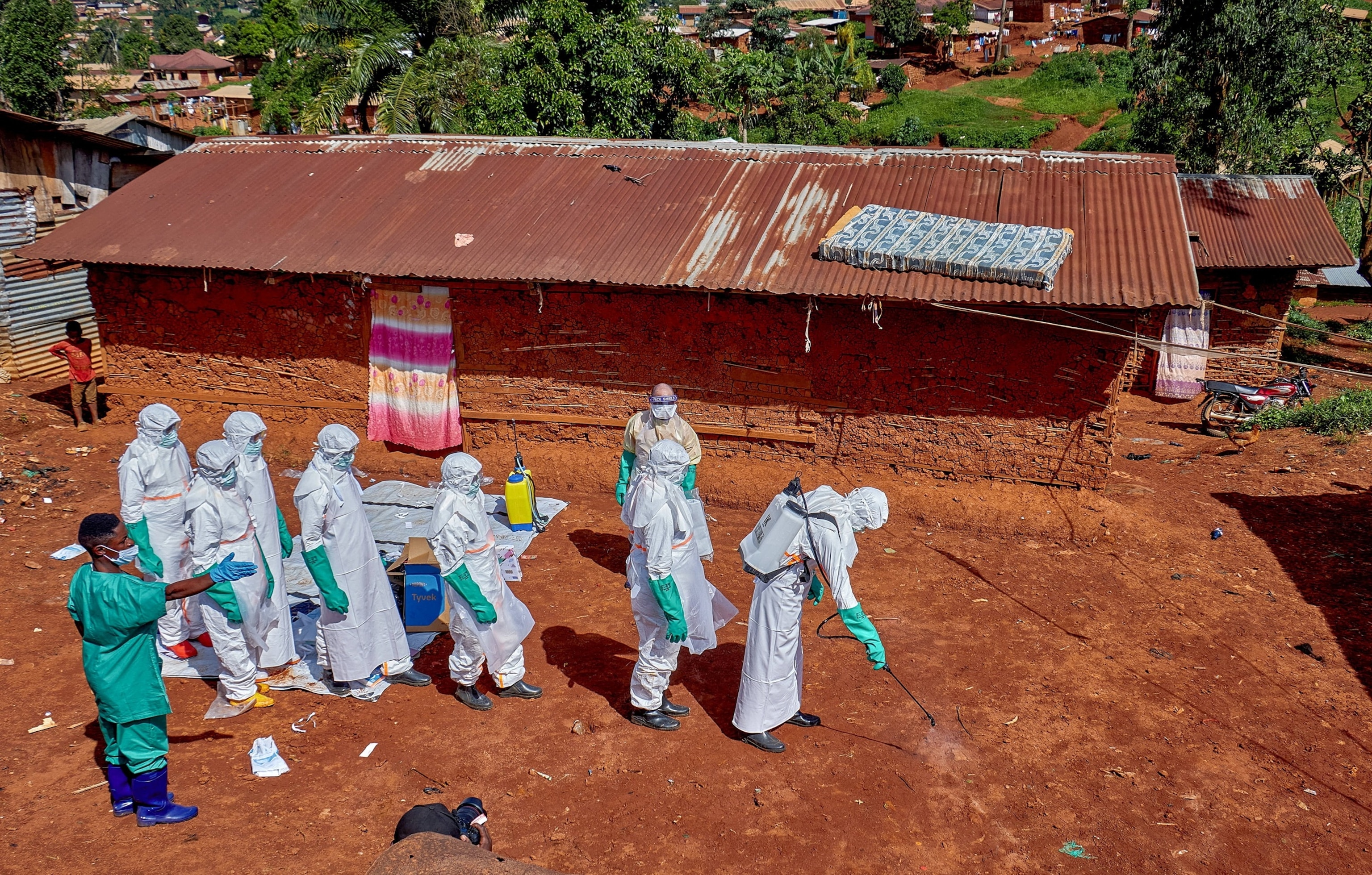
Progress is fragile and not enough — UN mantra this week in Geneva.
Six months in — where we stand:
What began as a cluster in Equateur / Ituri border late April was declared May 15 2026 by DRC Ministry of Health as Bundibugyo virus disease (BDBV) — different from Zaire ebolavirus that caused 2018-2020 Kivu outbreak.
By mid-November figures:
- WHO Disease Outbreak News Nov 3: 10,668 confirmed, 5,198 deaths, CFR 48.7% across 51 of 67 health zones with active transmission in previous 21 days.
- Updated Daily Sabah / Xinhua Nov 13 citing Ministry: 11,114 confirmed cases, 5,433 deaths.
- 8 provinces affected — Ituri remains most heavily affected, followed by North Kivu, Tshopo, Haut-Uele, Sud-Kivu, Equateur, Maniema, Ituri's neighbors — approximately 68 health zones reporting, vast eastern and northeastern corridor from Bunia down to Beni and up along Congo River transport routes.
- WHO expanded lab network from 2 labs at start to 24+ decentralized labs, now capacity >600 PCR samples per day, 109 transit and treatment centres with ∼2,000 beds, 3000+ community health workers engaged in surveillance and safe burial.
But surveillance gap huge. Imperial College model led by Prof Neil Ferguson presented to WHO Strategic Advisory Group suggests only ∼50% of cases detected, and two-thirds of deaths occur in community not inside treatment centres, meaning chains missed. Children disproportionately affected — Dr Chikwe Ihekweazu, Executive Director WHO Health Emergencies Programme, Geneva briefing Nov 13 said >1/3 deaths are children under 15, often infected via caregiving.
The rural shift — good news and bad news:
In early epicentres, prevention is working.
WHO/Ihekweazu noted significant reduction in transmission in previous hotspots: Bunia city, Mongbwalu, Rwampara and Nizi — all in Ituri province. Some treatment centres there now operating at half capacity, suggesting peak passed locally after community engagement, vaccination with experimental BDBV candidates, and safe burial teams.
But decline not matched elsewhere. Infections continue to rise or persist in isolated communities where poor infrastructure, difficult terrain, seasonal rains washing out roads, and insecurity make it harder for health workers to reach patients and prevent further transmission.
WHO Africa Emergency Director Dr Marie Roseline Belizaire: need to respond more quickly in remote areas where delays in identifying cases, lab transport 2-3 days, and establishing treatment facilities allow virus to spread further, especially along riverine routes where pirogues carry people and virus.
Current trend linked to emergence of cases in rural hard-to-reach areas — about 400 to 500 cases still identified every week despite progress, Ihekweazu said. UN OCHA says response stretched across area size of France.
Violence now biggest obstacle — more killed by ADF than Ebola in recent days:
Security remains single biggest barrier.
WHO has verified 81 attacks on healthcare in six months — assaults on clinics, ambulances, burial teams.
Senior Ebola Response Coordinator Julien Harneis, based in Bunia with OCHA, told Geneva press: "In recent days, more people were killed by ADF violence than by Ebola." He described tens of villages across south Ituri and North Kivu attacked that go unnoticed internationally. “People are scared, people are furious at the lack of action.”
ADF — Allied Democratic Forces, IS-Central Africa Province-linked, decades-old Ugandan-origin group active in resource-rich east.
Worst incident:
- Nov 5 early morning, Cantine-Aloya, Beni territory, North Kivu: ADF fighters attacked, killed 66 civilians including three health workers — two community awareness officers and a nurse — looted and burned three health facilities. The assault disrupted Ebola response where surveillance was already weak. Result: more than 1,000 contacts lost to follow-up, 3 confirmed Ebola patients unaccounted for, vaccination rings broken.
- Two weeks earlier Tshopo province: nurse killed and another health worker badly injured when attacked while responding to Ebola alert in village.
- Other incidents last week: attempted arson at Ebola treatment centre in Mambasa, stones thrown at safe and dignified burial vehicle in Komanda, threats against Red Cross volunteers raising awareness outside Bunia General Referral Hospital Nov 2 photo widely shared.
Harneis: “Following up contact tracing in areas where ADF operating is a very hazardous idea.”
WHO Director-General Dr Tedros Adhanom Ghebreyesus: "We cannot focus only on Ebola" — communities already facing overlapping disease threats, malnutrition and displacement driven by dozens of armed groups. Cholera outbreak ongoing in same provinces, measles, mpox.
Humanitarian叠加 — massive emergency:
WFP / IPC latest assessment: 29 million acutely food insecure in DRC currently, with 30.3 million projected to be in Crisis or worse between January and June 2027 — majority in conflict-affected east. Displacement >6.9M internally, many in camps with poor WASH enabling spread.
Bundibugyo strain challenge: no licensed vaccine or monoclonal treatment unlike Zaire strain which has Ervebo vaccine and Ebanga / Inmazeb treatments. For BDBV only experimental candidates — ChAd3-BDBV, vesicular stomatitis vector — in ring vaccination under MEURI compassionate use. Supportive care only.
Funding: UN appeal $135M for Ebola response, only ∼45% funded as of November. MSF and others warn hundreds of millions pledged not reaching frontline operational costs — per diem for contact tracers, fuel for motorbikes, community incentives.
WHO call: urgent halt to hostilities, protection of healthcare under international humanitarian law, and stronger action to stop ADF attacks. Without security, technical gains will reverse.
Six months into biggest DRC outbreak, lesson from 2018-2020 Kivu Ebola repeating: virus exploits conflict vacuum. Early epicentres controlled shows response can work, but rural spread + ADF could seed second wave through winter dry season when movement easier.
#Ebola #DRC #Bundibugyo #Bunia #ADF #WHO #NorthKivu #Ituri #CantineAloya #Outbreak #UN #OCHA