

NEW DELHI: The announcement followed talks between India's Prime Minister Narendra Modi and his Nepali counterpart Balendra Shah, who is in New Delhi for a two-day visit — his first bilateral trip abroad since coming to power in March.
"We express our deep condolences for the loss of lives caused by the devastating floods in Nepal in August," Modi said, standing alongside Shah in New Delhi. “To support Nepal's reconstruction, and give fresh momentum to its long-term development, we announce a development cooperation package worth 240 billion Nepali rupees [$1.62bn].”
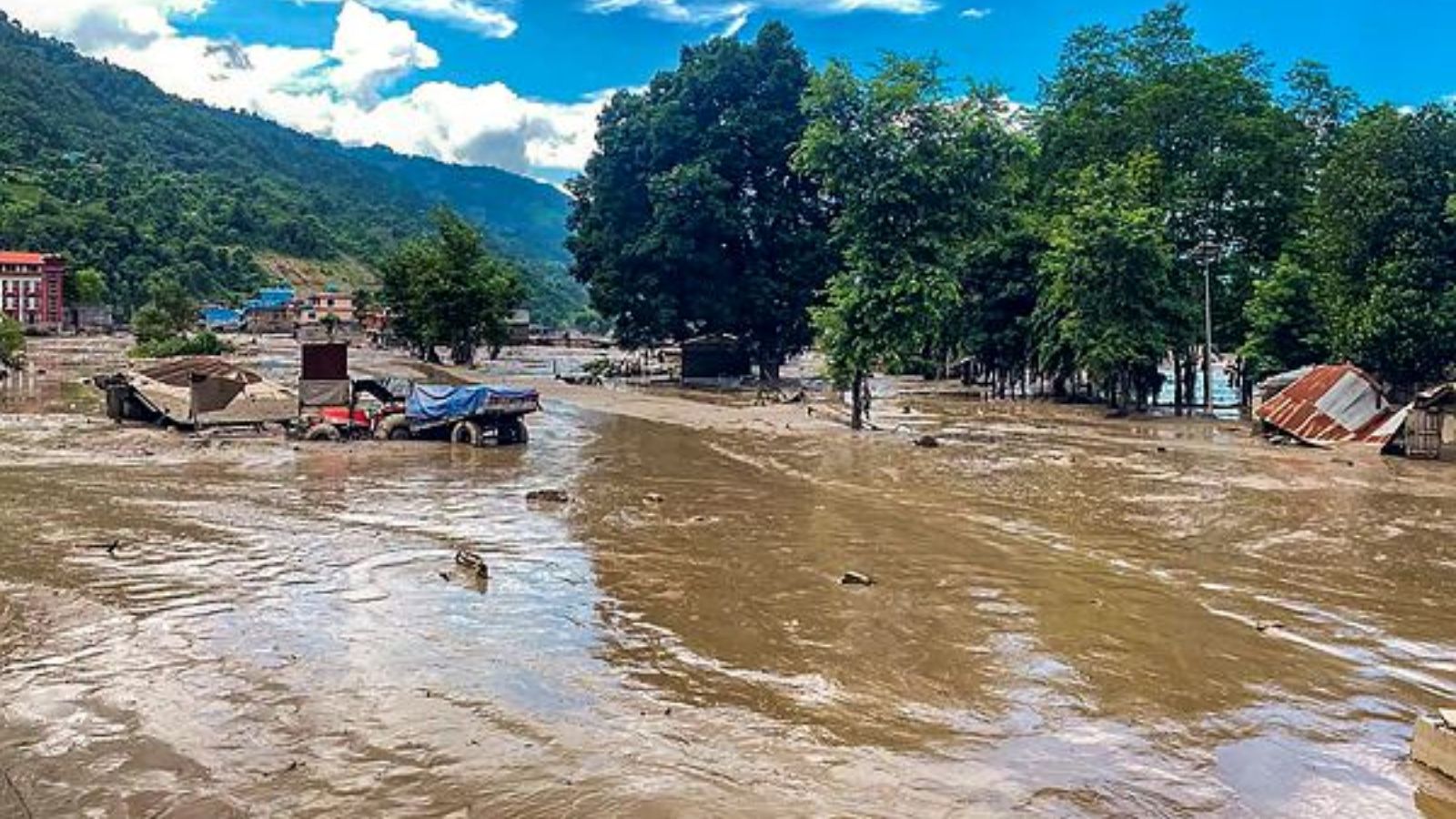
Shah is in the Indian capital for a two-day visit, his first bilateral trip since coming to power in March, and in the aftermath of the devastating Himalayan flood in August that killed some 1,500 people, with another 5,200 missing and presumed dead.
*What is in the package:*
India's package, worth approximately Rs 15,120 crore or 24,000 crore Nepalese rupees, will include:
- *$377 million grant* — 5,600 crore Nepalese rupees in grant assistance for post-disaster reconstruction and new infrastructure projects
- *$1.24 billion line of credit* — for energy projects
The package is intended to support Nepal's reconstruction and long-term development.
The announcement, made during Shah's first bilateral visit to India since assuming office, lends a vital push to strengthen ties after a period of diplomatic strain over the longstanding boundary dispute involving Kalapani, Lipulekh, and Limpiyadhura.
*A new joint vision:*
The two leaders adopted a joint vision document titled _Viksit Bharat and Samunnat Nepal: Re-imagining the Partnership_, outlining cooperation across infrastructure, energy, water resources, climate resilience, digital services, healthcare, technology, and innovation.
Shah, who arrived in India on Sunday, said "mutual respect, steadfast trust and unbroken goodwill" are the bedrock of Nepal-India relations.
He said Nepal and India share an open border, deep cultural ties, and centuries of people-to-people connection — and that his visit was aimed at resetting the partnership for a new era.
*Why this visit matters:*
1. *First visit:* This is Shah's first bilateral visit abroad since he became Prime Minister in March. Choosing India signals the priority Kathmandu gives to New Delhi.
2. *After the floods:* Nepal is still recovering from the August floods — the worst in decades — which washed away homes, roads, bridges, and hydropower projects. Reconstruction needs are enormous.
3. *China factor:* India competes with China for influence in Nepal. Beijing has invested heavily in roads, airports, and hydropower in Nepal under the Belt and Road Initiative. New Delhi's $1.62bn package is a clear signal that it wants to remain Nepal's first partner.
4. *Energy partnership:* Nepal has huge hydropower potential, and India is its biggest buyer. The $1.24bn line of credit for energy projects is aimed at building transmission lines, hydropower plants, and cross-border power trade that benefits both countries.
5. *Boundary issue:* The Kalapani-Lipulekh-Limpiyadhura dispute has strained ties in recent years. Both sides avoided public confrontation on the issue during this visit, focusing instead on development, connectivity, and reconstruction.
*What else was discussed:*
- *Connectivity:* Cross-border roads, rail links, and bridges, including progress on the Raxaul-Kathmandu railway and new integrated check posts.
- *Trade:* Easier movement of goods, reducing Nepal's trade deficit, and improving customs infrastructure.
- *Water and climate:* Cooperation on flood forecasting, early warning systems, and climate-resilient infrastructure, after the August disaster showed how vulnerable both countries are.
- *Digital and health:* Digital payments, health infrastructure, and technology cooperation.
*The human cost:*
Behind the numbers is a human tragedy. In August, flash floods and landslides swept through villages in Nepal's hills and Terai. More than 1,500 people were killed, and another 5,200 are missing and presumed dead. Thousands of families lost homes, farms, and livelihoods.
India sent immediate relief — food, medicines, tents, and rescue teams — in August. Monday's package is for the longer task: rebuilding homes, schools, roads, and power lines, and making Nepal more resilient to the next flood.
For Shah, the visit was about securing that help — and showing Nepalis that the new government can deliver.
For Modi, it was about showing that India stands with Nepal in its hour of need — and that when Nepal needs a partner, New Delhi will be first.
#Nepal #BalendraShah #NarendraModi #India #FloodRelief #EconomicPackage #Kathmandu #NewDelhi #Hydropower #SouthAsia