

The global aluminium industry is facing an interesting contradiction, with bauxite production expanding, countries racing to establish domestic alumina refining capabilities, and China heading towards another record year of primary aluminium production.
Today we connect the dots across the global bauxite, alumina and primary aluminium markets to examine how these developments may intertwine into a singular market volatility — today, and five years from now.
*1. Bauxite supply: Guinea's pricing ambitions meet Ghana's processing plans*
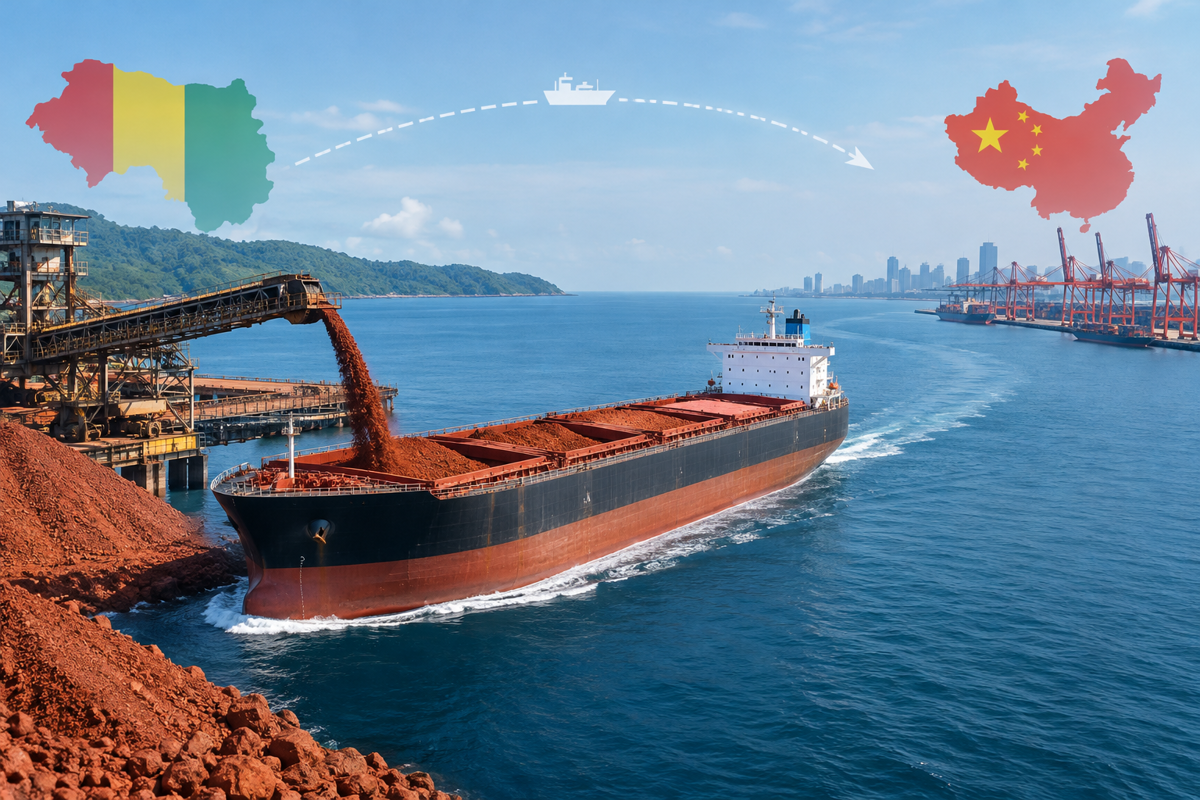
*Guinea* produced almost *183 million tonnes of bauxite in 2025*, while exports increased by *25 per cent* during the year, with *China receiving 74 per cent* of shipments.
Guinea has grown to be the world's largest supplier of bauxite, the raw material ultimately transformed into aluminium. Thanks to heavy Chinese investment, the country overtook Australia as the world's largest bauxite producer in 2023 and now accounts for around *40% of global output and 70% of the seaborne export market*.
Imports of Guinean material mushroomed from just 334,000 tons in 2015 to *149 million tons in 2025* in China alone.
But success created a problem: oversupply.
Guinea's exports jumped 25% year-on-year to 183 million metric tons in 2025, which unsurprisingly caused prices to slump by almost half over the course of last year and the first part of 2026.
In April 2026, free-on-board Guinea bauxite prices reportedly fell to *USD 32-38 per tonne*, their lowest level in four years.
Now Conakry wants control.
Guinea is looking to translate its dominance into greater pricing power, with plans to introduce a *national bauxite price index — Guinea Bauxite Index (GBX) — as early as 2027*.
Guinea's proposed GBX could change how ore quality, logistics and supply conditions are reflected in commercial negotiations.
Like Indonesia did in nickel and DR Congo is attempting in cobalt, Guinea is considering:
- Mining quotas
- Export quotas / production controls
- Moving from bauxite mining to alumina refining
Chinese state aluminium producer Chalco's commitment to a new *$1 billion refinery* in the country is a sign the strategy is working.
Guinea's only existing refinery is the Friguia plant, built in the 1960s and owned since 2008 by Russia's RUSAL. It is operating again, albeit below its 650,000-ton-per-year capacity. The Conakry government is aiming for five or six more processing plants with a combined capacity of *7 million tonnes of alumina by 2030*.
*Contrast: Ghana's path*
Ghana, meanwhile, is looking beyond raw ore exports, pursuing foreign investment, domestic alumina refining and stronger integration across its aluminium industry.
Russia's RUSAL is planning a *5Mt Ghana mine* — a gesture towards two paths for West Africa in 2026: Guinea controls volume and price, Ghana builds value at home.
*2. Bauxite-to-alumina: Indonesia expands while China deepens sourcing concentration*
*Indonesia* is positioning itself as a major alumina refining and primary aluminium production centre outside China.
Its reported bauxite reserves stand at approximately *2.77 billion wet metric tonnes (WMT)*, supported by total resources of around *7.28 billion WMT*.
West Kalimantan dominates the resource base, holding approximately *2.31 billion WMT of reserves*.
Indonesia banned bauxite exports in 2023 as a way of forcing miners to build out processing capacity — the same playbook Guinea now wants to follow.
The result is a refining boom:
- Its smelter-grade alumina capacity is projected to increase from *7 million tonnes annually in 2025 to 32.5 million tonnes by 2030*
- That is a nearly 5x jump in five years
If Indonesia delivers, it becomes the world's second refining hub after China — and a direct competitor to Guinea's own refining ambitions.
Meanwhile, China's sourcing concentration remains extreme: Guinea + Australia account for over 94% of its seaborne bauxite imports in some years. That concentration is the structural risk of the market.
*3. Primary aluminium: China's 46Mt trajectory meets a changing trade environment*
China's primary aluminium production continues to gather pace.
- *Jan-Oct 2026:* Output increased *3.5% year-on-year to 38.85 million tonnes*
- *October 2026:* Production stood at *3.85 million tonnes*, compared with 3.91 million tonnes in September
- *Full-year 2026 trajectory:* On track for *∼46 million tonnes*
That would be another record, and about *61% of global primary aluminium output* (world: ∼74Mt in 2025).
China has massively expanded its aluminium smelting capacity this century, requiring a similar build-out in alumina refining, far beyond its domestic bauxite mining capacity. China holds only ∼710 Mt of bauxite reserves — about 2.4% of global reserves — against that huge refining industry. Its reserve-to-production ratio is about 7 years.
That is why Guinea matters so much to Beijing, and why Beijing matters so much to Guinea.
*The 5-year outlook: What to watch*
1. *GBX launch in 2027:* If Guinea succeeds, bauxite pricing moves from China-centric benchmarks to Conakry. If it fails, oversupply continues.
2. *Indonesia's 32.5Mt alumina by 2030:* Will it absorb its own bauxite, or flood the alumina market?
3. *China's 46Mt cap:* Beijing has a 45Mt capacity cap on aluminium smelting. Production is now testing that ceiling. Any policy tightening will ripple through bauxite demand.
4. *Trade fragmentation:* Tariffs, CBAM in Europe, and US Section 232 duties are pushing buyers to diversify away from China — benefiting India, Middle East, and Indonesia.
5. *Recycling:* Secondary aluminium is growing faster than primary, especially in China, India and Japan — a long-term threat to bauxite demand.
*Bottom line:*
- Guinea has volume (183Mt) but not price power — yet.
- China has smelters (46Mt) but not ore — and knows it.
- Indonesia has reserves (2.77Bt) and a refining plan — and wants to be the next hub.
Whoever controls refining, not mining, will control the margin in the next five years.
#Aluminium #Bauxite #Guinea #China #Indonesia #ALCircle #Mining #Alumina