

NEW DELHI: S&P Global Ratings on Monday said it expects India's GDP to grow 7 per cent in both the current and subsequent fiscal years, with the country poised to be one of the fastest-growing economies in the Asia-Pacific region in 2027.
In its report titled 'Economic Outlook Asia-Pacific Q1 2027: Staying Strong', S&P said:
“We expect Vietnam and India to be the region's fastest-growing economies in 2027.”
The growth projection for FY27 remains unchanged from the previous forecast. However, the FY28 growth outlook has been lowered from 7.2% to 7%.
*The good news: Growth stays strong*
S&P said growth in the June and September quarters was driven by:
- *Strong goods exports* — benefited from higher commodity prices, trade diversification, and India's increasing integration into global supply chains
- *Public-sector investment*
- *Household consumption*, supported by buoyant credit growth
The strength was visible in electronic and engineering goods and chemicals.
Asia-Pacific as a whole is projected to expand by 4.4% in 2027, down from 4.8% this year. India grew 7.8% in FY26.
India will officially release its GDP growth data for July-September on November 30.
Last month, the RBI had forecast a 7.2% growth for the September quarter, while the Finance Ministry's Monthly Economic Review pegged the growth at 7.35%.
*The bad news: El Nino + inflation*
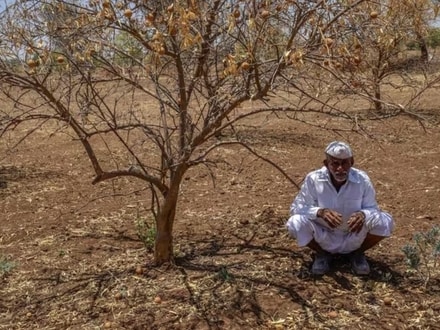
S&P said food prices are likely to rise in APAC economies, especially India, because of El Nino.
S&P sees the growth-inflation mix becoming less favourable in the second half of the current fiscal year.
"We expect higher input costs to be increasingly passed through to consumers. And we think the lagged effects of earlier disruptions will combine with fresh headwinds, most notably the uneven monsoon," S&P said.
Three factors are hurting agriculture:
1. *Deficient rainfall* during the summer season
2. *Lower reservoir levels*
3. *Persistent El Nino conditions* — likely to weigh on both current agricultural output and the upcoming winter (rabi) crop
The broadening pass-through of costs is likely to intensify inflationary pressures, S&P said.
*Inflation numbers:*
- India's retail inflation surged to *6.09% year-on-year in October*, surpassing the RBI's tolerance band of 2-6%
- S&P projects inflation to average *5.3%* in the current fiscal year to March, with risks tilted to the upside — up from 2% in FY26
- Inflation is expected to ease to *4.7%* in FY28
Food prices are likely to rise because of El Nino, though S&P said regional preparedness measures should limit the macroeconomic impact.
*What it means for interest rates:*
S&P anticipates a further *25 basis points policy rate hike by the Reserve Bank of India in December*, and again in early 2027.
That would make loans costlier — home loans, auto loans, and business borrowing — even as growth stays strong.
*Bigger picture for Asia-Pacific:*
S&P's Economic Outlook said:
- *High energy prices* will remain the largest macro headwind
- *Global AI build-out* will be the largest tailwind for the region
- Both forces should ease a bit in 2027
S&P expects Brent crude prices to average $85 per barrel in 2027, falling from $97 so far in 2026.
*Bottom line:*
India stays on top for growth — 7% for two straight years. But your food bill may go up first, and the RBI may raise rates to fight it.
#India #GDP #FY27 #SPGlobal #ElNino #Inflation #RBI #Economy