

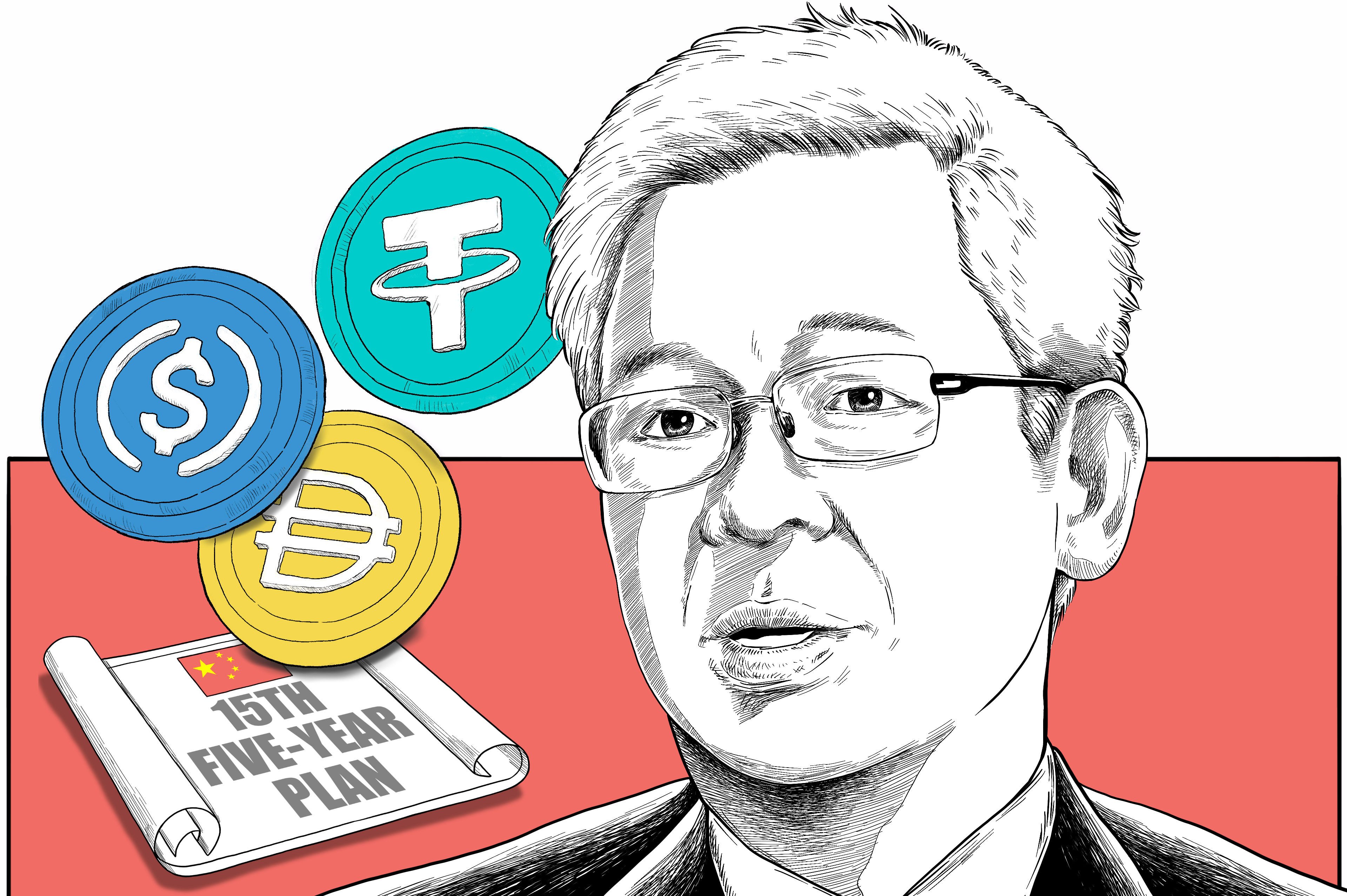
BEIJING: China is betting big on artificial intelligence. But a top S&P economist is warning that without broader reform, the AI boom could deepen — not fix — China's deepest economic problem.
Layering AI onto China's existing model without structural changes could worsen imbalances, said Louis Kuijs, chief economist for Asia-Pacific at S&P Global Ratings, in an interview with the _South China Morning Post_.
"When productivity goes up, it may go up in a way that mainly benefits capital and doesn't benefit labour," Kuijs said. “If this is laid on top of the existing economic process in China, it will add to existing pressures.”
China's model has long channelled a relatively small share of national income to workers and households. Consumption is weak. Investment and exports do the heavy lifting. Kuijs, a former senior economist at the World Bank's Beijing office, argues AI could make that skew sharper.
If productivity rises but wages do not, households get poorer in relative terms. Their purchasing power, already weak, could shrink further. Companies would then produce more AI goods and services than domestic consumers can absorb — leading to another wave of overcapacity, this time in AI-related industries.
The numbers show the scale of the bet. Total AI-related spending in China is projected to reach about $220 billion this year, according to a report by a research team affiliated with the China Finance 40 Forum. Yet the increase in AI capital expenditure is expected to contribute less than 0.4 percentage points to GDP growth.
S&P on Monday raised its forecast for China's 2026 growth to 4.5% from 4.3%, citing an AI-driven technology export boom. But it projected domestic demand would remain weak through 2027. Strong exports are helping Beijing meet its growth target this year while keeping stimulus at a minimum.
That is the imbalance in action: exports boom, households lag.
Kuijs says fixing it requires structural reform, not just more tech. That means improving access to health, education and social security so households feel safe to spend, and a clearer separation between the state and business so capital is allocated by returns, not by political targets.
Without that, local governments may keep building data centres and AI parks because they are told to, not because there is demand — the same over-investment cycle seen in steel, solar and property.
For India, the warning matters. If China floods global markets with cheap AI hardware, models and applications, Indian firms will face even tougher competition. But if China's domestic demand stays weak, it also means Beijing will remain dependent on exports — and vulnerable to tariffs and geopolitical shocks.
India faces a similar risk. AI can raise productivity, but if gains go only to capital owners and large platforms, inequality will widen here too. The lesson from Kuijs is universal: technology alone does not rebalance an economy. Policy does.
China's AI push is impressive. Whether it makes China richer for everyone — or just richer for capital — will depend on reforms Beijing has long promised but delayed. Until then, AI may supercharge growth while leaving the imbalance exactly where it was, only larger.
*Tags:*
#China #AI #ArtificialIntelligence #SPGlobal #Economy #LouisKuijs #Overcapacity #GlobalEconomy #IndiaChina #Technology