

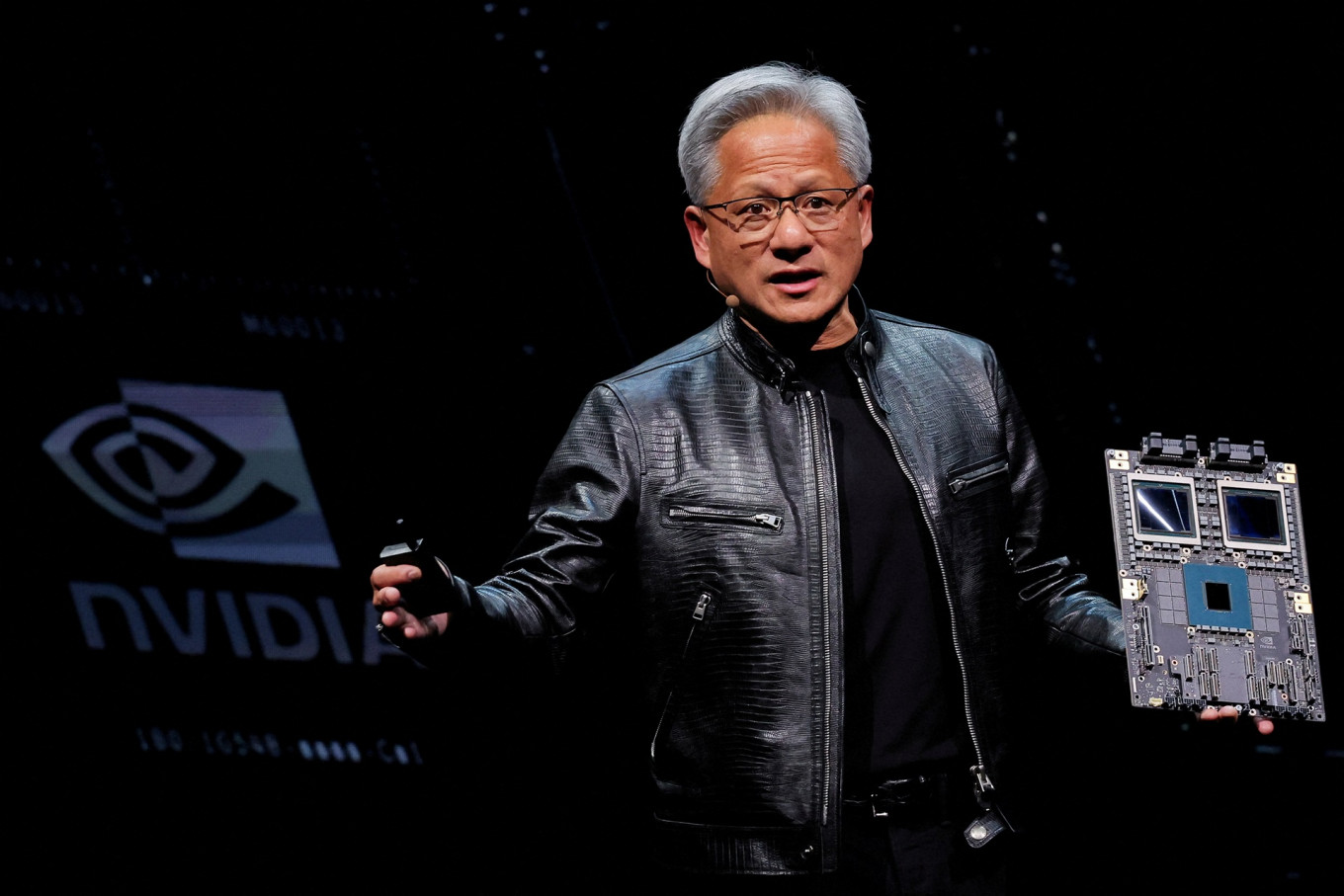
SAN FRANCISCO: Nvidia has told its manufacturing partners to stop shipping servers to four Southeast Asian countries, the ‘Financial Times’ reported on Thursday, citing three people with knowledge of the matter.
Manufacturing partners like Dell and Supermicro, which package Nvidia's chips into servers, told buyers in Malaysia, Singapore, Thailand and Indonesia that the chipmaker will not allow their orders to be shipped.
Nvidia, Dell and Supermicro did not immediately respond to requests for comment. Reuters could not immediately verify the report.
It is unclear whether the halt is temporary, as Nvidia and its partners try to work out how to comply with new US export controls.
Why Southeast Asia?
The move follows new US curbs that took effect last week. The Commerce Department's Bureau of Industry and Security (BIS) published a rule on November 16, effective November 19, requiring a licence to export advanced semiconductors to Malaysia, Singapore, Thailand, Indonesia and Brazil — countries the US says have a higher-than-normal risk of diversion.
The target is not Southeast Asia itself, but a loophole: Chinese firms gaining remote access to US chips, including Nvidia's, by renting compute in data centres abroad.
Chinese companies have been tapping Nvidia chips remotely from data centres in the region, bypassing direct export bans on China. The new rules close that loophole by requiring cloud providers to prove within 90 days that their end users do not include restricted entities.
Singapore has been at the centre of the scrutiny. The city-state is a major hub for AI data centres, and US officials have long worried that chips shipped there could end up — physically or virtually — in China.
A company in turmoil-
The Commerce Department published the new rule days after Nvidia CEO Jensen Huang resigned following reports of an affair with a suspected Chinese spy who had previously worked at Singapore-based cloud company Megaspeed.
Huang's resignation has added to market unease. Nvidia's stock, already volatile on AI bubble fears, fell again on the shipment halt news. Barron's noted: “The Stock Can't Catch a Break.”
For Nvidia, Southeast Asia is not a side market. Malaysia and Singapore have become major AI infrastructure hubs, with billions invested by Microsoft, Google, ByteDance and others. A prolonged halt would hit data centre builders, cloud providers and AI startups across the region — and Nvidia's own revenue.
What happens next?
Partners are now scrambling to understand compliance: which orders need a licence, which customers can be certified as clean, and how to prove no Chinese entity can access the servers remotely.
The BIS has given cloud providers a 90-day deadline to obtain a licence by proving their end users do not include restricted entities.
Until that process is clear, Nvidia appears to have chosen the safest option: pause everything.
For buyers in Kuala Lumpur, Singapore, Bangkok and Jakarta, that means delayed AI projects, delayed data centres, and uncertainty over when the world's most wanted chips will arrive again.
For Washington, it is a test of whether export controls can actually stop AI diffusion in a world where compute can be rented from anywhere — or whether the controls simply push the trade further underground.
*Tags:*
#Nvidia #AIChips #SoutheastAsia #ExportControls #Dell #Supermicro #Singapore #Malaysia #China #JensenHuang