

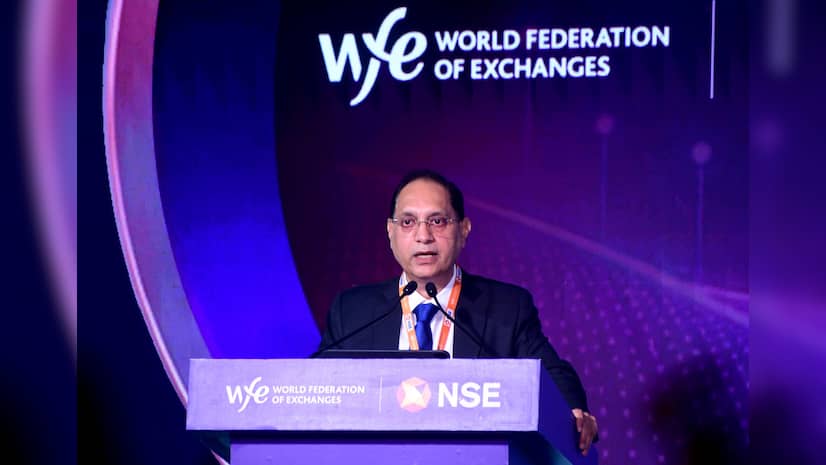
MUMBAI: The Securities and Exchange Board of India (SEBI) may examine the structure of the Tata Steel-APL Apollo deal to assess whether it could compromise minority shareholders' interests, amid questions over governance and the applicability of related-party transaction (RPT) rules.
On Friday, SEBI Chairman Tuhin Kanta Pandey confirmed the scrutiny: “We take minority shareholders' rights very seriously. Investor protection is very important. We are looking into the Tata Steel-APL deal.”
SEBI has sought initial explanations from APL Apollo officials, sources told Reuters and Moneycontrol. It may next call Tata Steel officials. It is yet to receive the revised contours after Tata Steel said it would re-examine the structure.
The deal in four legs-
Announced over November 22-23, the roughly $3.5 billion / Rs 28,000 crore + Rs 32,267 crore arrangement has four interconnected parts:
*1.* APL Apollo buys Tata Steel's tubes business for Rs 11,700 crore and Tata Steel Colors Pvt Ltd for Rs 16,300 crore — total Rs 28,000 crore, funded largely through borrowings.
*2.* Tata Steel buys a 26.4-26.6% stake in APL Apollo from promoter S Gupta Holding, the Gupta family entity, at Rs 2,100 per share for Rs 15,510 crore. It has already acquired around 9.91% via a block deal at Rs 2,100 for ~Rs 5,825 crore.
*3.* Tata Steel makes a mandatory open offer for up to an additional 26% from public shareholders at Rs 2,301.40 per share, for up to Rs 16,756 crore. If completed, Tata Steel's holding would rise to ∼52.38%, giving it control.
*4.* An MoU with promoter-linked SG Spectra for exclusive contract manufacturing on undisclosed terms.
Why sequencing matters+
The business sale was agreed on Nov 22, before Tata Steel became a significant shareholder on Nov 23. That timing, critics say, potentially places the first leg outside RPT rules that require additional scrutiny and shareholder approval.
"The deal could have been structured simply if the objective was only to take control. The promoters' stake could have been bought directly and then followed with the open offer. Instead, a day after announcing the transfer of the tubes and colour-coated businesses to APL Apollo, the stake purchase was announced. This is what makes this a related-party transaction," a person familiar with the matter told Business Standard.
SEBI is weighing whether the various legs should be assessed together under the RPT framework — including the asset sale, the promoter stake purchase, and the SG Spectra arrangement.
Under LODR Regulations, SEBI can apply the purpose-and-effect test: look beyond legal form or timing to whether a transaction is structured to achieve an outcome that would otherwise attract RPT norms.
"If the regulator finds that the arrangement was designed to circumvent RPT requirements, it could direct the companies to seek shareholders' approval," sources said.
What shareholders and proxy advisers say?
Public shareholders own over 70% of APL Apollo. Its largest institutional holders include New World Fund, Smallcap World Fund, Norway's Government Pension Fund Global, ICICI Prudential MF, Aditya Birla Sun Life MF, DSP, Franklin Templeton, Nippon India MF and HDFC Life.
They have told management they would not support the deal in its current form.
"One of our biggest concerns is that there is a lot of debt taken for the deal, while the current APL promoter is exiting through this transaction. That leaves minority shareholders with a heavily indebted company," an investor told Economic Times.
"The board must explain why APL Apollo's balance sheet is being used to finance a change in its own control. APL Apollo's minority shareholders bear the cost of this structure. The selling promoter exits almost entirely," IiAS said.
InGovern: “A transaction of this scale cannot be treated as routine. It requires full disclosure, independent valuation and, if it is found to be a related-party transaction, a shareholder vote.”
SES questioned whether the first tranche was kept below 10% to avoid triggering norms, and said Tata Steel should be considered a related party from Nov 23.
CreditSights (Fitch) said debt-funding would be credit negative — pro-forma net leverage worsening from 2.3x to 2.9x.
What the companies say?
Tata Steel: “Tata Steel has complied with the applicable laws in announcing the transactions. However, we have taken cognisance of the feedback received and are carefully examining the concerns raised to determine how best to address them.”
MD & CEO T.V. Narendran told investors the structure would be reviewed, and that APL Apollo promoter Sanjay Gupta wants minority holders to get Rs 200/share more — suggesting a possible sweetener to the open offer price.
Market reaction-
Shares of both companies recovered on Thursday-Friday after sharp declines earlier in the week. Tata Steel ended Thursday at Rs 163.35, up 2.67%, after correcting more than 10.5% through Wednesday. APL Apollo closed at Rs 1,481-1,544, up ∼4% Friday, after falling more than 30% since announcement.
The deal, targeted for completion by March 2027, is now in wait-and-watch mode — until SEBI sees a revised structure.
*Tags:*
#SEBI #TataSteel #APLApollo #RPT #MinorityShareholders #CorporateGovernance #IiAS #OpenOffer #StockMarket #TuhinKantaPandey