

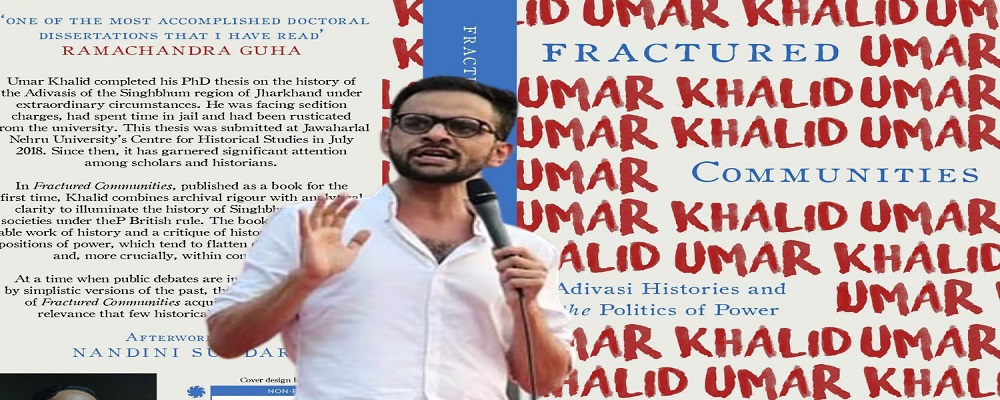
From news television that paints him as a Deshdrohi, Umar Khalid emerges in a book review as an astute writer and serious scholar. Thangkhanlal Ngaihte reviews Fractured Communities: Adivasi Histories and the Politics of Power, adapted from Khalid’s JNU PhD, and argues it adds significantly to knowledge of tribal history in India.
The work focuses primarily on Ho tribals in the Kolhan areas of Singhbhum district in Jharkhand. It challenges a tendency in the northeast to imagine tribal life as uniform. At least four states — Mizoram, Nagaland, Meghalaya and Arunachal Pradesh — have tribal-majority populations, but the bulk of Scheduled Tribe population is in MP, Chhattisgarh, Odisha and Jharkhand.
Khalid traces colonial encounters. Hos have a two-tiered system of chieftainship, Mundas and Mankis ruled over a cluster of villages. Colonial accounts called them Larka Kols, emphasised the “wild nature” of Ho country, a “forbidden land”, and characterised them as warrior-like, athletic, simple and given to excessive drinking.
As colonial rule expanded, it played off divisions between tribal chieftains and intruding colonial power became inevitable. When clashes intensified, British undertook military expeditions and subdued dispersed villages one by one — burning entire villages and granaries to ensure surrender, then using headmen as proxies.
Ngaihte notes the book’s strength and limitation. It does not engage in comparative analysis with other tribes — whether in Chota Nagpur, Indo-Burma borderlands, or Africa — where similarities between Ho and Zo tribes in how popular discontent against colonial rule and chieftainship system builds up, and claims to independence are striking.
The final image is damning: At Chaibasa, administrative headquarters of Singhbhum, all trains running through the busy station, except one, are goods trains transporting timber and coal from tribal hinterland to coastal plains. Ho passengers alight, wait for two minutes, then ride rickety buses to bumpy roads. Tribal history, Khalid argues, is not just world clashes with state bureaucracy, but with rapacious state-aligned corporations. The colonial playbook outlived the colony.