

It was called the "Campus Dead" - an odd collection of momo, cola and ice shops selling a dream to a rickety table crowd. That was Satya Niketan in the 1990s. Today, it is a dense ghetto of private accommodations, where thousands of DU South Campus aspirants chase degrees, stacked in three-storey buildings turned into five-storey warrens.
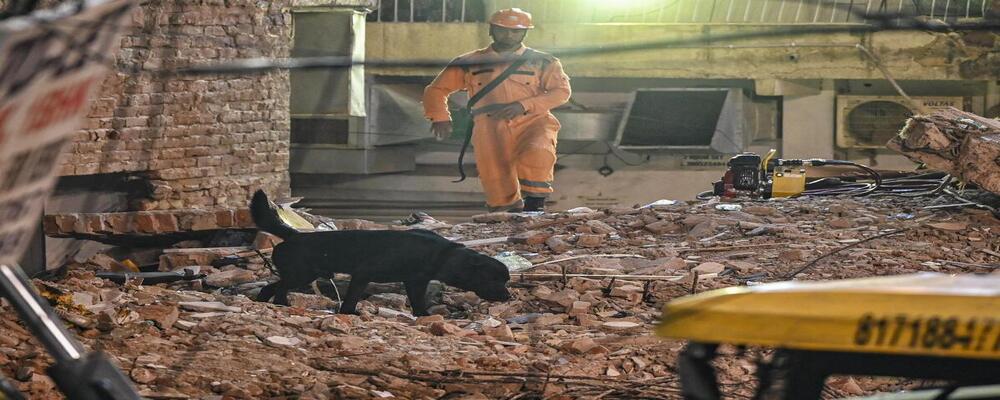
On September 6, a five-storey building crashed down, killing seven people under bricks and concrete. The lanes nearby were vacated, some deemed unsafe. Residents in PGs packed their bags again.
Satya Niketan's story is Delhi's urbanization failure. In the 1970s, the Delhi Development Authority allotted 70 sqm plots in the urban village of Morad Bagh to families displaced from R K Puram. In 1972, DDA regularized 299 plots in the area. The lanes, meant for villagers, became PGs. As Delhi University's South Campus expanded in the 2000s - with 36 affiliated colleges by 2009 - the demand for cheap housing exploded.
A resident recalled how families who lived in houses that were once one storey began adding floors as students came. "No title deed, power of attorney sale," he said. Unauthorized constructions were called "agreements." MCD sealing drives started in 1991, but violations continued.
The economics are brutal. A student from Sri Venkateswara College pays Rs 12,500 for rent, Rs 4,000 for electricity, Rs 5,000 for food - Rs 21,500 for a single room. Another pays Rs 8,000 for a bed and shared loo, food and electricity extra. A five-tier steel bunk, a tiny kitchen with a stove, 20-odd bubble-top young adults in a flat. "You won't find anything cheaper this close to South Campus," a PG owner says.
The tragedy is vertical. The city never built affordable hostels proportionate to its university. So the market built upwards, illegally. When we ask why students live like this, we should ask why a world-class university's housing plan ends at its gate. Satya Niketan didn't collapse one day. It collapsed over three decades.