

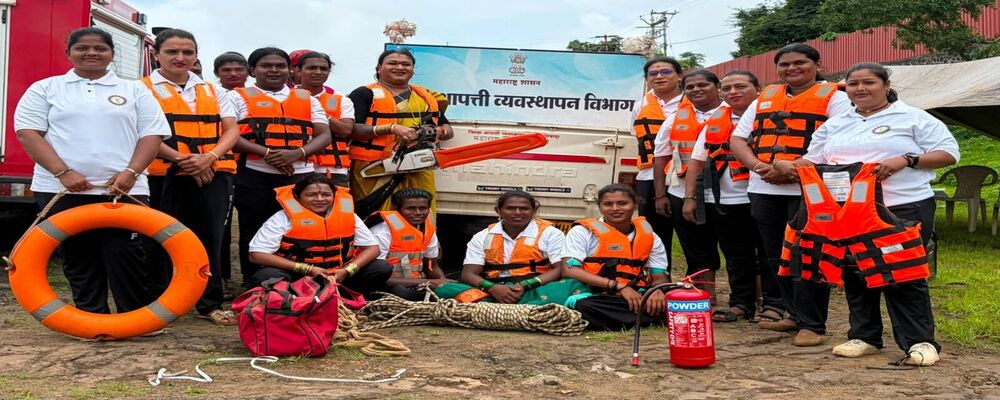
In the last week of August at Rajaram Lake, Kolhapur, a drill looked routine - orange lifejackets, ropes, 10 days of rescue practice in water. Until you learned who was wearing them.
They are part of India's first transgender disaster management and rescue team. The Kolhapur District Disaster Management Authority has trained 15 transwomen so far, the first batch of 10 from May 26 to 28, with fresh rounds every three months. It is a first-of-its-kind initiative in the country.
Kolhapur DDMA has trained 2,500 volunteers in a decade. In 2019 it created the state's first all-women rescue unit, 'Aapda Sakhi', now 500 strong. This monsoon, District Disaster Management Officer Prasad Sankpal asked: “Why not train a transwomen team?”
For recruits, the lifejacket means more than safety gear. "Even today, people see us as sex workers or beggars," says Mayuri Alvekar, founder of Maitri NGO who brought volunteers onboard. Shivani Gajabar, currently pursuing a Master of Social Work at Shivaji University, says acceptance hasn't fully arrived. "Even today, when I go to class, no one sits on my bench. I'm all alone." Another member, Suhasini Devmane, Maharashtra's first transgender tourist guide, spent eight years as an ayurvedic panchakarma expert while hiding who she was.
Training covered swimming, inflatable boat operation, wet and dry lifesaving, motorboat handling and CPR. "The institutional strengthening is already visible - volunteers now help road accident victims without instructions," says Sankpal.
The deeper win is identity. "For over eight years, I had to hide my identity - else I would have lost my job," says one volunteer. “Now we are getting recognition and, most importantly, an identity.”
Next, Sankpal says, the team will be trained for 30 categories of man-made and natural disasters, including snake rescues, and deployed for crowd management during Navratri and Jyotiba Yatra. The pending gap: money. Volunteers work for free. The administration is now pushing for home guard status with an honorarium. Rescue is not just about pulling people to safety. Sometimes, it is about being pulled into society