

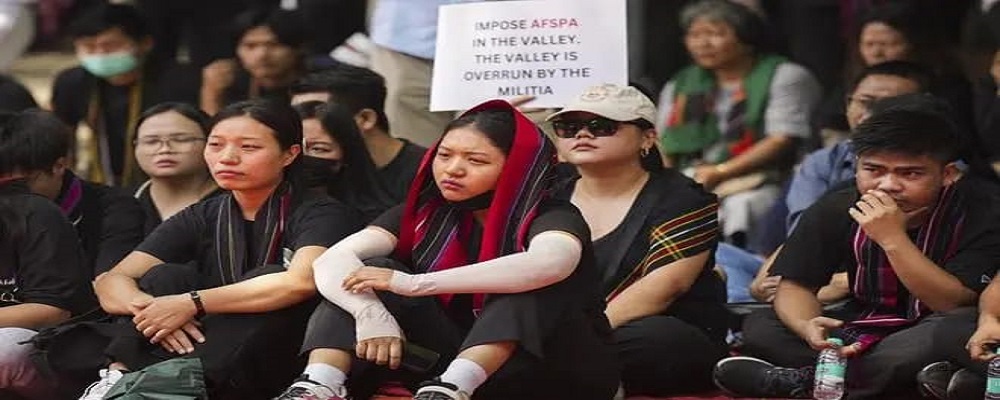
For three years, Manipur has been shorthand for Meitei vs Kuki-Zo. As that fire abated marginally — marked by Kuki-Zo MLAs returning to the Assembly on September 2 after a two-year boycott — another fault line has cracked open: Naga vs Kuki-Zo.
Since February, localised disputes have spread across hill districts. The data is grim: at least 15 Kuki-Zo, 11 Nagas, three security personnel and a truck driver killed till July, with more deaths in the last two months. Naga villages burned, new displacement camps, blockades choking medicines, health centres dysfunctional. The RTI figure that over 700 people died in relief camps since 2023 due to lack of healthcare and nutrition still haunts.
This is not new. It echoes the Naga-Kuki violence of the 1990s, now revived with armed groups claiming to act for their communities and reviving arguments over who controls the hills and whose customary law prevails. The smaller Kuki-Zo community is worst hit.
The editorial call for “firm, even-handed State action” is urgent but must be precise. With a BJP government under Yumnam Khemchand Singh trying to engineer a thaw, and Assembly elections approaching, the state cannot afford selective criminal justice. Blockades are a crime regardless of who imposes them. Armed groups must be disarmed, not managed. And civilian safety must be guaranteed irrespective of ethnicity — the fundamental duty a state lost in May 2023 and has not fully regained. If the Naga-Kuki-Zo clashes entrench, Manipur will move from a two-party conflict to a triangular civil war.