

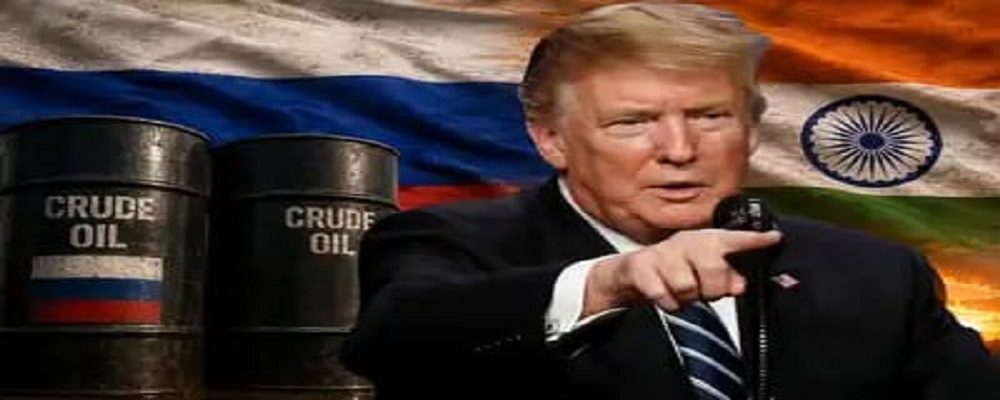
The US Russia Sanctions Act signed by President Donald Trump is not another tariff threat. Earlier 50% penal tariffs on Indian exports for buying Russian oil came via Executive Order and could be reversed the same way. This Act is Congress-passed, requiring written justification to Congress for any waiver, giving it legal permanence.
The Act authorises up to 100% tariffs on countries importing large quantities of Russian oil and gas — on top of 10% forced labour tariffs and 50% Section 232 tariffs on steel and aluminium. For India, where Russia accounted for 51% of oil imports in July 2026 and oil is above $100/barrel, sharing costs with US customers as exporters did for 50% tariffs is impossible. MSMEs exporting to the US — India’s largest destination at 20% of goods exports — will be priced out.
India has three options, all bad: cut Russian oil and scramble for expensive alternatives while Strait of Hormuz supplies remain constrained; bear tariffs and lose export market; or lobby for a low rate using the “up to 100%” wording during Commerce Minister Piyush Goyal’s US visit before the 30-day window closes.
History suggests Delhi usually complies with US pressure on oil sourcing, strategic autonomy claims aside. Oman’s alternative ports won’t be ready overnight. This is a test of Modi-Trump friendship, but also of Atmanirbhar reality — you cannot be self-reliant if your energy and your exports both depend on decisions in Washington.