

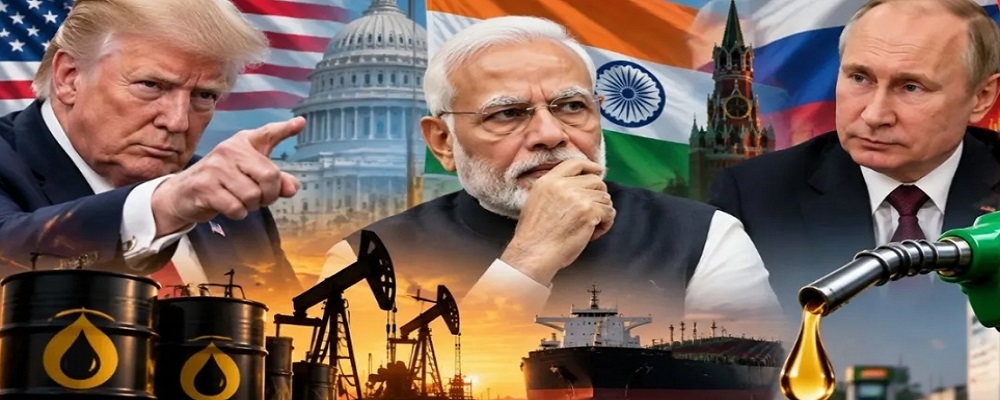
International diplomacy and global trade policies witnessed significant upheaval following the US Congress's passage of the 'Russia and Iran Sanctions Act 2026.' This legislation empowers the US administration to impose tariffs of up to 100% on countries that continue to import crude oil from Russia or Iran. This move has directly impacted Asian economies and the global energy market.
Globally, crude oil prices have historically determined economic growth rates. Following the Russia-Ukraine conflict, nations like India and China purchased crude oil from Russia at discounted rates, which significantly aided in controlling domestic inflation. While the objective of this new US law is to curtail Moscow's energy revenues, it has once again placed strain on global supply chains.
India's energy policy has consistently prioritized ensuring the availability of affordable and uninterrupted energy for its consumers. The Ministry of External Affairs and economic policymakers have clarified that India is actively diversifying its energy sources. Indian oil refineries are striving to maintain stable domestic supplies by balancing oil imports from West Asia, Africa, and US markets.
The impact of this policy-driven tension is also evident in global currency markets; the Dollar Index is experiencing volatility, and currencies of emerging markets remain under pressure. However, many economists believe that such stringent sanctions will further encourage non-dollar trade (local currency settlement) and bilateral trade agreements worldwide.
Overall, energy security is no longer merely a matter of economics; it has become inextricably linked to the geopolitical balance. While upholding its strategic autonomy, India remains actively engaged on the diplomatic front to safeguard national interests and mitigate the impact of price hikes on its citizens.