

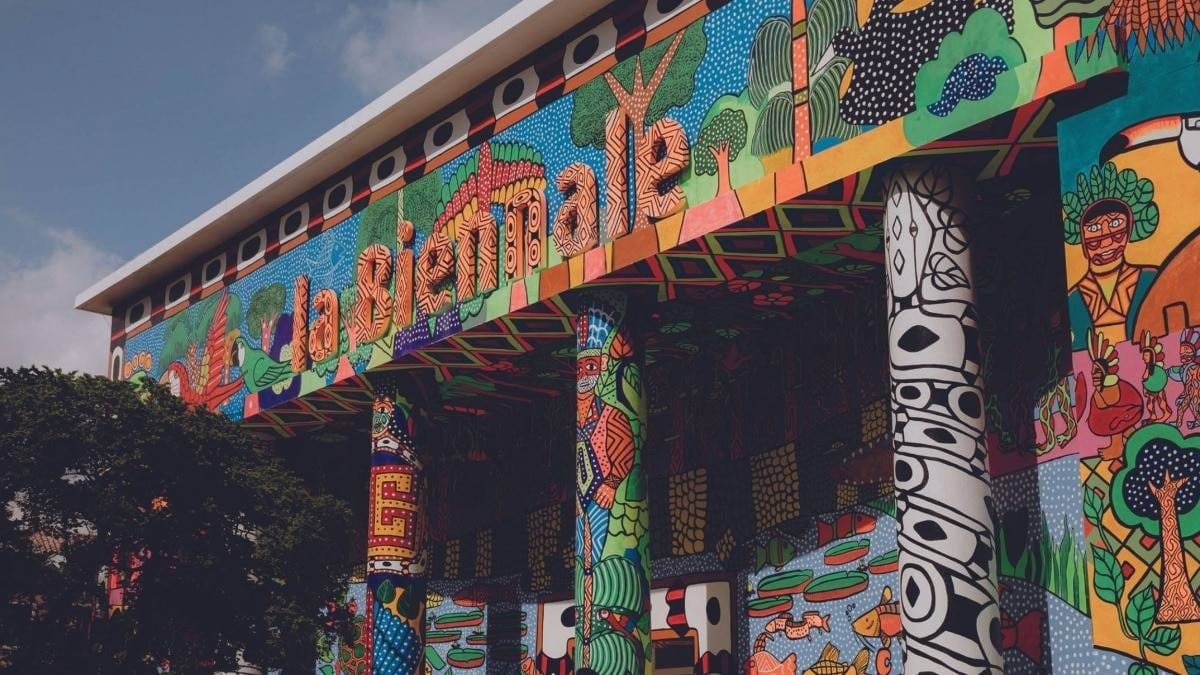
After seven years of absence, the India Pavilion is back at the Venice Biennale — the Olympics of the art world — and it is getting high praise.
Titled "Not Just Us", curated by Alka Pande, the pavilion features five artists — Amitesh Verma, Akshay Sethi, Somnath Singh, Anupam Roy and Arun Kumar — weaving folk, craft, ecology and personal memory. In 2005, India had its first pavilion; this is only the fourth time in its 130-year history it has participated.
Artist Ashim Purkayastha's broken home at 44 Link Road, Delhi; Sangram Majumdar's haunting Singur; Sunil Gupta's photographs — these are not just artworks but arguments about belonging.
The pavilion's return was not easy. The proposal by Amita Talwar, the Lucknow-based curator, dealt with migration. Officials wanted visitors to walk in with "Echoes of Home" and reflect on their own sense of belonging. The Ministry of Culture, IGNCA and NMACC pulled it together, and as one official said, "We received multiple rejections of the sort, but eventually the vision won."
The Biennale itself is a study in soft power. China has shown continuously since 2005; countries like Uruguay and Angola have permanent pavilions. India, by contrast, had a permanent space in Venice allotted in 2011 but did not use it, with a government in 2013 calling participation a "waste of money."
This time, the presentation earned praise for avoiding state propaganda. It talked about water fabric, bamboo architecture, and "Chai" — a twig structure by Banamali Naik. It asked a simple question, from the late poet Nida Fazli's line: to return or build a home?