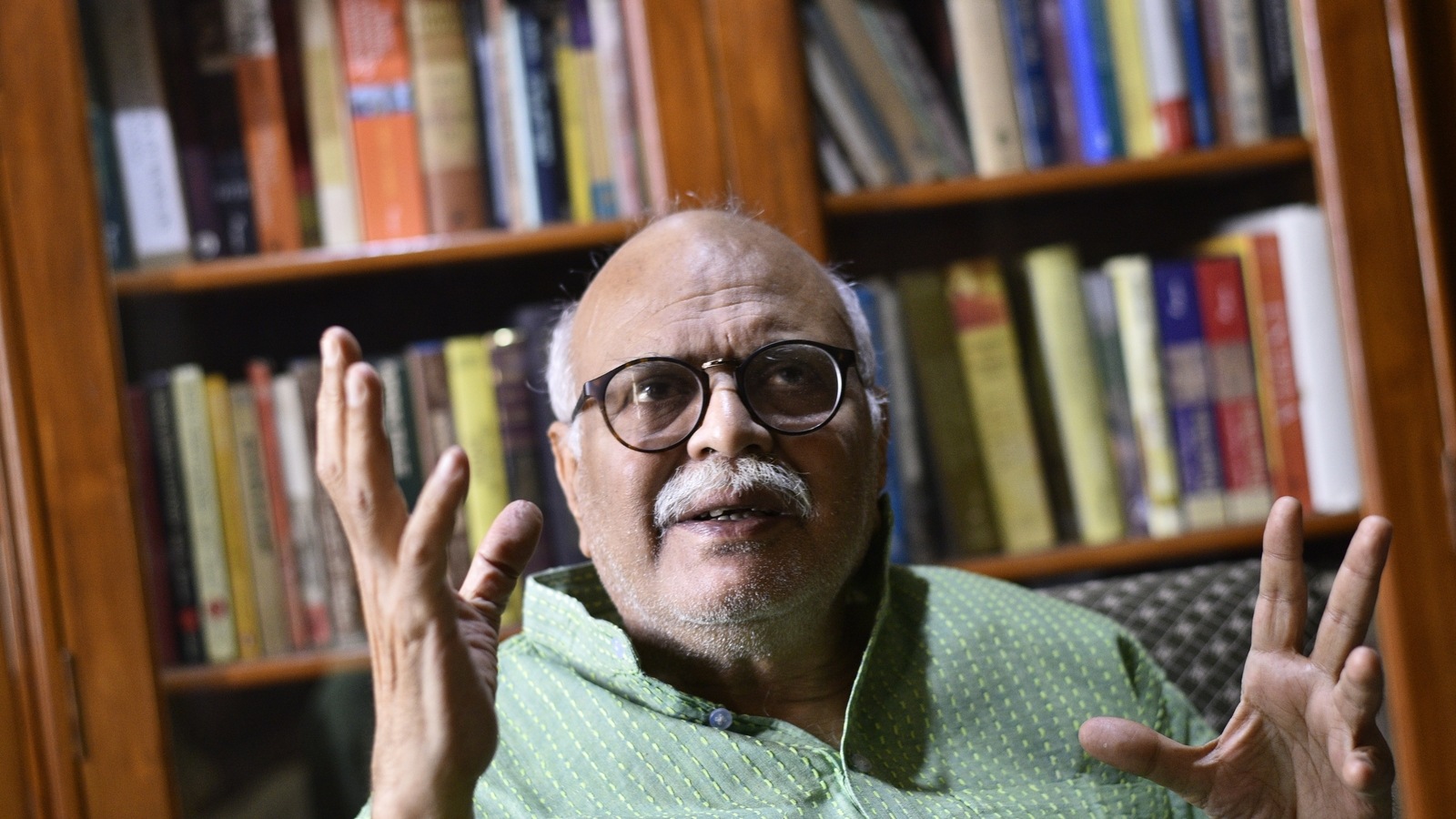
When Saleem Kidwai passed away on August, 2021, at his home in Lucknow —cardiac arrest, aged 70; the obituaries called him a historian, a translator, a gay rights activist. All true. But insufficient.
Kidwai, who taught medieval Indian history at Ramjas College, Delhi University for 20 years until 1993 before returning to Lucknow as an independent scholar, was something rarer: an archivist of what India had chosen to forget that same-sex love is not a Western import, but an indigenous tradition.
Born in Lucknow in 1951, one of the first Indian academics to be publicly out at a time when few in academia dared, Kidwai knew the cost. In Montreal in the late 1970s, where he was at McGill, he was arrested during a police raid on a gay bar — charges not dropped until 1982. That experience pushed him back to India to fight at home.
His magnum opus, co-edited with Ruth Vanita, was 'Same-Sex Love in India: Readings from Literature and History' (2000). The book was a forensic act of recovery: translations from 15 Indian languages spanning 2,000 years from the Kama Sutra to Sufi poetry, from the Puranas to 19th-century Rekhti verse, showing love between men and between women celebrated, not criminalised, until the British imposed Section 377 in 1861. When the Supreme Court decriminalised homosexuality in 2018, a copy lay before the bench. Lawyer Anand Grover called it "The Bible" of the movement.
His second love was the world that made him was Lucknow, its music and its tawaifs. A connoisseur of Begum Akhtar, whose telephone diary he preserved, Kidwai wrote deeply on courtesan singers and their musical-literary heritage. That scholarship fed his translations.
Kidwai became the only translator apart from Qurratulain Hyder herself to translate her novels: ‘Chandni Begum’ (2017) and ‘Safina-e-Gham-e-Dil’ as ‘Ship of Sorrows’ (2019), a Partition story of six lives in Lucknow. He translated Malika Pukhraj's autobiography as ‘Song Sung True’ (2003), a courtesan's absorption in music and intrigue and Syed Rafiq Hussain's ‘The Mirror of Wonders’ , the first Urdu animal fables collection, as satire.
He left two works unfinished at his desk: Hyder's last untranslated novel ‘Gardish-e-Rang-e-Chaman’ and a history of Lucknow by Mirza Jafar Hussain.
Posthumously awarded the 2025 Rainbow Lifetime Achievement Award, Kidwai's legacy is not just books but permission to be scholarly and flamboyant, Muslim and gay, Lucknowi and global, archival and alive.