

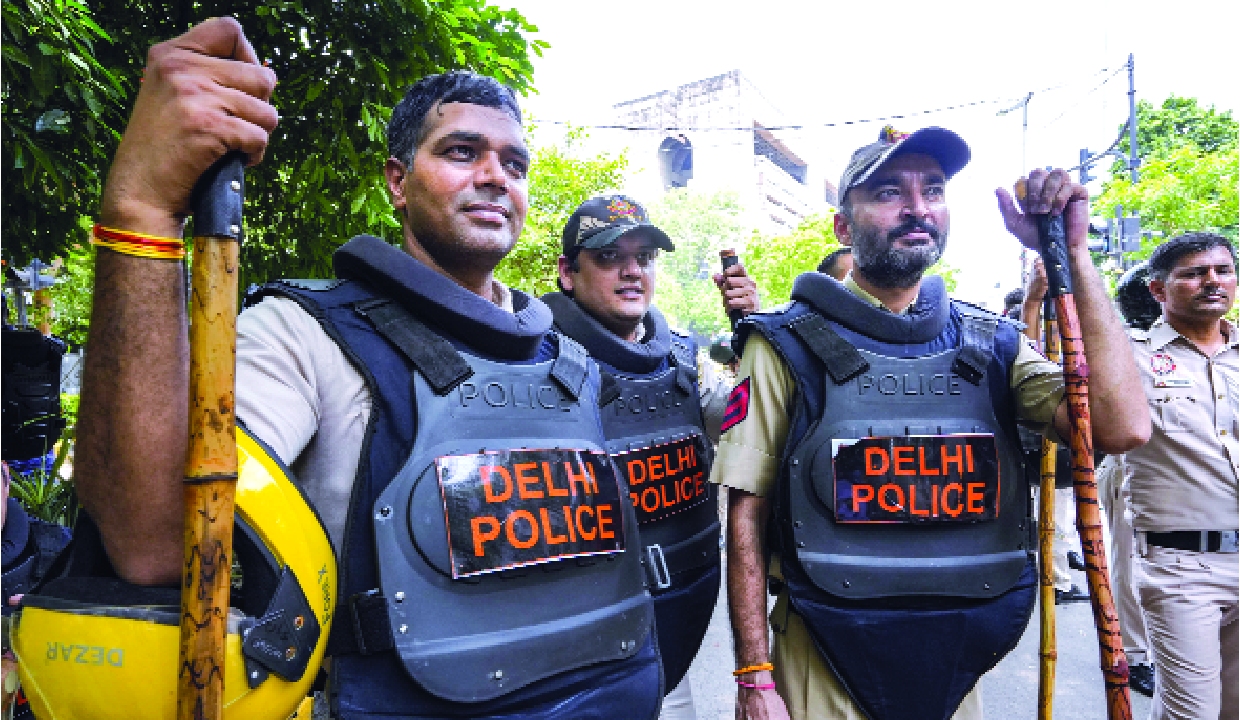
D is extra-judicial witness for an extra-ordinary mobilisation of police. In Delhi, to prevent a pro-Palestine march at Jantar Mantar, police deployed more than 200 times what was required, with more than 200 companies. These measures are not mere preventive. They are preventive emergency, bordering on undeclared emergency.
So writes Yamini Krishnan Jija Azad on Editorial Page under headline: Police must protect individual rights, not political interests.
She traces pattern: On October 11, to prevent CJP's anti-CEC protest, Delhi Police shut 57 Metro stations, imposed Section 163 BNSS, snapped internet, detained political figures like Mamta Banerjee, MPs including John Brittas and journalists. The spectacle handed the cockroach protest? Actually, prevented a gathering but magnified reform discontent.
Read more - Jantar Mantar No More
Azad, an IPS officer and author of Policing the Republic, argues this is classic misuse. A useful comparison comes from Supreme Court judgment in PFI case. The court said under British-era Section 144 CrPC now Section 163 BNSS, police cannot impose blanket ban on assembly in entire city. It must be specific area, specific time, with reasons. Also, it said police must facilitate protest at designated site, e.g., Jantar Mantar, with conditions, not ban it.
Second, principle established in 1970s: police must protect individual rights, not government. When police barricades Rajiv Chowk to prevent 200 students from reaching Jantar Mantar, it protects political interests of ruling dispensation from embarrassment, not citizens.
Third, training matters. Negotiation, de-escalation, communication are key. Why did Delhi not adopt that? Why deployment of 30,000 personnel, 200 companies of paramilitary, riot control vehicles for a protest of few thousand?
Azad argues there is lack of SOP for handling protest. The police repeatedly become victim of its own narrative. Every protest is seen as threat to sovereignty, not as occasion to honour obligations to facilitate, in case of designated site, limited time, and protect, then to open channels of dialogue, assemble. This is what Supreme Court mandated.
On Sunday, Supreme Court held special sitting and said ensure no illegal detentions, allow Metro, internet. That is judicial rebuke.
Read more - Opposition Takes SIR Fight to Supreme Court
For citizens, message is: Delhi Police cannot become a state. The state has become Delhi Police now, as MP John Brittas said.
For police, Azad's advice: go back to basics - protect protester as much as non-protester, facilitate dialogue, not barricade.
Tags: #DelhiPolice #JantarMantar #RightToProtest #SupremeCourt #Section 163 #YaminiKrishnan #CJP #JohnBrittas #IndividualRights #PoliceReform