

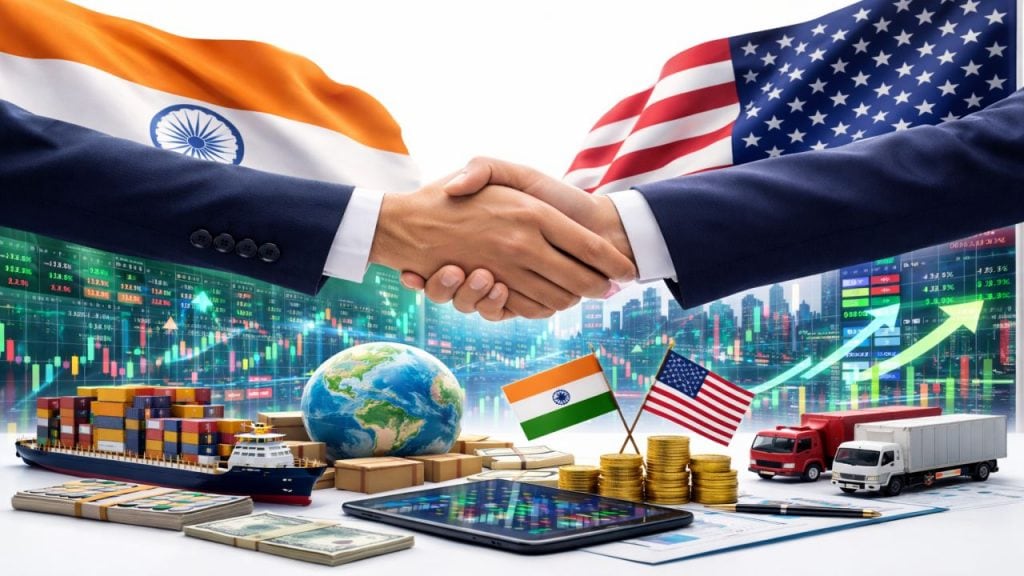
On Saturday, Commerce Minister Piyush Goyal said India and the US would finalise their interim trade agreement framework "in line with changed circumstances." That bureaucratic phrase hides a year of drift.
Negotiations began after the February framework. This month, Finance Minister Nirmala Sitharaman said talks had reached a plateau beyond which compromise would be difficult. USTR Jamieson Greer said a deal was in final stages, but not imminent. External Affairs Minister S Jaishankar on Wednesday said both sides are continuing to engage, heading towards a landing point.
Read more NATO-Russia Standoff: Is the Threat of a Major War Escalating?
Why the landing never comes? Two new sticking points.
First, overcapacity. The US has launched a Section 301 investigation into overcapacity under the Trade Act of 1974, targeting China and 15 other economies, including India. The US says when a sector's production exceeds demand, cheap supply crushes prices elsewhere. China is accused of overcapacity in autos, EVs, batteries, chemicals, semiconductors, solar. Last Wednesday, the US said it, along with 13 countries and blocs including EU, Australia, Japan, has decided to take effective actions against structural excess capacity. The G20 trade ministers' joint statement in Milan was significant. While the new Section 301 agreement suggests tangible progress, the concerns in New Delhi are on two counts: one, whether entering a deal which entails significant concessions given the Donald Trump administration's unusual approach, will indeed result in any competitive tariff advantage for India over its competitors. Two, the US has, on various occasions, imposed fresh curbs despite having signed trade agreements. This was particularly evident in its dispute with Canada despite signing USMCA during Trump's first term in 2020.
Read more - The Power Play
Second, tariffs were reduced from 12.5% to 10% after New Delhi issued notification banning imports of goods produced through forced labour. Yet talks are complicated by new US legislation against Russian oil - the Lindsey O. Graham Sanctioning Russia and Iran Act of 2026. That legislation gives Trump power to impose up to 100% tariffs on buyers of Russian oil and gas. We saw this pattern in July 2025, when Washington spared China but imposed additional 25% tariff on India for buying Russian crude. If Russian oil purchase is the issue, why does India face tariff while China gets exemption? The threat appears aimed at forcing India to cut Russian purchases and sign a deeply unequal bilateral trade agreement.
Lingering uncertainties: India and several other economies are awaiting results of Section 301 investigation into overcapacity. Government's stance is India does not have structural excess manufacturing capacity in sectors identified by G20, and that country's manufacturing capacity serves both domestic and global needs.
Read more - From H-1B to Hired Locally
Indian exporters say US buyers have become cautious and are refraining from placing large orders in a single tranche. This is affecting low-margin products such as textiles and engineering. However, US concessions on electronics and pharmaceutical imports have so far helped India maintain overall export levels to the US. Without those, figures would have been more adversely tilted against India. Goods exports to US showed sharp 21% jump in August to $8.3 billion compared to August last year, when India began facing 50% tariffs. Between April and August, too, exports jumped over 6%, driven by electronics and engineering goods. Electronics exports jumped 89% to $5.5 billion compared to $2.9 billion. However, India's imports from US, driven by energy products, also rose sharply. In August, imports went up by 65% to $5.97 billion. This comes as India also has been making several regulatory changes to aid American companies by lowering tariffs on US bourbon whiskey and motorcycles, announcing tax holiday for data centres and opening nuclear sector.
For India, deal or no deal, uncertainty itself is a tax.
Hashtags: #India USTradeDeal #PiyushGoyal #TrumpTariffs #Section301 #RussianOil #Overcapacity #G20Trade #USIndiaRelations