

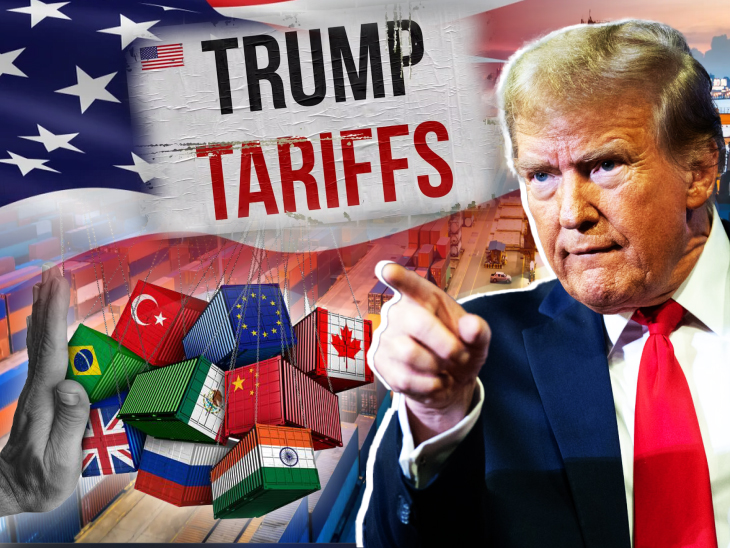
US President Donald Trump's decision to suspend the implementation of a law that could authorise tariffs of up to 100% on countries purchasing Russian oil and gas has introduced a significant new dimension to global energy diplomacy. The move could ease the immediate threat of punitive US trade measures against major buyers of Russian energy, including India and China. However, the suspension does not necessarily mean that Washington has abandoned the option of imposing tariffs or sanctions in the future.
Known as the Lindsey Graham Act, the legislation was designed to give the Trump administration extensive powers to target Russia's energy and defence sectors, as well as countries continuing to purchase Russian oil and gas. The bill was sponsored by US Senator Lindsey Graham. After signing the legislation into law in mid-September, Trump has now moved to suspend its implementation through an executive order.
Read More: Espionage War in the Stratosphere
Explaining the decision, Trump stated that he had informed Congress that granting a waiver was necessary in the national interest of the United States under the prevailing circumstances.
Why India and China Could Benefit
India and China are among the world's major buyers of Russian energy. Since the outbreak of the Russia-Ukraine war, India has continued purchasing Russian crude despite Western sanctions, citing energy security, competitive prices and the need to meet domestic demand.
The prospect of tariffs of up to 100% had posed a serious risk to Indian exporters. Such measures could have sharply reduced the competitiveness of Indian goods in the US market, disrupted bilateral trade and further strained already complicated economic relations between New Delhi and Washington.
The suspension could therefore provide India with some immediate relief from the threat of additional economic pressure. The extent and duration of that relief, however, will depend on subsequent decisions by the US administration and the practical implementation of its Russia-related policies.
For India, the issue goes far beyond access to discounted crude. It concerns strategic autonomy and the right to determine energy policy according to national requirements, market conditions and consumer interests.
New Delhi has consistently maintained that its energy decisions must reflect its own economic and strategic priorities rather than automatically conform to the geopolitical preferences of other countries.
Energy Prices, Domestic Politics and the US Midterm Elections
Trump's decision must also be examined against the backdrop of American domestic economic pressures. Disruptions to global energy supplies and rising oil prices can increase transportation costs, push up production expenses and aggravate inflation in the United States.
With the November 2026 midterm elections approaching, fuel prices have become an especially sensitive political issue. If stringent sanctions against Russia were to reduce global energy supplies and drive up prices for American consumers, the administration could face additional criticism over its economic policies.
This creates a difficult balancing act for Washington. The United States wants to restrict Russia's energy revenues, which help finance its war effort. At the same time, it must consider the economic consequences of policies that could make fuel more expensive at home.
Reports concerning a possible diesel supply arrangement with Russia have added another layer to the debate. According to the available account, the arrangement could involve easing certain restrictions in exchange for Russia releasing additional diesel into international markets. The precise terms and implementation of such an arrangement, however, require independent verification.
The underlying contradiction is clear: a policy intended to exert economic pressure on Moscow may become difficult to sustain when its consequences threaten American consumers and domestic political interests.
A Setback for Ukraine, a Diplomatic Opportunity for Russia
The decision could also raise concerns in Kyiv. More than four years into the war, Ukraine continues to depend on Western financial and military assistance. President Volodymyr Zelensky has reportedly estimated that his country would require approximately $80 billion in assistance for the coming year.
If restrictions on Russian energy exports are relaxed, Moscow could gain additional economic flexibility to support its military expenditure. Critics of Trump's decision argue that easing pressure on Russia could weaken Ukraine's position and undermine the broader effort to hold Moscow accountable for its invasion.
Read More: Modi -Trump Reset
Democratic Congressman Don Beyer criticised the move, arguing that it would send the wrong message to Ukraine and its supporters.
Russia, by contrast, welcomed the decision. Kirill Dmitriev, an envoy of Russian President Vladimir Putin, described the suspension as a historic development. He argued that the proposed measures could have inflicted significant damage on both the American economy and international markets.
Meanwhile, the military conflict continues. Ukrainian attacks on Russian refineries, disagreements over American support and growing uncertainty surrounding Washington's approach to the war have further complicated the diplomatic landscape.
The suspension of the tariff threat does not, by itself, establish that Washington has fundamentally changed its position on the conflict. It does, however, illustrate how energy security and domestic economic considerations can influence the implementation of geopolitical pressure.
India's Strategic Challenge
For India, Trump's decision presents both an opportunity and a continuing source of uncertainty.
On the one hand, the immediate threat of punitive tariffs linked to Russian oil purchases may have receded. On the other, the episode demonstrates how rapidly American trade and energy policies can shift in response to geopolitical developments and domestic political pressures.
India should use this breathing space to diversify its energy sources, strengthen domestic refining capacity, maintain stable supplies and preserve balanced relations with its principal economic partners.
It must also avoid assuming that the present suspension represents a permanent policy change. The possibility of renewed restrictions cannot be ruled out, and Indian exporters must remain attentive to developments in US trade policy.
Ultimately, this is not merely a story about sanctions against Russia. It is a reflection of a changing global order in which geopolitical principles, energy security, economic interests and electoral calculations frequently collide. For India, the central challenge is to protect its national interests and strategic autonomy while navigating the shifting priorities of Washington and the wider international system.
The author is an assistant editor at Cult Current.
#TrumpUturn #RussianOil #IndiaUSRelations #RussiaUkraineWar #IndiasStrategicAutonomy