

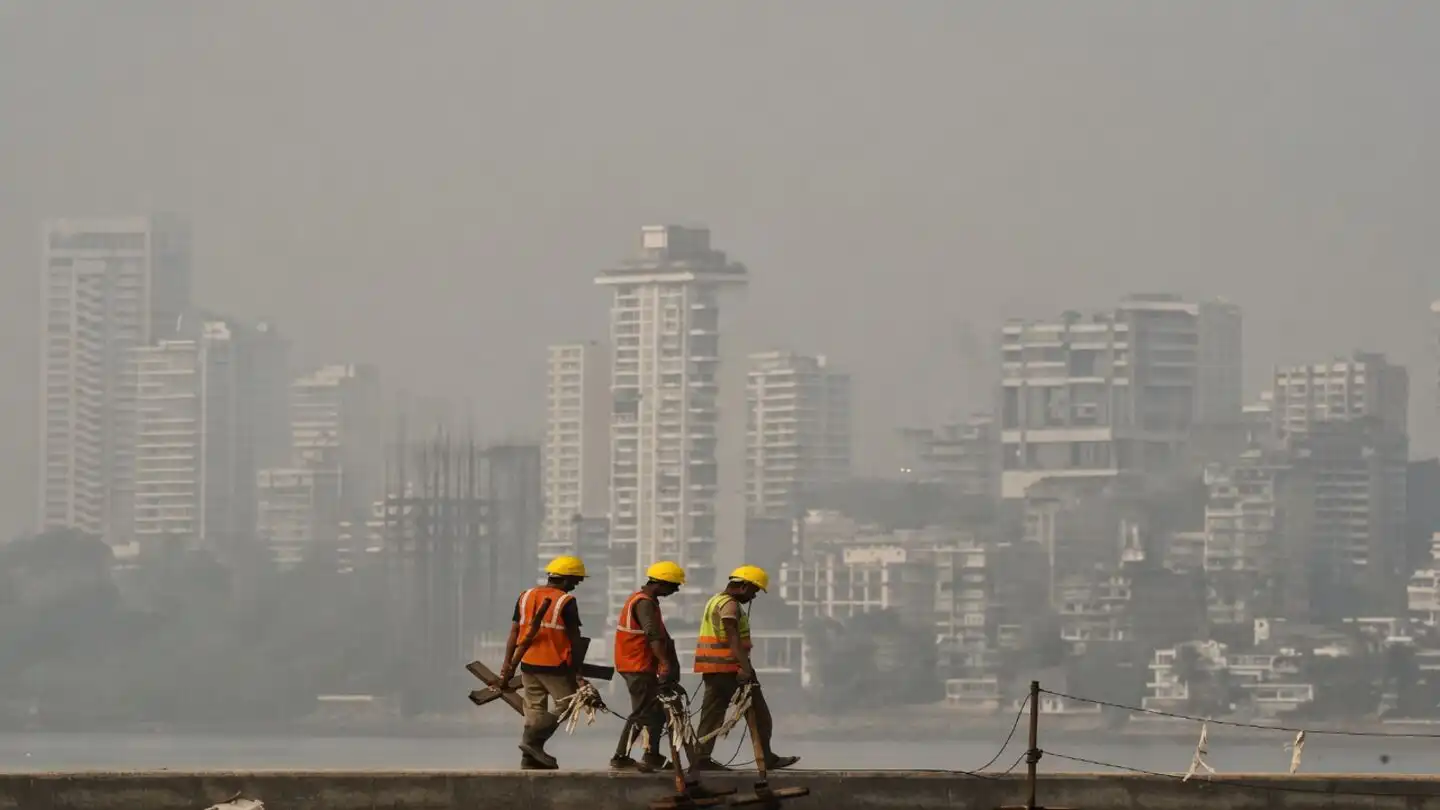
Mumbai's sea breeze failed. On Saturday, October 25, the city recorded AQI 322 — very poor — against Delhi's 176 moderate, the best October 24 Delhi has seen in a decade. Bandra-Kurla Complex logged 153-155, Worli 142-145, Deonar 121-134. Navi Mumbai touched 163 unhealthy with smoke, humidity 29%, wind 13 kmph. Doctors reported headaches, sore throats, eye irritation. BMC blamed sea salt from Arabian Sea droplets; CPCB data shows real culprits — construction dust, sluggish winds, garbage burning, crop fires and residual firecracker smoke.
This is Mumbai's first October very poor air in memory. In October 2025, Navi Mumbai averaged 93. Now worst day 129 on October 5, but on 25th it crossed 160. The spike came as IMD issued yellow alert for hot and humid weather October 22-26, max 37°C, min 26°C, Santacruz 38.2°C on October 13, near all-time October record 38.6°C of 2015. IMD says no immediate relief.
Read more - When The Sky Turned Red In Borneo
Behind AQI lies larger collapse. Maharashtra's monsoon withdrew October 8, 19% deficit against national 12.6%, El Nino weakening monsoon. Drought declared in 265 of 358 talukas September 26. Jayakwadi Dam in Marathwada losing 1.649 billion litres daily to evaporation. IMD's October-December outlook — below-normal rain, above-normal max and min temperatures. Solapur recorded 37.7°C, highest October reading in 20 years. Amravati 37.4°C, 5.1°C above normal. Marathwada and west Vidarbha have shifted from tropical savannah to hot semi-arid zone in IMD's 70-year MAUSAM journal study. Konkan's wet zone expanded, interior drying.
While city chokes and farms dry, forests fall. BMC proposes diverting 3.323 hectares mangrove land in Mulund East and Nahur for GMLR-EEH cloverleaf interchange — 187 mangroves, 217 trees affected, part of 12.2-km Goregaon-Mulund Link Road with 5.3-km twin tunnel under Sanjay Gandhi National Park. Vanashakti's D Stalin said mangroves sacrificed for every project, public consultation eyewash.
Supreme Court in March 2026 allowed cutting 45,675 mangroves across 103.65 hectares for Rs 18,263-crore Versova-Bhayandar coastal road — 9,000 permanently removed, 36,675 relocated. Compensatory afforestation planned in Chandrapur, 900 km away. MCZMA October 23 cleared Thane Coastal Road-2 — 7.12 km through Thane Creek Flamingo Sanctuary, Ramsar site — felling 680 mangroves permanently, affecting 3,754 total, despite asking for alternative alignment in August. MMRDA said no alternative feasible.
In Pune, dry Thursdays, Rs 5,000 water fine, dying vineyards in Jalna. Maharashtra faces same loop — El Nino heat, drought, AQI surge — but response is to cut its natural air-conditioners. Mangroves absorb CO2 five times normal forest, are Mumbai's first flood defence since 2005 floods. Grasslands of Pune's 54% grassland loss to solar farms, forests of Aarey — 2,400 trees cut in 2023-24 for Metro — all reduce evapotranspiration that cools city.
Read more - The Heat That Won't End?
Analytically, Maharashtra's 19% rain deficit is not natural alone. Losing 45,000 mangroves means losing 103 hectares of carbon sink that could have sequestered 3,000 tonnes CO2 annually. Building coastal roads to cut travel from two hours to 20 minutes while AQI hits 322 is trading lungs for wheels.
If BMC's tender to fell mangroves opened March 6 without Stage-II forest clearance, as Vanashakti legal notice claims, it violates Forest Conservation Act. Survival rate of compensatory plantations 70%, mature ecosystem cannot be replaced.
Maharashtra needs mangroves more than interchanges when heatwave and drought loom.
*Tags:* #MumbaiAQI #NaviMumbai #MaharashtraDrought #Heatwave #Mangroves #GMLR #CoastalRoad #IMD #ElNino #Vanashakti