

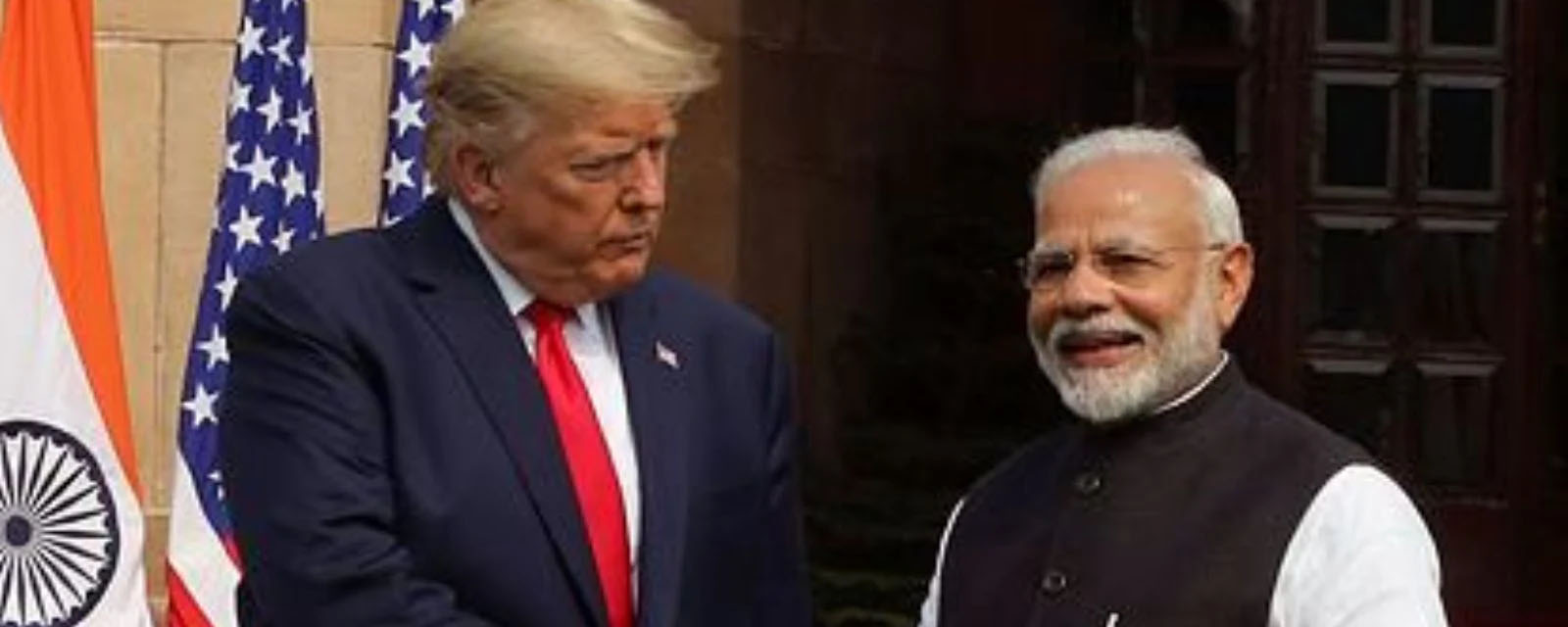
Prime Minister Narendra Modi’s recent visit to Washington marked a significant development in India’s energy sector, as India and the U.S. reaffirmed their resolve to deepen energy cooperation. The U.S. has positioned itself as a key supplier of crude oil, petroleum products, and liquefied natural gas (LNG) to India, underscoring the strength of the India-U.S. Comprehensive Global Strategic Partnership.
In 2016, Modi unveiled his vision for a gas-based economy to reduce pollution, diversify energy sources, and secure long-term energy stability. As of 2025, India is navigating a complex global energy landscape. The U.S. is ramping up its natural gas exports under President Donald Trump’s leadership, while Russia, an established supplier of oil to India, continues to face U.S.-led sanctions that complicate the energy trade.
India’s energy strategy includes increasing the share of natural gas in its energy mix from the current 6.2% to 15% by 2030. This ambitious target is driven by the need to reduce carbon emissions and diversify primary energy sources. According to the International Energy Agency, India’s natural gas consumption is expected to rise by nearly 60%, reaching 103 billion cubic meters (bcm) annually by 2030.
Currently, India imports around 50% of its gas demand through LNG, which presents a vulnerability in its energy security. Projections suggest India’s LNG imports will double by 2030 to 65 bcm, making it the world’s fourth-largest LNG importer. This heavy reliance on LNG imports exposes India to price fluctuations, supply disruptions, and geopolitical risks.
Modi’s visit to the U.S. could open new avenues for India to secure long-term LNG contracts, strengthen technology collaborations, and attract investments in oil and gas infrastructure. The evolving energy partnership between the U.S. and India not only enhances India’s energy security but also aligns with its goal of transitioning toward a gas-based economy while maintaining strategic autonomy.
Meanwhile, Russia continues to pitch LNG to India despite facing Western pressure. Russian officials have promoted LNG from the Arctic LNG 2 project, though Indian companies remain cautious due to the geopolitical risks linked to U.S. sanctions. Discussions between Indian and Russian firms are ongoing, with India exploring all available options to secure competitive LNG deals.
As India navigates the complexities of global energy markets, both the U.S. and Russia present compelling, yet challenging, LNG supply options. U.S. LNG offers stability but comes at a premium. For example, shipping LNG from the U.S. Gulf Coast to India incurs freight costs of approximately $1.61 per million British thermal units (MMBtu) as of early 2024. Moreover, U.S. LNG contracts often feature rigid terms, limiting India’s flexibility in responding to market fluctuations.
On the other hand, Russian LNG is geographically closer and more cost-effective. However, geopolitical uncertainties, including sanctions related to the ongoing Russia-Ukraine conflict, complicate financial transactions and logistical operations. As Europe reduces its dependence on Russian energy, India may have an opportunity to negotiate lower prices from Russia, but risks remain high.
Over-reliance on either U.S. or Russian LNG poses risks. U.S. LNG could be affected by policy changes, while Russian LNG faces ongoing sanction-related uncertainties. To mitigate these risks, India aims to diversify its LNG suppliers by incorporating sources from the Middle East, Australia, and Africa, thereby building a more resilient energy portfolio.
Following Modi’s discussions with Trump on oil and gas supplies, India is keen to secure competitive LNG pricing in long-term contracts. For India’s gas-fired power plants to remain economically viable, LNG prices need to range between $8 and $10 per MMBtu—much lower than North Asia’s spot LNG prices, which are currently around $16 per MMBtu.
In a bid to secure more affordable LNG, GAIL India is exploring the acquisition of a stake in a U.S. LNG plant. This move aligns with the recent U.S. decision to lift restrictions on LNG export facility approvals, enabling India to lock in long-term contracts at competitive rates. Additionally, India is investing in domestic gas infrastructure and technology to boost energy capacity.
Despite sanctions, India is also exploring alternative financial mechanisms to sustain energy cooperation with Russia. These mechanisms include trading using national currencies, a strategy that has been historically successful between India and Russia. Recent talks indicate a renewed interest in bypassing U.S. dollar-based transactions to continue energy imports from Russia.
The Trump administration, however, may tighten sanctions on Russian energy exports, which would complicate India’s LNG procurement strategy. If U.S. policies intensify, India will need to proactively diversify its energy sources and refine its payment strategies to ensure stable imports.
India’s energy cooperation with Russia extends beyond LNG to oil, coal, and nuclear energy. Russian companies are involved in India’s oil and gas exploration, and talks continue on expanding LNG shipments. At the same time, India is strengthening ties with Middle Eastern LNG producers and exploring new suppliers in Africa and Australia. By adopting a multi-pronged approach, India is reducing its dependence on any single energy supplier, ensuring long-term energy security and economic competitiveness.
Manish Vaid is junior fellow, Observer Research Foundation, with research interests in strategic energy insights and
green transitions, This article has been further updated with additional content by the Cult Current desk, and we are republishing it with due credit