

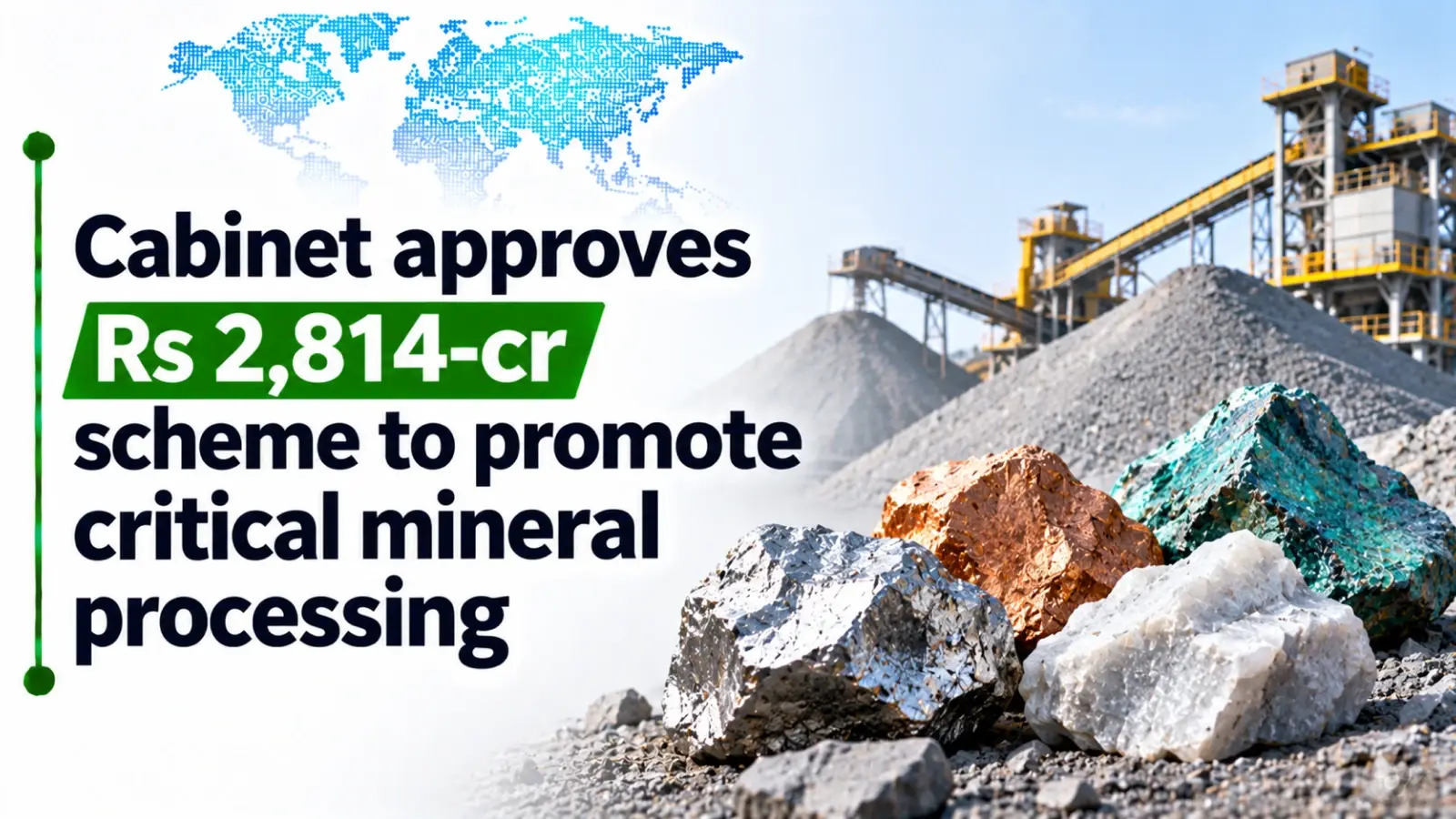
Two Cabinet decisions on Nov 4 could reshape India's green future. First, Rs 2,814 crore boost for critical mineral processing - lithium, cobalt, nickel, rare earths. Second, Rs 17,500 crore Viability Gap Funding for battery energy storage systems (BESS) and pumped hydro.
Why it matters: India imports 100% lithium, 100% cobalt. China controls 70% of processing. With EV sales crossing 2 million in 2026 and 500 GW renewable target by 2030, without minerals, transition stalls.
The scheme offers 30% capital subsidy for processing plants, 50% for recycling. Six plants to be set up - in Andhra Pradesh, Odisha, Tamil Nadu. Andhra's new site near Nellore for lithium refining from Australia's mines where India KABIL has stakes.
The Rs 17,500 cr energy storage scheme targets 12 GWh BESS capacity. Power Minister said India needs 74 GW storage by 2032 to manage intermittent solar/ wind. Currently we have 4.7 GW.
Analytically, this is import substitution 2.0. Like PLI for semiconductors, government is de-risking private capital. But challenges remain: technology from China, environmental clearance in Eastern Ghats, and water for lithium processing.
From Indian industry lens, it helps three groups: Tata Chemicals, Amara Raja for batteries; Adani, Greenko for storage; and defence for rare earths used in missiles.
Global context: US IRA gives $369 bn for similar; EU Critical Raw Materials Act 2023. India is late but budget is focused.
If implemented, it could cut battery costs 20%, making EVs cheaper than ICE by 2028. That will cut oil imports - still $140 bn a year. So mineral policy is actually oil policy.
Success metric: whether by 2030, India processes 30% of its lithium domestically vs 0% now.
Tags: #CriticalMinerals #BESS #CabinetDecision #Lithium #EnergyStorage #EV #PLI #ChinaDependence #Green Transition