

Bratislava, Nov 11:
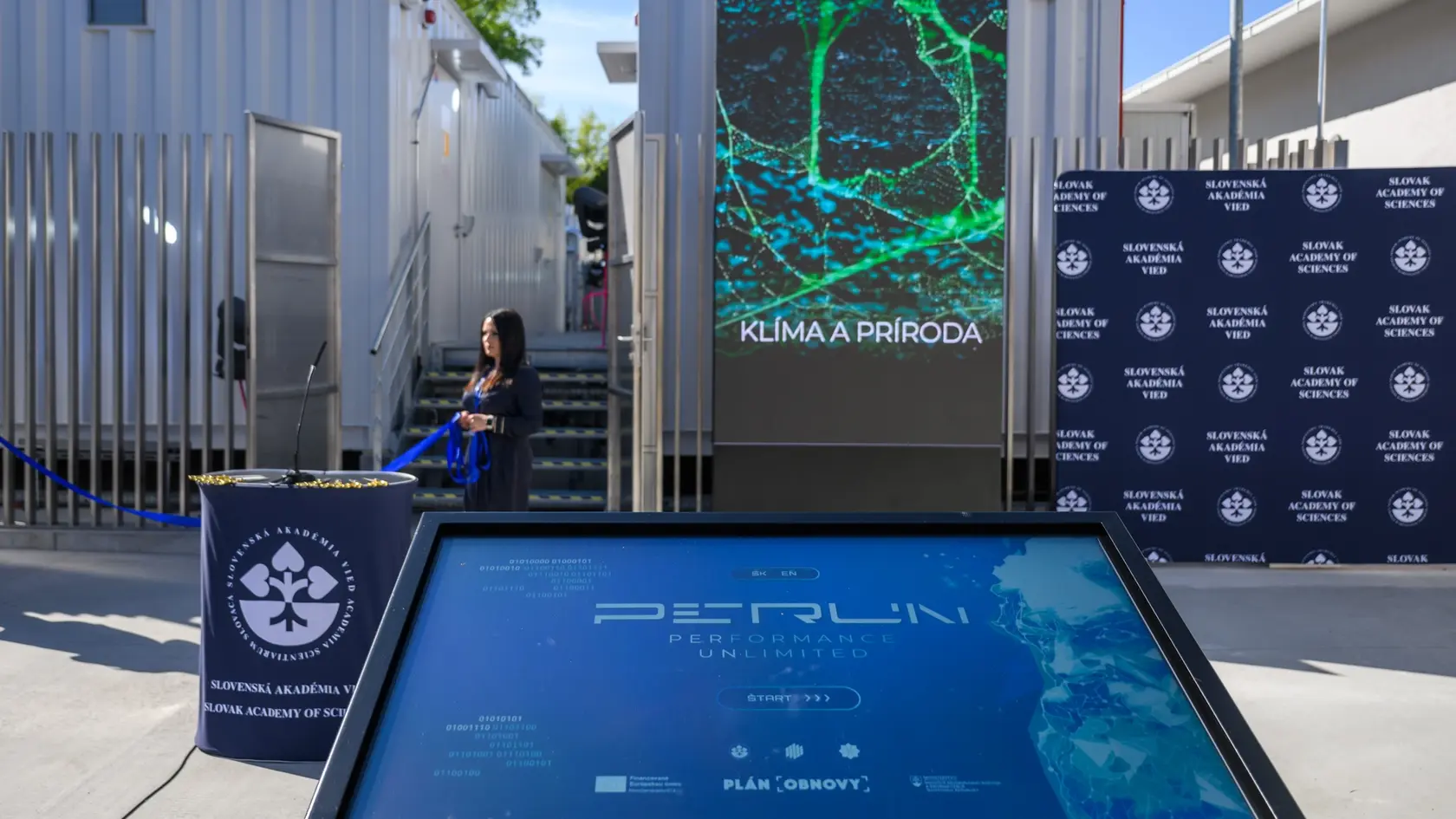
Slovakia this month officially launched Perun — national supercomputer at SAS Bratislava + cluster in Košice as single system >25 petaflops, Rank 125 on Top500 Nov 2025 list. Built on BullSequana XH3000 + Nvidia GH200, €36.3m from EU Recovery Plan, successor to Devana and Aurel (128 teraflops in 2012).
While no Slovak won Nobel this year, SAS computing center notes its infrastructure's "small contribution" — typical pattern for Nobel science:
- Grid model: Like SURF Grid provided 12.5 million hours for LIGO-Virgo gravitational wave detection — Nobel Physics 2017 for Weiss, Barish, Thorne — and SDSC + HTCondor cloudburst 51,500 GPUs for IceCube neutrino work — Nobel Physics 2026 for Francis Halzen — Slovakia contributes via http://EGI.eu, WLCG Tier-2, PRACE.
- Leonardo access: Since Nov 2022, Slovakia as member of Leonardo consortium (6 countries, Italy led) gets 56,000 GPU node-hours/year on 250 petaflop Leonardo — 6th fastest world. Slovak projects apply via SAS Computing Centre to run highly parallelized simulations that Devana can't handle.
- Historical: Aurel supercomputer 2012-2021 used in 113 projects — physical chemistry, biochemistry, materials, particle physics, quantum physics, virology — 4,000x faster than PC. 2a44f57d
SAS statement: “With Perun, Slovakia joins countries equipped with modern computing infrastructure capable of supporting both cutting-edge research and applied development... strengthening competitiveness.”
Why it matters for India:
India's National Supercomputing Mission (38 systems, 223 petaflops) follows same path — Param Rudra, Airravat — small cycles from many centres enable global collaborations like LIGO-India, INO neutrino observatory.
Nobel science today is never one lab — it's thousand nodes sharing time.
*Tags:* #Slovakia #Perun #NobelPrize #HPC #Supercomputer #IceCube #LIGO #EGI