

HANOI — Vietnam is embarking on landmark transformation of its power sector, paving way for competitive electricity market where consumers gain right to choose providers, and the core battle is not about wires — it's about price.
The old model is broken-
For 20 years, Vietnam ran state-owned, subsidised, single-buyer model centered on Vietnam Electricity (EVN). It worked when installed capacity was 5,300 MW in 2013 with EVN holding 54%. By June 2026 system hit 93,831 MW, private sector now 40.5% vs 5.3% in 2013, EVN down to 13.8%. But only 38% of generation participates in market. Pricing remains opaque, cross-subsidy between industrial, residential, rural, urban persists. Households in Sa Pa and Ho Chi Minh City pay same rate though cost differs.
Result: Vietnam must triple capacity to 234,000-251,000 MW by 2030 per Power Development Plan 8 to fuel 7%+ growth, needs over $100bn private capital in next five years. Investors deterred by non-cost-reflective tariffs and inability to negotiate.
Resolution 70 — the mandate—
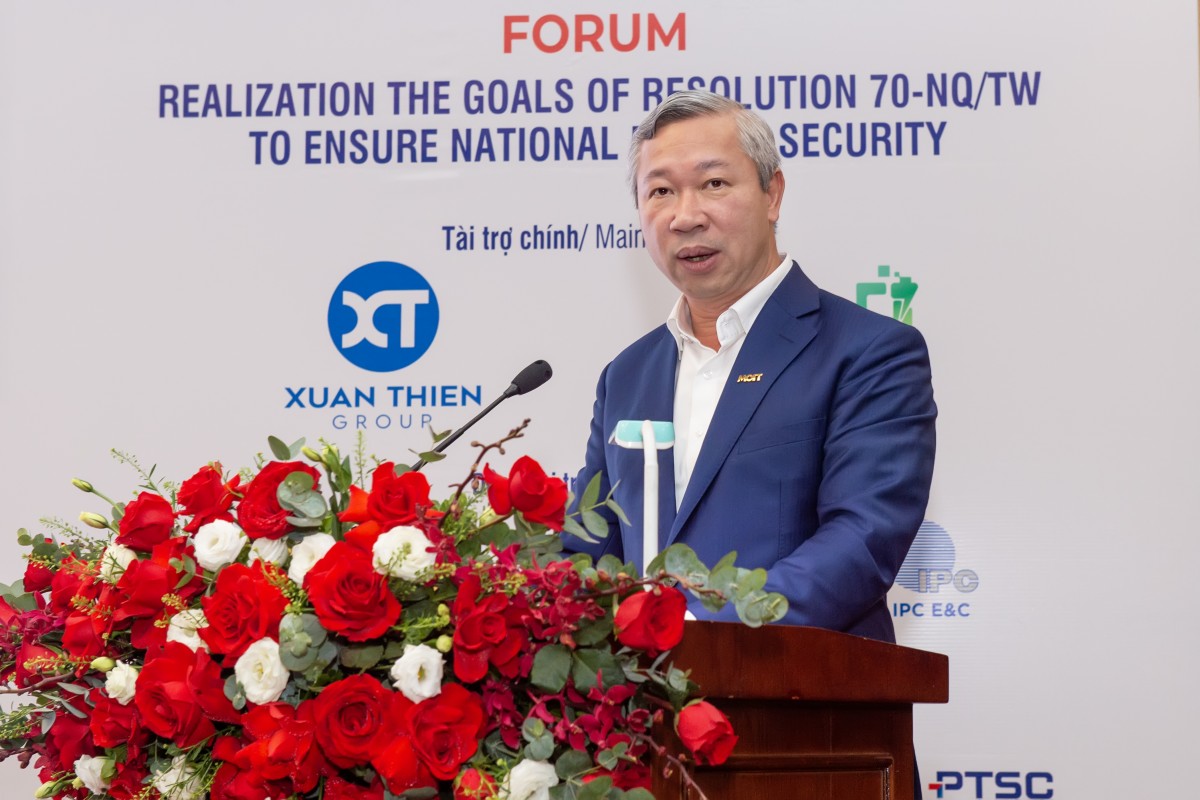
Politburo's Resolution No. 70-NQ/TW Aug 20, 2025 on ensuring national energy security to 2030 with vision to 2045, elaborated by Government Resolution 328 and amended by Resolution 361/NQ-CP Nov 10, 2026, sets bold vision:
- Complete institutional reforms
- Ensure transparent, market-driven pricing under state oversight
- Eliminate cross-subsidies between customer groups and regions
- Foster competitive electricity market
- Grant consumers right to choose suppliers
- Boost PPPs in transmission, Direct Power Purchase Agreements (DPPA)
Minister of Industry and Trade Nguyen Hong Dien at October conference: “Resolution 70 is a mandate of reality. There is no room for hesitation. Those unwilling to reform must step aside.”
Three phases—
1. Competitive generation market — operational since 2012
2. Competitive wholesale market — launched 2019
3. Competitive retail market — planned 2027
Under draft Prime Minister decision being reviewed by Ministry of Justice, from 2027 eligible users can select retail supplier, price negotiated directly via bilateral contracts or spot market. Others stay on regulated state tariff. Spot price announced per trading cycle by market operator NSMO — National System and Market Operator, separated from EVN from 2024 to ensure independence.
Structure separates natural monopolies (transmission, distribution, system operation) from competitive activities (generation, retail).
The pricing politics — two-part tariff—
The heart is pricing reform: move from single-component kWh-only tariff to two-part system as in most countries.
- Capacity charge (fixed cost): pays for transmission lines, substations, grid readiness, registered demand
- Consumption charge (variable cost): actual kWh used, with time-of-use and peak-demand pricing
Assoc Prof Ngo Tri Long, former Deputy Director of Price Market Research Institute, noted key innovation is market-based but state-managed, without cross-subsidization. Each group pays actual cost.
MOIT tasked to report to PM in 2026 on two-part retail system. Also tasked to develop policy supporting households installing rooftop solar self-consumption + storage — crucial to relieve peak.
EVN's warning—
EVN is worried competition will drive up prices.
In feedback to draft, EVN said shift from state-regulated average price to market price would lead to higher electricity prices, because new price must fully account for generation, transmission, distribution, plus profit margins. Regional disparity could hurt remote areas.
MOIT shares concern about fluctuation. "Electricity is unique commodity where supply and demand always balanced," ministry said. But trend of increasing prices to reflect reasonable costs is necessary.
Recent tariff change illustrates sensitivity: On Nov 1, 2026, EVN cut average retail price 2% and simplified residential tiers from six to five, introduced separate tariffs for tourist accommodation and EV charging, reorganized by voltage level (including new 220kV+ category). EVN estimates 98.23% of households — those using <900 kWh/month — see lower bills; 1.77% high users pay more. Revenue loss ~VND 1.6 trillion ($61m) monthly. Recommendation still: conserve.
Ministry vs Ministry—
Restructuring debate split government:
- MOIT view (market structure): Transmission is natural monopoly, must be independent of buyers/sellers for fair competition. Proposes National Power Transmission Corporation (EVNNPT) separated from EVN, and not creating National Strategic Power Generation Corp but restructuring generation units to compete.
- Ministry of Finance view (financial security): Separating EVNNPT needs additional VND 42,500 bn equity, could impact BOT contracts requiring investor/lender approval. Electricity supply 2027-2030 projected very strained. If solution increases shortage risk in next 3-4 years, pace must adjust. Proposes EVN remain wholly state-owned LLC under MOF, continue directly managing 7 hydropower companies Son La, Hoa Binh, Tuyen Quang, Ialy, Tri An, Se San, Huoi Quang-Ban Chat long-term to balance purchase costs and stabilize retail price.
MOF also says establishing strategic generation corporation not mandatory for competitive market.
Vice Chairman Vietnam Energy Association Nguyen Anh Tuan said views differ not in objectives but priority order. Three principles needed: finalize timeline early, resolve input conditions — capital supplement plan, BOT negotiations and ensure equal treatment via independent accounting and public disclosure before separation.
Why now?
As analyst Ha Dang Son, Center for Energy and Green Growth Research: Long-standing practice of using one customer group to subsidize another is being phased out. Consumers hoping for competitive pricing and improved service, but diversification needs goods to trade.
With 2024 Electricity Law No. 61/QH15 (effective Feb 2025) changing price adjustment mechanism from Prime Minister Decision to Government Decree, allowing prompt reflection of input parameters, legal framework finally ready.
The politics: Eliminating cross-subsidy means industrial users who were subsidized will pay more, rural users who were subsidized may pay more, or state budget must compensate. Minister's warning not about economics but about losers resisting. As one EVNSPC deputy head said, core of competitive market lies in its pricing mechanism — everything else is wiring.