

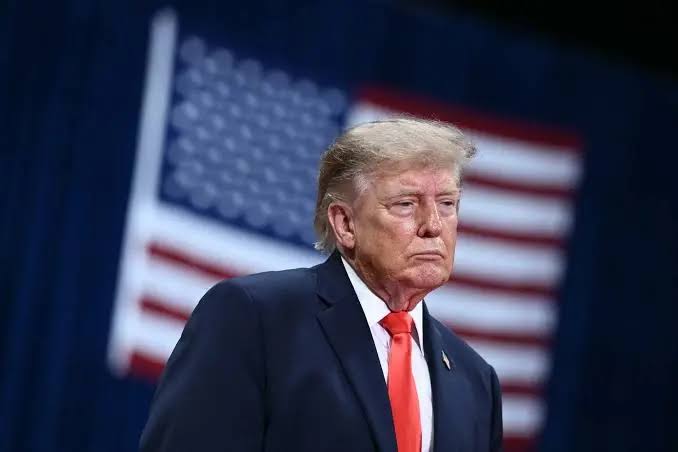
The U.S. midterm elections on November 3, 2026, altered the course of American politics. In these elections, the Democratic Party secured majorities in both the House of Representatives and the Senate. This means that for the remaining two years of his term, President Donald Trump will face a Congress controlled by the opposing party. This outcome comes at a time when questions are being raised within the United States over inflation, employment, and the rising cost of living. On the other hand, at the international level, U.S. policies, military actions, and trade decisions have strained its relations with several nations.
Viewing these elections merely as a power struggle between the Republican and Democratic parties in America would be an oversimplification; their significance goes far beyond that. This election also questions the powers of the U.S. president, his foreign policy, and America's role in the world. From the Middle East to Latin America, and from trade relations with India to the politics of Israel, American decisions are impacting numerous nations worldwide. In this context, it is crucial to understand the direction in which Trump's politics, commonly referred to as 'Trumpism,' is heading and what its implications might be for the global order.
Trump’s return to power in 2024 carried a strong political message. He defeated Kamala Harris by securing 312 electoral votes, while Harris received 226. The core slogan of his campaign was "Make America Great Again," and he promised the American public that he would curb illegal immigration, lower inflation, strengthen domestic industries, protect American interests abroad, and keep the nation out of unnecessary foreign wars. He argued that over the past many years, America had spent vast sums of money on other nations' wars while its own citizens struggled with inflation and economic hardships.
Trump had also promised to expand employment opportunities in the U.S. and protect American industries by imposing tariffs on goods coming from other countries. The foundational philosophy of his policy was that America must use its economic and political power exclusively for its national interests. He termed this mindset 'America First.' The 2024 Republican election manifesto also prominently featured national security, border control, energy production, the return of industries, and economic protectionism. His supporters hoped that Trump would economically strengthen the U.S. and play a role in ending ongoing global conflicts.
However, a gap always exists between campaign promises and the practical realities of governance. This gap has become evident in several areas during Trump’s second term, with the U.S. military policy being the prime example. Prior to coming to power, Trump presented himself as a leader who would keep America out of long and costly wars; yet, during his second term, the U.S. has engaged in military actions across multiple countries.
In January 2026, the U.S. launched a military operation in Venezuela, arresting President Nicolás Maduro and bringing him to America. This action raised serious questions in international politics. Arresting a sitting president of another country through a military operation is not merely a bilateral matter concerning two nations; it is a fundamental question of national sovereignty and international law. The House of Commons Library in the British Parliament also raised questions regarding the legal and international implications of this operation.
The ultimate test of Trump's foreign policy, however, is unfolding in the conflict with Iran. In February 2026, the U.S. and Israel launched military strikes against Iran, escalating tensions across the entire Middle East. Iran retaliated, and the conflict began to spill over into neighboring countries and maritime trade routes. While several nations, including Qatar, have attempted to mediate between the U.S. and Iran, no agreement to end the war had been reached by November 3. Reports of explosions continued to emerge from southern Iran on November 7, and the situation regarding the movement and security of vessels in the Strait of Hormuz remains tense.
A critical question arises here: When a president comes to power promising to end wars and keep America away from foreign conflicts, how do conditions for new military conflicts arise during their tenure? Protecting national security is the responsibility of any government, but the consequences of military actions and prolonged wars are not limited to the combatant nations alone. They can drive up energy prices, disrupt trade routes, and put pressure on the global economy, with the heaviest burden ultimately borne by ordinary citizens.
To understand Middle Eastern politics, it is also essential to examine the relationship between Israel and the United States. For decades, Israel has been America's closest strategic ally, receiving robust military aid and diplomatic backing on international platforms. However, this relationship is now becoming a subject of debate within U.S. domestic politics.
On October 27, 2026, general elections were held in Israel. In a 120-member parliament, Prime Minister Benjamin Netanyahu’s-led coalition won 53 seats, while the opposition bloc secured 48 seats. Arab parties won a total of 19 seats. Since a majority of 61 seats is required to form a government, neither major political bloc secured a clear mandate. Consequently, forming a government in Israel will require extensive negotiations and compromises among various political parties.
The significance of these elections extends far beyond government formation. Israel faces massive challenges concerning Gaza, Iran, Lebanon, and its own internal security. Netanyahu’s policies and leadership are subjects of deep political division within the country. It would be incorrect to assume that all Israeli citizens share a uniform view on war and security issues; election results demonstrate that the nation's political landscape is fractured across diverse ideologies and interests.
Amidst this, on November 3, Trump announced that the U.S. would cut off nearly $4 billion in annual military assistance to Israel by the end of the year. He stated that an agreement had been reached with Netanyahu and that Israel was no longer dependent on this aid. However, the pre-existing military assistance pact between the U.S. and Israel was scheduled to run through 2028, leaving the implementation mechanism of Trump’s sudden declaration unclear. This development illustrates how domestic politics, shifting economic priorities, and strategic interests can alter even the most enduring bilateral alliances.
The intersection of American domestic politics and foreign policy is now more transparent than ever. Voter dissatisfaction during the midterm elections was fueled by inflation, the rising cost of living, the Iran war, and administrative missteps. This signifies that foreign conflicts are no longer insulated policy matters; they directly impact the daily lives and electoral choices of American citizens.
The recent political shift in Brazil offers another vital parallel. In the presidential election held on October 25, 2026, Luiz Inácio Lula da Silva secured a resounding victory, defeating Flávio Bolsonaro (the son of Jair Bolsonaro). Lula garnered 51.79% of the valid votes against Flávio’s 48.21%. This victory marks Lula's fourth tenure as Brazil's president, having previously served two terms from 2003 to 2010 and another from 2023 to 2026.
Comparing Brazil's political trajectory with that of the U.S. is revealing. Trump and Jair Bolsonaro share striking similarities in political ideology and style, both heavily leveraging nationalism, identity politics, and anti-establishment sentiment. Yet, Brazilian voters rejected Flávio Bolsonaro in favor of Lula, proving that right-wing populist momentum is not uniform globally; domestic economic realities, social contexts, and leadership dynamics ultimately dictate electoral outcomes.
An interesting constitutional contrast exists between the United States and Brazil. The 22nd Amendment to the U.S. Constitution, ratified in 1951, bars any individual from being elected president more than twice. Having won in 2016 and 2024, Trump is constitutionally barred from running for a third term. Conversely, the Brazilian constitution permits a president to run for re-election consecutively once, allowing Lula to return to power in 2023 after his initial terms and now secure a fourth mandate.
The 22nd Amendment sets a definitive boundary on Trump's political future. While he will remain president until January 2029, the constitutional path to a third term is firmly closed. However, this does not mean his political influence will evaporate; he is well-positioned to shape the Republican Party's direction and sway the 2028 presidential race, alongside rising figures like Vice President JD Vance and Secretary of State Marco Rubio.
The Democratic Party's victory in the midterms introduces a major hurdle for Trump, as the opposition now controls both chambers of Congress. Democrats can obstruct his legislative agenda, summon government officials for oversight, and launch rigorous investigations. While impeachment proceedings can be initiated in the House, removing a president requires a two-thirds supermajority in the Senate. Thus, while the midterms do not terminate Trump's presidency, they make the execution of his policy agenda significantly more difficult.
The most profound ripple effects of these developments will likely be felt in India. Over the past few decades, India-U.S. relations have grown significantly stronger, anchored by cooperation in defense, technology, trade, education, and the Indo-Pacific region. Amidst China's expanding footprint, the U.S. views India as an indispensable strategic partner; nevertheless, trade disputes and tariff disagreements persist between the two nations.
The core premise of Trump's trade strategy has been to levy heavy tariffs on foreign imports to shield American industries and pressure trading partners into granting more concessions to U.S. goods. This policy has directly impacted India.
In February 2026, India and the U.S. announced a framework for an interim trade agreement, under which Washington proposed an 18% reciprocal tariff on several Indian exports, including textiles, footwear, leather, chemicals, and machinery. However, on February 20, 2026, the U.S. Supreme Court delivered a landmark ruling declaring that the president cannot unilaterally impose tariffs by invoking emergency international economic powers. This verdict halted some of Trump's signature tariff measures.
Nonetheless, this did not eliminate all trade barriers for India. In July 2026, the U.S. introduced a separate investigation resulting in a 10% additional tariff on certain Indian goods under the guise of combating forced labor imports. According to India's Ministry of Commerce, India was placed in a lower additional tariff category compared to other heavily penalized nations. This underscores that bilateral engagement requires much more than temporary trade deals; domestic legal frameworks, local politics, and commercial interests heavily dictate outcomes.
For India, the economic stakes are high. The textile, leather, gems and jewelry, engineering goods, and MSME sectors are heavily reliant on the American market. Imposing additional duties could inflate prices, eroding the competitiveness of Indian goods against global alternatives and impacting exports, investments, and employment. Consequently, India must prioritize the interests of its domestic industries and small business owners in ongoing trade dialogues.
Crucially, India-U.S. ties transcend mere commerce. The United States remains a vital partner for India in defense technology, foreign investment, and Indo-Pacific security architecture. New Delhi must ensure that commercial friction does not derail the broader strategic partnership, while concurrently adopting an independent and robust diplomatic stance to safeguard its economic sovereignty.
This diplomatic balancing act becomes even more complex when examining India's parallel relationships with Israel, Iran, and Russia. India shares deep defense, agricultural, and security ties with Israel. Simultaneously, Iran is critical for India's regional connectivity via the Chabahar Port and access to Central Asia, while Russia remains a traditional cornerstone of India's defense and energy sectors. These relationships are driven by distinct national interests.
The ongoing conflict involving Iran poses a severe concern for New Delhi. The Strait of Hormuz is one of the world's most vital maritime chokepoints, through which a massive share of global oil and gas transits. Prolonged volatility in this region risks inflating crude oil prices, spiking shipping insurance costs, and crippling international trade. As a major importer reliant on foreign crude to meet its energy demands, India's domestic economy, inflation, and industrial output are directly vulnerable to oil price shocks. Furthermore, the safety of millions of Indian expatriates residing in the Gulf states remains a paramount responsibility for the government.
In this volatile environment, the concept of strategic autonomy assumes renewed importance for Indian foreign policy. Strategic autonomy does not mean maintaining equidistant neutrality or refusing to cooperate with nations; rather, it signifies that India makes sovereign decisions driven strictly by its national interests rather than external pressure. India can concurrently advance defense technology partnerships with the U.S., maintain warm relations with Israel, keep channels open with Iran, and sustain historical ties with Moscow. Viewing these partnerships as mutually exclusive would run counter to India's national interest.
The U.S. midterm elections serve as a reminder that executive power within a democracy is far from absolute. The American constitutional framework relies on a strict separation of powers among the executive, legislature, and judiciary. The 22nd Amendment limits presidential tenure, while judicial rulings ensure executive actions remain bound by the Constitution, as exemplified by the Supreme Court’s tariff block and the Democratic congressional takeover.
However, elections alone cannot instantly dissolve international conflicts. A shifting Congress will not automatically end the war in Iran or resolve the Gaza-Israel crisis, but it significantly empowers the political opposition to challenge and audit executive decisions.
The coming two years will prove critical for both American and global politics. Trump must navigate a hostile Congress controlled by his political rivals, while the Democrats must prove they can offer a viable economic and political alternative rather than mere obstructionism. Meanwhile, Israel will navigate government formation, Brazil will see Lula embark on his fourth term, and India must carefully calibrate its multilateral diplomacy among global superpowers.
Ultimately, global politics is shaped not by single leaders or solitary elections alone, but by a complex interplay of economic interests, military might, institutional checks, and strategic decisions. While Trump's resurgence underscored the potent forces of nationalism and economic grievance in America, the midterm results prove that electorates retain the power to scrutinize state policies and their real-world consequences.
For India, the imperative of the hour is clear: it must avoid pitting its partnerships against one another. Its energy security, economic growth, and regional stability depend entirely on how astutely it manages relationships across a fragmented global order. In such times, strategic autonomy is not merely a diplomatic buzzword, but a vital national necessity.
The overarching question raised by these U.S. elections transcends the future of Trumpism itself; the central dilemma is whether the international community can preserve spaces for cooperation, international law, and national sovereignty amid economic warfare, military interventions, and escalating great-power competition. The answer will not emanate from Washington alone, as the agency and role of middle powers like India will be equally decisive.
(The author is a senior journalist.)