

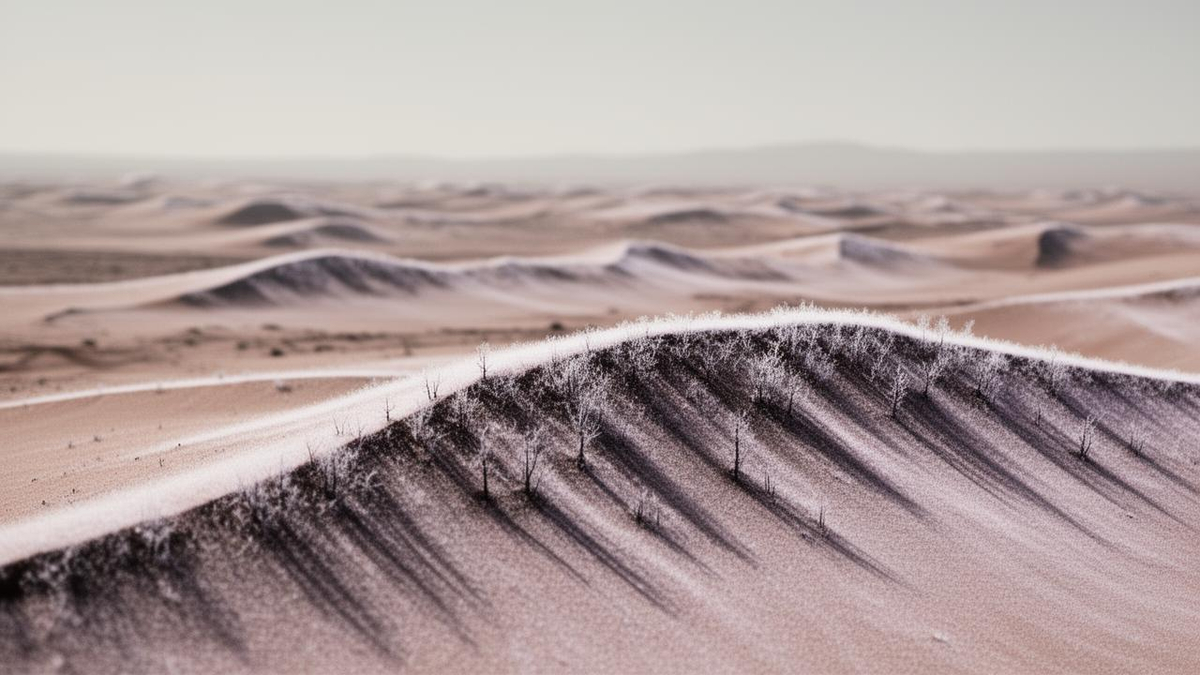
PASADENA: NASA Captures "Ghost Forest" on Mars: Not Trees, but Sand Sliding as Dry Ice Sublimates. Striking photograph captured NASA Mars Reconnaissance Orbiter resurfaced sparking fascination appears rows dark trees standing frozen dunes near Martian north pole.
Despite lifelike appearance scientists confirm no vegetation Red Planet; "trees" actually dark streaks sand sliding icy slopes.
To best humanity understanding — significant — nothing seems grow red planet. Nary rover nor orbiter ever caught wind single alga, cactus, spindly tumbleweed.
Which makes photograph snapped NASA Mars Reconnaissance Orbiter 2008 all more startling. In it thickets scraggly trees appear stand bolt upright crests frozen dunes near Martian north pole.
But really matter perspective. Flip image upside down suddenly long shadowy streaks against pale ice sand look much more what really are: dark sand inside dune disrupted sent tumbling down dune side seasonal sublimation carbon dioxide ice.
*How sublimating dry ice tricks eye:*
Optical illusion occurs every Martian spring. During frigid winter blanket carbon dioxide ice — dry ice — covers northern sand dunes.
When spring sunlight warms surface penetrates translucent ice heats below. Instead melting liquid dry ice sublimates turning directly trapped gas.
Eventually pressure builds until ice crust cracks bursts outward carrying dark sand along escaping gas. As sand cascades steep slopes leaves thin branching trails look remarkably tree trunks shadows above.
NASA APOD: “When this happens near top dune, dark sand can slide down dune, leaving dark streaks surface at first glance may look like trees standing in front brighter areas, but they cast no shadows.”
That's giveaway — trees cast shadows. These cast none. Because they're flat stains on ground, not vertical objects.
Mars like Earth tilted relative Sun marches own progression seasons every year. But Mars many ways unlike Earth what happens seasonal transitions look very different.
During bitterly cold Martian winter instead water ice dominates Earth carbon dioxide atmosphere freezes snow frost blanketing polar landscape layer dry ice.
When long winter starts give way spring ice doesn't melt liquid like snow frost Earth but sublimes directly back atmosphere. Disruptive process.
Even feeble warmth Sun reaches Mars enough warm ice along crests dunes causing weaken crack. Seemingly paradoxically sunlight penetrate translucent ice warm below producing accumulations gas eventually burst outward carrying sand along.
As sand cascades steep slopes dunes leaves long dark streaks viewed above resemble branches trunks trees.
*Caught in act:*
In 2008 image HiRISE actually captured small cloud dust kicked material cascading down dune. Close ups show billowing plumes indicating sand slides occurring even image taken.
Image taken Apr 2008 spring Mars. HiRISE most powerful camera sent another planet resolves objects 25 cm across image spanning about 1 km. Each dark sand streak measure up to 164 feet (50m) length.
Sand dunes form nearly complete ring around Mars north pole covered thin layer reddish Martian dust patches dry ice. To date no firm evidence any type Martian biology past present plant otherwise.
"What we think happening dark sand sliding down bright frosted portion dune," Candy Hansen member MRO team University Arizona told http://SPACE.com. “You're looking slip face dune, where sand comes stop forms sort scallop-shaped edge bottom.”
*Dunes move — fast for Mars:*
2011 study late planetary scientist Candice Hansen-Koharcheck Planetary Science Institute colleagues compared images northern polar dunes taken successive Martian years revealing dramatically landscape change.
Sequence HiRISE observations reveals seasonal CO2 ice drives sand down slopes dune leaving dark streaks reshaping landscape. In five dunes researchers measured lower edges slopes advanced 2.2 to 4.7 metres over single Martian year — 687 Earth days.
By summer ice vanished taking dark streaks it. Martian winds redistribute sand gradually smoothing.
By summer dry ice layer disappears completely dark sand streaks gradually dispersed wind terrain becomes flatter. Cycle repeats turning Martian north polar region natural laboratory tracking effects sublimation planet surface.
Visual confusion image shows researchers must still carefully cross-check surface shapes against physical processes underway.
*Why humans see trees — pareidolia:*
Brain wired find faces, trees, life in patterns. Mars Face 1976, Mars trees 2008, Mars door 2022, Mars spider — all geology + pareidolia. NASA calls it "Martian pareidolia".
Real Mars life hunt: Perseverance Jezero crater collecting samples ancient lake, Curiosity Gale crater methane spikes, ExoMars 2028. No trees — if life exists, it's microbes underground, not forest.
*India angle:*
ISRO Mangalyaan HiRISE-like? Mars Orbiter Mission 2014 captured dunes, polar caps. ISRO's next Mars Lander 2030s will study same CO2 sublimation.
Next time viral "NASA finds trees on Mars" — flip image, check shadows. Ghost forest is ghost — sand, ice, spring.
#Mars #NASA #HiRISE #MRO #GhostForest #DryIce #Space #Pareidolia #MarsReconnaissance #Sublimation