
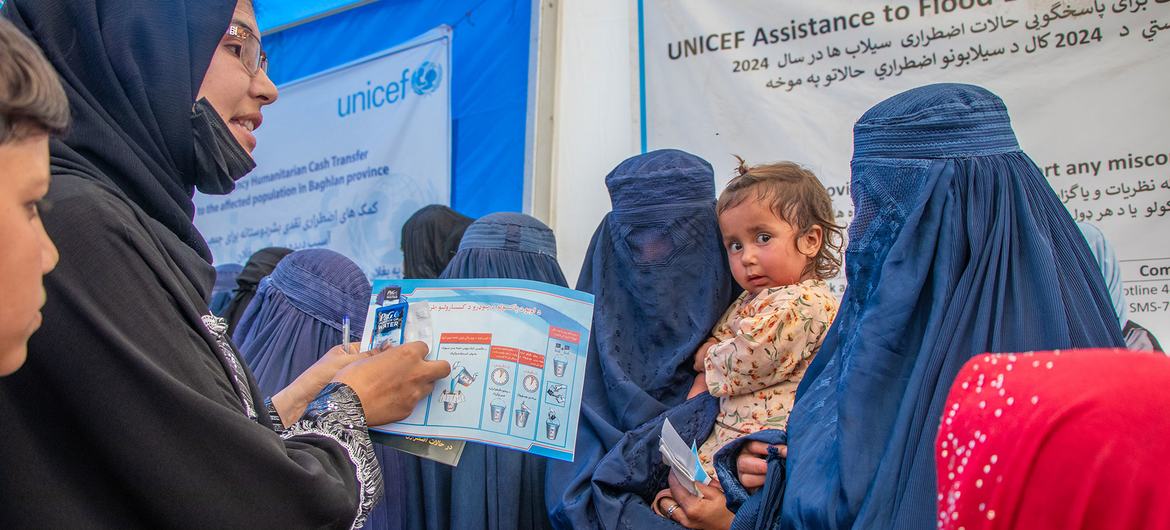
KABUL: The United Nations has warned that declining humanitarian funding in Afghanistan is forcing the closure of essential support services for women and girls, leaving them increasingly vulnerable to violence and abuse.
The warning came on November 25, the International Day for the Elimination of Violence Against Women and the start of the 16 Days of Activism against Gender-Based Violence.
"Just as the risks of violence against women and girls are growing, the services they depend on are disappearing because of aid cuts," said Susan Ferguson, UN Women Special Representative in Afghanistan.
“Women's organisations provide safe women-only spaces, counselling, vocational training and other vital support. In a context where assistance must be provided by women, for women, these organisations are irreplaceable.”
“We cannot afford to lose the very organisations that women and girls depend on, at a time when they need them most.”
The numbers-
This year alone, according to OCHA, UN Women and other humanitarian actors:
- More than 193 service points for survivors of gender-based violence have closed because of aid cuts, affecting more than one million women and girls;
- Nearly 300 humanitarian health facilities have been closed or suspended, affecting more than one million women and girls;
- Around 3.4 million women and girls in need are now unlikely to have access to water, sanitation and hygiene services.
A UN Women survey of 74 women-led organisations across Afghanistan this year found that nearly three in four had experienced funding cuts in 2025, and more than half had been forced to scale back violence prevention and protection services.
Half of the organisations surveyed expect to suspend operations or close by April 2027 because of aid cuts, putting up to 427,000 women at imminent risk of losing access to services.
Why it is happening now-
Ferguson said risks are growing as economic hardship, environmental shocks and successive humanitarian crises compound the impact of intensifying restrictions on women's rights and freedoms.
Since taking power in 2021, the de facto authorities have issued more than 100 decrees stripping women and girls of their rights. Women are banned from many public spaces and most places of work. Some 2.6 million girls have been barred from secondary education, which is projected to push more girls into child marriage and increase maternal mortality.
UN Women Chief of Humanitarian Action Sofia Calltorp, just returned from Afghanistan, said the attack is deepening: women are now being excluded from providing healthcare, and there is a growing risk that Afghanistan's 22 million women and girls will be denied access to it, because of the ban on women training in these professions and restrictions on male health workers treating women.
In Kabul, she heard of a 24-year-old woman detained in her own home by her father for 18 months.
A UN Women survey of more than 3,000 people found three-quarters had experienced at least one serious environmental shock in the past year, exposing up to 16 million women and girls to displacement, loss of safe water and shelter, and protection threats.
Women in Afghanistan are nearly four times less likely than men to have access to formal justice mechanisms.
"Impossible decisions"-
Describing Afghanistan as the "world's worst women's rights crisis", Ferguson said Afghan women are now "fighting for their own survival". Funding cuts have forced humanitarians to make impossible decisions about which women and girls can receive support — and which must be turned away.
UN Women provides emergency cash assistance, counselling and small business training. But, said Calltorp, these services “do not undo the wider restrictions, which have also removed the guardrails against violence and abuse at home.”
The UN is urging governments and donors to increase, not cut, support. Under the campaign message "Still together. Stand with Afghan women and girls", the UN, donors and civil society are coming together throughout the 16 Days, November 25 to December 10, to highlight the urgent need to prevent and respond to violence.
"I urge governments and other international donors to increase their investment in women's organisations and stand with Afghan women and girls in their right to live free from violence," said Ferguson.
#Afghanistan #UNWomen #AidCuts #Women #GenderBasedViolence #Taliban #HumanRights #16Days #Kabul #Humanitarian