

WASHINGTON / BAGHDAD: "We support Iraqi Prime Minister Ali al-Zaidi's efforts to assert state authority throughout Iraq, stop the smuggling of Iraqi oil, end corruption, and bring all weapons under the exclusive control of the state," Trump said in a Truth Social post on Friday (November 27, 2026).
"We support Prime Minister al-Zaidi's efforts to build a united, prosperous, and strong Iraq that makes its own political decisions," he added.
The post appeared shortly after Iraqi government spokesman Haider al-Aboudi said Baghdad considers crude oil exports that bypass state oil marketer SOMO to be smuggling, since the proceeds do not reach the state treasury.
$100 billion lost—
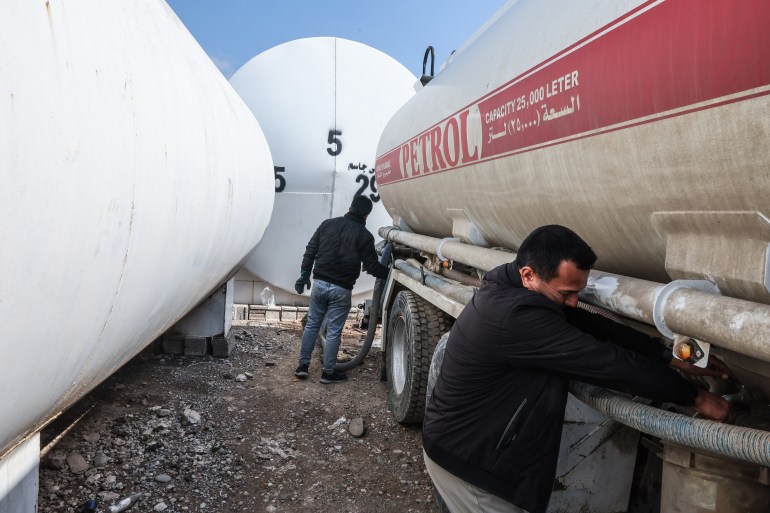
Speaking to the Iraqi state news agency, Aboudi added that Iraq lost an estimated $100 billion to oil smuggling through its Kurdistan region from 2008 to 2025.
That is the core of Baghdad's case: oil that does not go through SOMO does not go to the treasury. It goes to middlemen, to Kurdish authorities, to militias, to Iran.
Two fronts at once—
Zaidi is fighting on two fronts:
*1. Kurdistan*
On Tuesday, Zaidi moved to place the Kurdistan region's border crossings and several oil fields under federal control.
Iraq on Thursday closed two border crossings in the Kurdistan region, one with Syria and one with Iran, after Zaidi ordered federal authorities to take control of crossings run by the semi-autonomous regional government.
Kurdish authorities denounced the decision as a "constitutional violation." Thousands of demonstrators, many carrying Kurdish flags, rallied in support of the semi-autonomous Kurdish region in Erbil on Thursday, November 26, amid tensions over control of border crossings and oil resources.
Zaidi's crackdown targets routes used to move crude into Iran where it is being blended with Iranian crude for export, according to an intelligence document cited by Iraq's state media.
*2. Iran-backed militias*
In Zaidi's other major standoff, the prime minister ordered the army last week to prepare to enter *Jurf al-Sakhar* south of Baghdad, where the government accuses *Kataib Hezbollah* of running a smuggling operation.
Zaidi, who has repeatedly vowed to disarm Iran-backed armed groups, recently went after a powerful faction over alleged oil smuggling. He has been cracking down on the illicit oil trade, arresting officials and challenging the Iran-backed group after smuggling was uncovered in its stronghold near Baghdad.
Why Washington cares?
Iraq has long been stuck balancing the competing influence of the United States and Iran. But Zaidi has been steering the country closer to Washington.
A 41-year-old Iraqi businessman, al-Zaidi assumed power in May amid the US-Iran war. He immediately launched an aggressive anti-corruption campaign that sought to consolidate both the country's oil and arms under state control at a time when Iran-backed militias were firing at US interests.
A month later Trump welcomed al-Zaidi at the White House, where he called him "a great fighter" and “a great fan of America.”
Zaidi enjoys close ties with Trump envoy *Tom Barrack*, who is driving efforts to expand US oil investments in Iraq and develop an export route through Syria that could reduce dependence on the Strait of Hormuz.
The US, which is intensifying its economic pressure against Iran, accuses Tehran of using Iraq to evade sanctions, and has previously sanctioned Iraqi individuals and companies for blending Iraqi and Iranian oil.
"Zaidi's strategy is aligned with what America wants for Iraq and for its Iran policy," said Sajad Jiyad, senior non-resident fellow at the Center for International Policy. “A stronger central government serves US interests better.”
Why Tehran and Erbil won't accept it?
Several Iraqi political sources told AFP that Zaidi's relationship with Tehran has strained and that Iran will not accept that its allied factions disarm amid a regional war.
For the Kurds, federal control of crossings and oil fields is seen as an existential threat to autonomy guaranteed in Iraq's constitution.
For Kataib Hezbollah and other factions, disarmament and loss of smuggling revenue is loss of power — and loss of funding.
A security source in Baghdad told AFP this week that the government's position is that “any smuggling to Iran or elsewhere is prohibited, and the entire international border must be secured.”
What next?
Trump's post is not just praise. It is a signal: Washington is aligned with Baghdad against both Erbil and Tehran on this fight.
That raises the stakes. If Zaidi pushes into Jurf al-Sakhar, or holds the Kurdistan crossings, he will need US backing — political, and possibly military — to survive the backlash.
If he backs down, the $100 billion smuggling machine keeps running, and Iran keeps using Iraq to evade sanctions.
*Tags:*
#Trump #Iraq #AlZaidi #OilSmuggling #Kurdistan #Iran #KataibHezbollah #SOMO #TomBarrack