

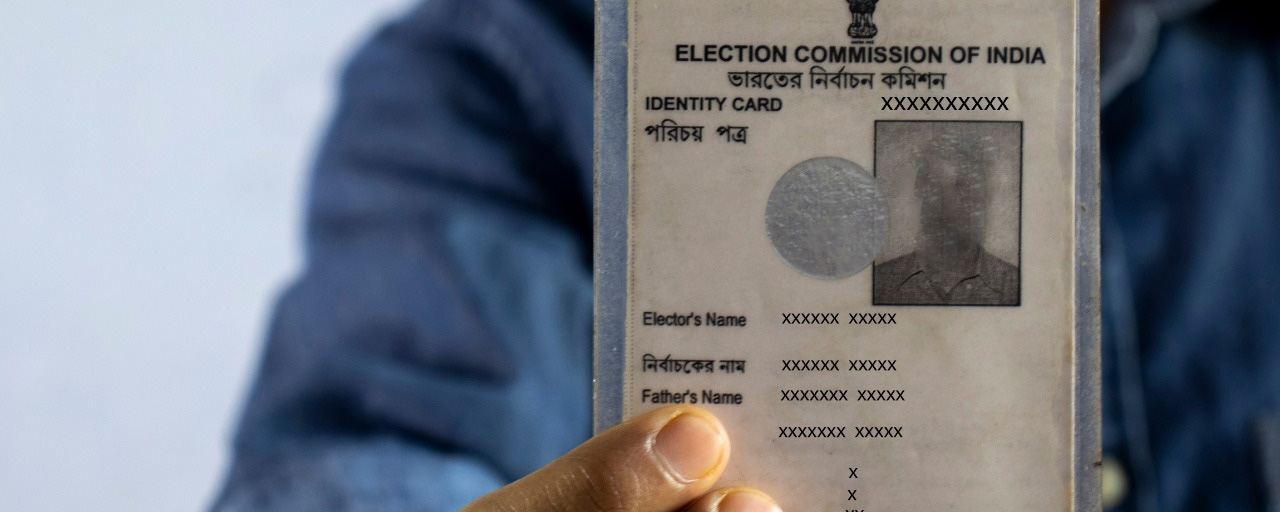
In this rainy July of 2025, as political camps in West Bengal sharpen their strategies, the Election Commission of India (ECI) is busy with a massive exercise — Special Intensive Revision (SIR) of voter lists.
And not just Bengal — Assam, Kerala, Tamil Nadu, and Puducherry are also under the scanner as these states head for crucial Assembly elections in 2026. The Election Commission says its goal is clear: to make voter rolls updated and error-free.
But the opposition is asking: Why now? And what exactly is the intention behind this timing?
Why is cleaning up voter lists important?
Official estimates say that states like Bengal have lakhs of names that are either duplicated, contain wrong addresses, wrong ages — or even names of people who have passed away but still exist on the rolls.
According to the ECI, a fair election starts with a clean and credible voter list — so that bogus voting stops, genuine voters don’t get left out, and the election’s legitimacy stays unquestioned. Even during the last Lok Sabha election, there were complaints in multiple districts of duplicate names within families, or migrant workers’ names appearing in more than one constituency.
So the ECI claims that SIR is just a routine exercise, nothing sudden or extraordinary.
But why has this turned political?
The problem is, states like Bengal, Assam, and Kerala are highly sensitive election battlegrounds.
The Trinamool Congress (TMC) recently held a press conference questioning the timing of this sudden revision in Bengal. They allege that the ruling party could use this to tweak voter bases in certain areas to their advantage.
Similarly, in Assam, the Congress and AIUDF have expressed fears that after the NRC and citizenship controversies, tinkering with voter lists again could reopen old wounds.
In Kerala, CPI(M) says that fair revision is welcome — but if the process turns political, it could deepen mistrust.
What do experts say: Where is the fear coming from?
Election analysts point out that revising voter rolls isn’t new — it happens every few years in every state.
But the 2026 West Bengal election is expected to be extremely polarised and fiercely contested.
The TMC has ruled the state since 2011, while the BJP has been trying to expand its footprint aggressively. In such an atmosphere, even technical processes can easily get politicised. Add to this the ongoing debates about linking voter cards with Aadhaar and digitising electoral rolls — civil rights groups have repeatedly flagged concerns that these could be misused to target certain communities.
People’s reaction: Trust or confusion?
On the ground, rural voters say that Booth Level Officers (BLOs) are visiting door to door with forms — but not everyone fully understands the process.
Many people fear that their names might get struck off by mistake.
For the elderly and less literate voters, filling digital or physical forms without mistakes is still a big hurdle.
Conclusion: A true test of transparency
The health of India’s democracy doesn’t rest just on the ECI’s claims — but on people’s trust in the process.
If this Special Revision stays fair, transparent, and easy for all, it will only strengthen democracy.
But if loopholes, bias or poor implementation creep in, the same revision could become yet another political weapon.
In the end, the real question is:
Will this big clean-up before Bengal 2026 make democracy stronger — or deepen the distrust in politics?
The answer will depend on how vigilant citizens remain — and how fair the Election Commission proves itself to be.
Shreya Gupta is a trainee journalist at Cult Current. The views expressed in the article are
her ownand do not necessarily reflect the official stance of Cult Current.