

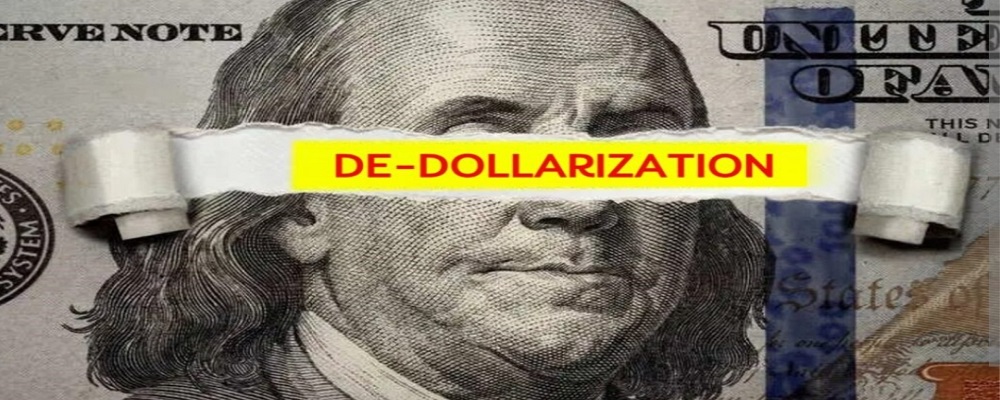
For decades, the US dollar has reigned supreme over global trade, the banking system, and foreign exchange reserves. Since the post-World War II agreements, trade across the globe—spanning everything from oil to grain—has been conducted in this single currency. However, recent global political upheavals, stringent Western sanctions against Russia, and US economic policies have sparked a new wave among nations seeking to break free from the dominance of a single currency. This signals a historic shift in the fundamental structure of the global economy.
The primary driver of this shift is the 'weaponization' of foreign currency for political ends. When the US and its allies froze Russia's foreign exchange reserves and excluded it from the global banking network (SWIFT), many developing and emerging nations realized that excessive reliance on a single currency could threaten their own sovereignty. Countries like India, China, Russia, and Brazil promptly initiated agreements to conduct bilateral trade in their national currencies (such as the rupee, yuan, and ruble) to safeguard themselves against potential future sanctions.
In this evolving trade landscape, the weakening of the 'petro-currency' system is a significant development. Saudi Arabia and other Gulf nations have signaled a willingness to accept payments for crude oil in currencies other than the dollar—such as the Chinese yuan and the Indian rupee. India has recently utilized non-dollar mechanisms effectively to purchase discounted crude oil from Russia, significantly aiding in inflation control and foreign exchange savings. Concurrently, India's Unified Payments Interface (UPI) is gaining acceptance in multiple countries, marking a major step toward the internationalization of digital payments.
Nevertheless, the dominance of a primary currency cannot vanish overnight. Approximately 85% of global foreign exchange trading still takes place in this currency, and the majority of global central bank reserves are held in this form. No alternative currency currently possesses the liquidity, openness, and global confidence that the US financial market offers. China's stringent economic policies and the lack of a transparent currency system prevent its currency from becoming a full-fledged alternative.
The conclusion is that while the world will not become entirely dollar-free, it is certainly moving towards a 'multi-currency system.' Global trade will no longer be dominated by the currency of a single nation, thereby fostering greater competition and balance in the international market. This shift will grant developing countries greater economic autonomy and flexibility—characteristics that are set to define the trade landscape of the 21st century.