

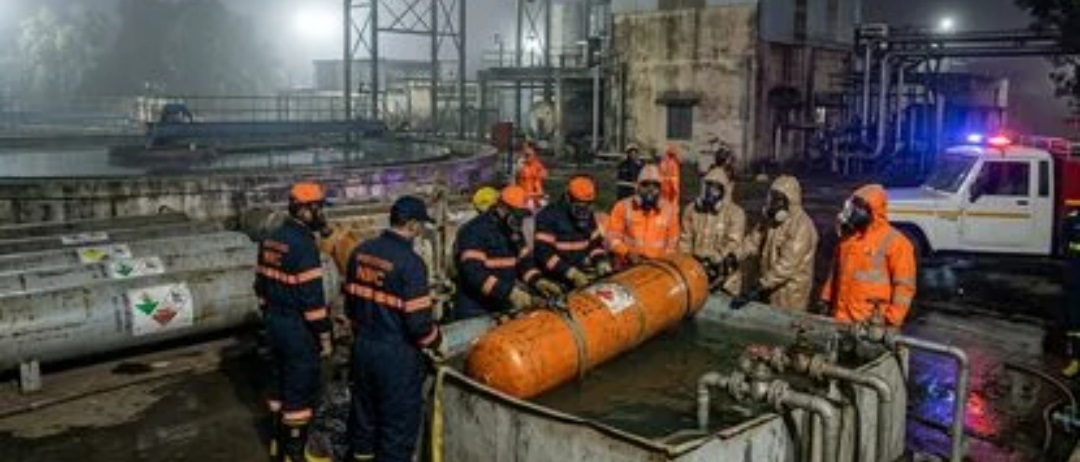
The Harrowing Scenario of the Nagpur Chlorine Incident-
Nagpur, Maharashtra’s 'Orange City', was just stirring from its lazy morning slumber when a pungent, suffocating odour emanating from the water treatment plant threw the entire area into a state of panic. A massive chlorine cylinder—with a capacity of 900 kilograms—at the Kanhan Water Treatment Centre suddenly began leaking gas. In the blink of an eye, a toxic haze spread through the air, and lives were suddenly imperiled. The very chemical intended to purify water teetered on the brink of becoming a harbinger of death. This sudden turn of events has once again raised serious questions regarding the vigilance and preparedness of the safety apparatus.
A Hazy Sky and Suffocating Breaths: Eyewitness Accounts
As the greenish-yellow chlorine gas mingled with the air, chaos and screams erupted in the nearby settlements. People rushed out of their homes, suffering from intense eye irritation, throat soreness, and chest tightness. The haze was so dense that visibility was reduced to almost nothing. Mothers were seen wrapping their children in cloth and fleeing to safety, while the elderly struggled to breathe on the streets. More than thirty people fell ill and were immediately rushed to a local hospital by ambulance. For everyone present, every passing second became a battle between life and death.
Relief Operations on a War Footing: The Fire Brigade’s Daring Operation
Upon receiving news of the incident, police, fire brigade, and NDRF teams rushed to the scene. Recognizing the gravity of the situation, the police immediately sealed off the entire Kanhan area to prevent the public from being exposed to the gas. Braving great personal risk, fire brigade personnel donned special protective suits and employed the 'water curtain' technique to contain the leak. Efforts were initiated to neutralize the chlorine gas leaking into the air by using high-pressure water jets. After hours of strenuous effort and the prompt intervention of technical experts, the leak was finally brought under control, allowing the administration to breathe a sigh of relief.
The Bitter Reality of Industrial Negligence and Dilapidated Infrastructure
This incident is not merely a technical glitch but a serious indictment of our safety standards. A 900-kilogram gas cylinder is no small vessel; it is essentially a dormant bomb that requires constant monitoring, pressure valve checks, and periodic audits. Were the emergency alarms and safety cut-off valves at the water plant in proper working order? Had the deployed staff received rapid-response training to handle such a situation? Often, due to budget constraints or maintenance negligence, such plants continue to operate with dilapidated equipment for years, eventually endangering the lives of innocent citizens.
Echoes of the Bhopal Gas Tragedy and a Stern Lesson for the Future
Whenever a gas leak occurs in India, the harrowing memory of the Bhopal gas tragedy inevitably comes to mind. This incident in Nagpur serves as a grave warning that we must immediately shed our complacency regarding chemical safety. Merely ordering an inquiry or suspending a few officials is not a permanent solution. Rigorous safety audits must be conducted across all water treatment plants and industrial units in the country, regardless of their size. If aging cylinders and valves are not replaced in time, a situation that remained confined to hospital wards today could escalate into a mass casualty disaster tomorrow.