

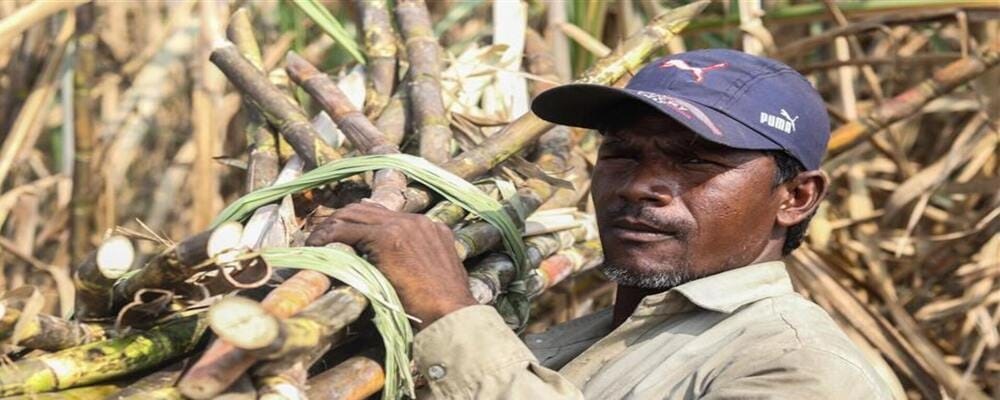
In a major crackdown, thirty-two persons including seven women have been rescued from alleged bonded labour at a sugar cane field in Ganganadoddi village, Chamarajanagar district, Karnataka.
According to an FIR registered at Ramapura police station on Thursday, Shanmugam has been identified as the main accused. He allegedly brought 30 migrant labourers from different parts of Tamil Nadu and one each from Andhra Pradesh and Bihar on the pretext of providing work, and engaged them in sugar cane harvesting for periods ranging from three months to two years.
Police say some were made to work without any wages, assigned work for all 32 and isolated from locals to prevent them from speaking to outsiders. Three of four accused have been taken into custody.
The rescued labourers are now housed in a government hostel in Hanur town. A medical examination revealed the extent of exploitation: 12 were administered pain-relieving injections, three were treated for injuries, and one with dislocation of the left elbow was referred to Kollegal hospital.
Analytically, this case exposes the dark underbelly of India's sugar belt that spans Chamarajanagar and Tamil Nadu. Seasonal demand for cheap labour fuels inter-state trafficking networks that lure vulnerable migrants with false promises. The modus operandi - wage denial, confinement, and social isolation - is textbook bonded labour under the Bonded Labour System (Abolition) Act. The fact that exploitation continued for up to two years points to lack of labour inspection and local intelligence in remote agricultural pockets.