

Only an intrepid chef would mix bacon and banana. Or crab and coffee. Welcome to computational gastronomy, where molecular biology and AI help us discover unlikely flavour pairings and fix how we eat.
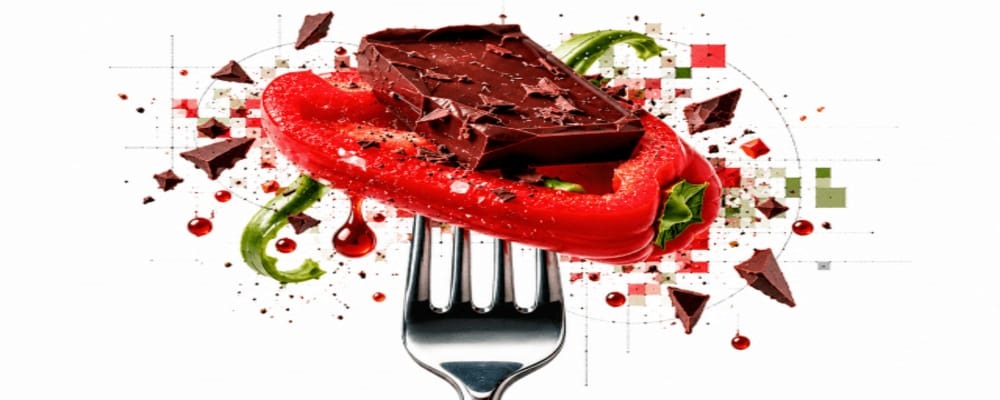
At the heart of it is FlavorDB, an open-access database that maps food ingredients by flavour molecules they share. Why does capsicum and chocolate, seemingly bizarre, both share flavour compounds? FlavorDB contains over 25,000 flavour molecules across ingredients, built by researchers led by Ganesh Bagler at IIIT-Delhi.
Chef Grigori Fomichov at Dubai's Nobu uses it to create new menus. His most curious find: lemon and white chocolate, pineapple and blue cheese, bourbon, bacon and banana share aroma molecules. Vodka and biscuits is a match because of shared molecules. His lab's dish: apricot cordial with sunflower seed orgeat foam - born from data, not tradition.
The science goes deeper. "What is computational gastronomy? Gastronomy uses chemistry and science to study food - from compounds that create flavour to shape and combinations," Bagler says. By analysing patterns in what we eat, it can tell us how to make food more nutritious and sustainable.
This is critical for India, where much of food is mis-documented. The Indian Food Composition Table lists 500-odd foods, but The Indian Nutrient Database built by researchers expands this to 1,000 commonly consumed Indian recipes. The team is now building a "Comprehensive Map of Indian Food" - a knowledge graph with thorough annotations on nutrition.
The applications are threefold: Discovering new combinations, developing personalised meals based on genetics, allergies and health goals, and reducing food's environmental footprint by finding sustainable substitutes with similar flavour. Bagler's team has developed SustainFoodDB to map carbon footprint of ingredients.
As Bagler notes: "Pulling it all together - the science, the technique, the molecules - into one coherent experience is something only a person can do. The database gives you possibilities, but not decisions." The chef still matters.