

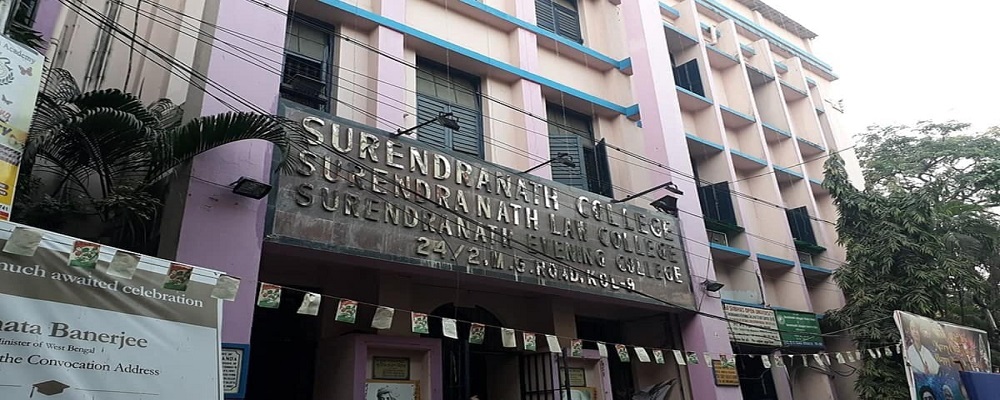
The vice-principal of Surendranath Law College in Kolkata resigned on Friday after a 23-hour ‘gherao’ by students over a 70% minimum attendance rule. What followed reveals much about campus politics in Bengal.
Mohammadi Tarannum said she was locked in her office for the entire night without electricity. No one came to rescue. “I... hereby tender my resignation from the said position due to certain unavoidable family, health-related and personal issues,” her resignation letter stated. To media she said she had sought help from Higher Education Minister Kaustav Bagchi, who had promised to intervene.
The standoff, which started Thursday afternoon and ended at 1 p.m. Friday, saw heated exchanges. Like all colleges affiliated with Calcutta University, Surendranath Law College is headed by a vice-principal. The 70% attendance requirement is set by Bar Council of India. “Neither I nor anyone else can alter this fact. I cannot take this pressure. I fell sick. I was locked here for the whole night,” she said.
The Akhil Bharatiya Vidyarthi Parishad (ABVP), which participated in stir, hailed the “win for students” and went on to “purify” her office with Gangajal. ABVP State media in-charge Ananta Barui said, “Students will not tolerate discrimination.” First-year law student and ABVP member Veenit Sharma told The Hindu, “We wanted to purify the space, so we sprinkled Gangajal and lit some incense sticks.”
Education Minister Bagchi agreed with 70% rule but flagged another issue: “That place does not even have a proper attendance register. How will they keep attendance if there is no system in place?” He also alleged a “culture of political favouritism” during previous Trinamool Congress government in college.
This is not an isolated incident. It fits a pattern where gherao — once a labour protest tool — has become a routine pressure tactic in Bengal campuses, and where resignation under duress is followed by ritualistic purification that communalises an administrative dispute.
Two questions get lost: One, if BCI mandates 70% attendance, why does college not have an attendance register? Two, when a vice-principal is confined overnight without power, where is institutional security? The ABVP calls it victory for students’ rights and academic justice. But when a woman administrator says no one came to rescue her, it is also a failure of the state’s duty to protect its own staff.