

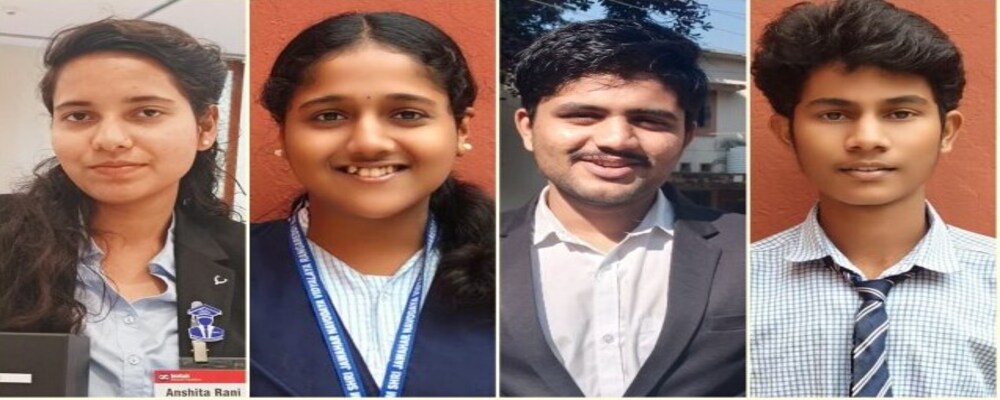
On power-cut evenings in Hapur's Athsaini village, Anshita Rani studied under a rechargeable lamp her father bought because she couldn't read after dark. At 23, now in her final year at National Law University Delhi, that lamp is old, dim, but still holds a place of honour. "It barely works now, but we still have it," she says.
Anshita is one of the faces of the National Law Scholars Programme (NLSP), an initiative that finds promising students from Navodaya Vidyalayas - schools that rarely produce lawyers - and prepares them for CLAT to enter India's most competitive law schools.
Started in 2019 as a collaboration between Navodaya Vidyalaya Samiti and alumnus Anoop Maurya, NLSP is a fully funded, two-year residential programme. For students like Anshita, from a joint family of 22 in a crowded house with no quiet corner to study, it is a lifeline.
The model is significant. Law in India remains an elite profession, dominated by urban, English-speaking networks. NLSP directly intervenes in that pipeline. It identifies talent in Class 11 in rural JNVs, where roughly 10,000 students are screened, and provides rigorous coaching for CLAT's English-heavy, logic-driven format.
The challenge is not just academic. As students note, the transition to an NLU like Jindal or NLSIU is cultural - adjusting to peers with stronger English and wider networks is “constant and worrying.”
Yet the programme is powering a quiet revolution. What Anshita's lamp represents is not just hard work, but access. When a first-generation learner from a UP village argues constitutional law, it changes who gets to become leaders and shape policy. In a profession that desperately needs rural, grounded voices, NLSP is not charity - it is course correction