

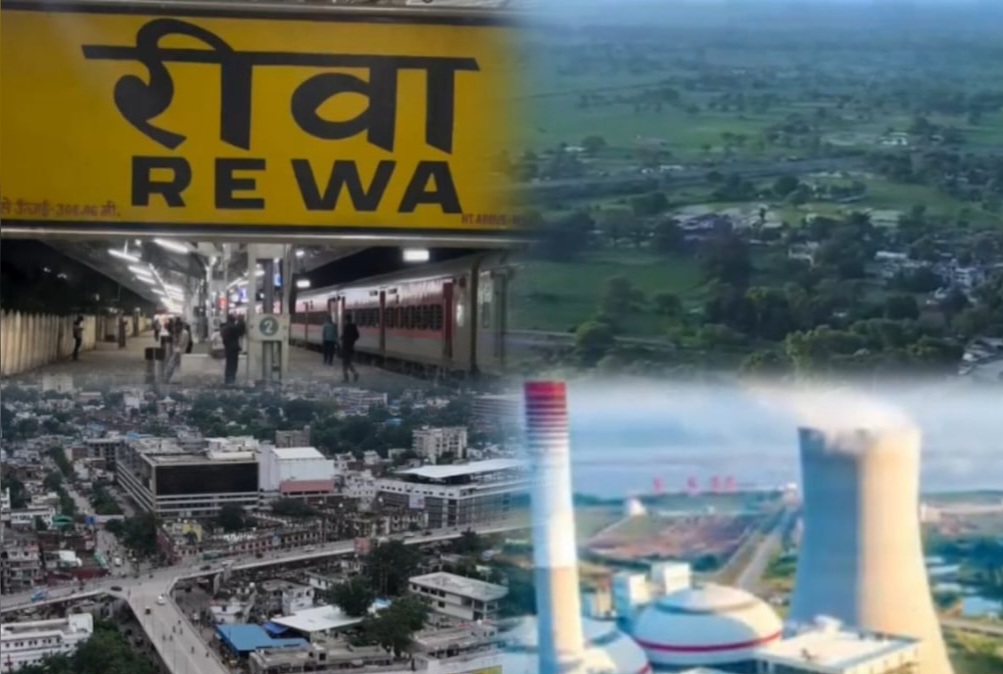
Rewa is no stranger to big energy. It houses Asia's largest solar parks. Now it is ground zero for India's most sensitive energy reform.
In December 2025, Parliament passed the SHANTI Act — Sustainable Harnessing and Advancement of Nuclear Energy for Transforming India Act — amending the Atomic Energy Act, 1962 and the Civil Liability for Nuclear Damage Act, 2010. For the first time, it allows private Indian companies to Build, Own and Operate nuclear power plants, with fuel and security remaining with the Centre, and NPCIL as operator for safety oversight.
Tata Power Renewable Energy's proposal for a 440 MW Bharat Small Modular Reactor (BSMR) cluster in Rewa district is one of the first under this law. Cost is estimated at Rs 28,000 crore, with preliminary site investigations starting October 9 in Rojhauhi village.
Read more - Vehicle Data Not Sold, Shared Masked Says ULIP
That drilling triggered the current standoff.
Two versions of consent-
Villagers allege Gram Sabha consent under PESA Act, 1996 was never taken. PESA makes Gram Sabha consent mandatory in Scheduled Areas for land acquisition and for any project affecting community resources. Rewa has significant Kol tribal population under Fifth Schedule influence.
District administration says consent was secured and an NOC was issued on that basis.
The crucial twist: villagers allege the letter used to obtain the NOC was originally issued for a different purpose — likely for solar or water survey — and repurposed for nuclear site investigation. This is a serious allegation. Under LARR Act 2013, consent must be informed, prior, and purpose-specific. If a letter for one purpose is used for another, the NOC is legally vulnerable.
For two weeks, Adivasi families have held a Jal Satyagraha — standing in water — a form of protest immortalized during the Narmada Bachao Andolan. The protest took a tragic turn on October 22, when 60-year-old Vimla Kol, a participant, died after falling ill. Police say cause is being probed; family links it to prolonged exposure during protest.
Why this matters for SHANTI?
The Centre's aim is to add 100 GW nuclear by 2047. Without private capital, it is impossible. But India's nuclear history — from Kudankulam 2011-13 to Kovvada — shows that technical safety is only one part. Social licence is the other.
Three questions now decide Rewa's fate:
1. Consent audit: Was Gram Sabha quorum met? Was meeting videographed as per MP Panchayat rules? Is the original consent letter available in public domain?
2. Transparency: SMR technology, emergency planning zone, water use from Tons river, and spent fuel liability need disclosure in Hindi and Kol dialect, not just EIA English.
3. Rehabilitation: Rewa's tribals already lost land for solar. The 2013 Act requires 4x compensation in rural areas and consent of 70% for PPP projects. Nuclear project qualifies.
Read more - TVS Family Files Caveats Before War Begins
Tata Power has said it is at "early feasibility stage" and will follow due process. The MP government says no land has been acquired yet.
For India, if Rewa fails on consent, it will become Kudankulam 2.0 for private nuclear — courts will intervene and investor confidence will drop. If it succeeds with proper PESA compliance, it becomes the template for 18 other BSMR sites NITI Aayog has identified.
The death of Vimla Kol should trigger a magisterial inquiry and immediate halt to drilling till consent documents are placed before the Gram Sabha again.
*Tags:* #RewaNuclear #SHANTIAct #TataPower #PESA #GramSabha #AdivasiRights #Rojhauhi #JalSatyagraha #NuclearEnergy #MadhyaPradesh